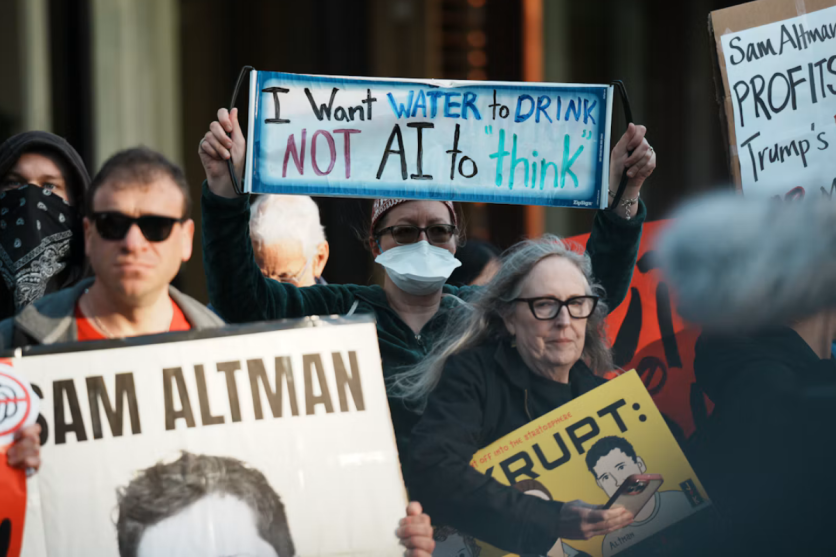
US federal agencies have been tracking opposition to AI data centres under a new label, anti-tech extremism, according to more than 1,000 pages of internal reports Wired obtained. The documents come from the Department of Homeland Security, the FBI, and regional intelligence hubs known as fusion centres.
Officials warn that the backlash against AI could spill into sabotage and civil unrest. Critics say the language risks treating ordinary protest as a security threat.
The FBI says it investigates people who commit or plan violence and federal crimes and not those who simply hold opinions.
A New Threat Label Appears in Federal Reports
Wired reports that the phrase anti-technology violent extremism does not appear in any public DHS or FBI guide to domestic extremism.
Several reports point to data centres as likely targets. A New York bureau warned that rapid AI adoption could fuel large protests that turn into civil unrest. A Northern Virginia centre said anti-government extremists had carried out planning aimed at data centres and other critical infrastructure.
Wired also found that speakers were removed or arrested at data centre hearings in at least six states. The US Capitol Police prepared its own note on threats and attacks likely linked to data centre grievances.
Philadelphia Bulletin Shows How Monitoring Works
The clearest example is a December bulletin from the Delaware Valley Intelligence Center which sits inside Philadelphia Police. It said domestic violent extremists were likely interested in targeting AI data centres.
The same bulletin admitted it had no specific information about a plan in the Philadelphia area. It still collected social media memes and jokes about burning facilities and listed disruptive First Amendment activity as a warning sign. It flagged three planned data centre projects nearby as possible protest sites.
The Intercept published the bulletin, and civil liberties advocates said it blurs the line between protected speech and violence.
Resistance to AI Data Centres Is Surging
The monitoring follows a surge in local resistance. Research group Data Centre Watch counted 75 projects worth about $130 billion blocked or delayed in the first quarter of 2026 and another 45 worth $68 billion in the second. Its tracker lists 843 opposition groups across 49 states.
A March Gallup survey found that 71% of US adults opposed an AI data centre in their area.
Campaigners have also taken to the streets. Tom's Hardware reported that 142 protests took place across 42 states in a single July weekend. New York's governor then signed what Greenpeace describes as the first state moratorium on new hyperscale data centres.
The pushback is not limited to America. French groups joined coordinated European protests on 6 and 7 November demanding a moratorium on mega data centres and a democratic debate about their future.
Violence Fears Collide With Free Speech
Concern about violence is real. In April, a 20-year-old man threw a Molotov cocktail at the San Francisco home of OpenAI chief executive Sam Altman and threatened to burn down the company's headquarters.
Civil liberties groups say one violent act should not define a movement made up mostly of neighbours worried about noise, water use, and electricity bills. They argue that classifying criticism as extremism could chill public debate at planning meetings.
For governments and tech companies, the challenge is clear. They must separate genuine threats from lawful dissent while communities keep asking who benefits when a data centre arrives. How they strike that balance may shape both public trust in AI and the speed of its rollout.


