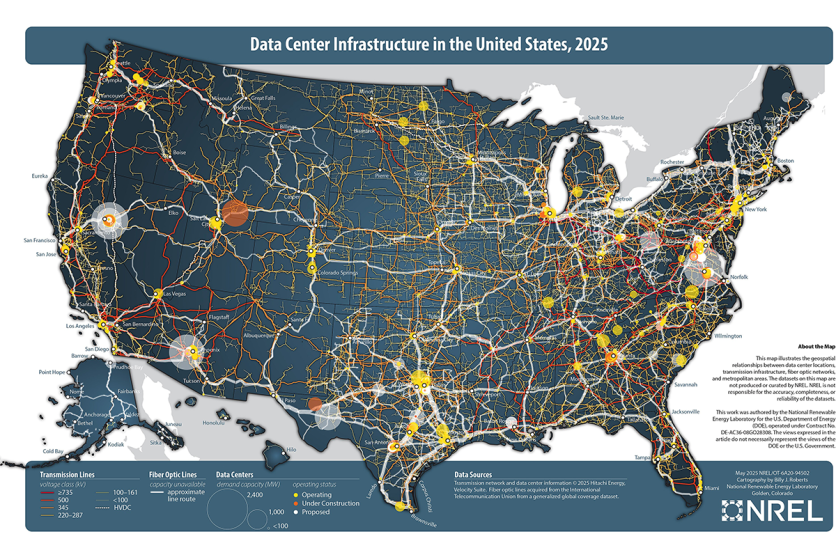
US midterm results will make new data centres harder to build, Meta President Dina Powell McCormick warned after candidates promising tighter controls won key races.
US Midterms Put Data-Centre Projects Under Pressure
At a 4 November 2026 Wall Street Journal Tech conference, Meta President Dina Powell McCormick said the results would make building data centres harder. The industry, she said, had 'not done as good a job as we needed to explain the benefits of these investments'.
Data centres use servers and processors for AI, as well as land, electricity and water. Democratic candidates who backed tighter controls won governor races in Texas, Ohio, Georgia, Nevada and Iowa, the Associated Press reported.
Still, data centres were not a top issue for most voters: about one-quarter said they were crucial to their congressional vote, below cost of living and government corruption. The AP expects tougher regulation, though federal action could be stalled.
Local Costs and Local Returns
Redbud Consulting tracked 47 local referendums across 44 municipalities in 12 states. The Associated Press said restrictions were approved in 44 of the 45 completed local referendums. Its poll also found roughly three-quarters opposed a centre in their own community. The figures describe tracked referendums, not every local election or a national vote on AI.
Reported concerns span household electricity costs, water, noise and environmental effects near sites. The issues now enter planning and election debates over grid costs, local benefits and residents' say.
Data center backlash isn't about AI, it's about who pays the bills (and the noise)
by u/AdSpecialist6598 in technology
Meta says it has built data centres for 20 years and operates facilities in 23 US states. Powell McCormick said its local agreements can include paying for electricity, directing tax surpluses to teachers and first responders, hiring locally and seeking bipartisan support. She expects greater scrutiny of whether constituents want each project.
These are Meta's stated terms, not proof every project delivers them or resolves opposition. Who pays for the expansion, and what return do residents receive?
UK Policy Sets Out a Different Test
The UK has no equivalent election result in this coverage, but a similar local-benefit debate. At the Budget on 28 October 2026, the Government estimated that 6 gigawatts of AI data-centre capacity would be needed by 2030, arguing domestic infrastructure could support secure AI access and reduce reliance on overseas capacity.
The Data Centre Covenant sets expectations on energy costs, water, environmental standards and jobs. Strategic projects seeking additional government support must meet its tests, including agreeing local benefit plans. The Covenant is a policy framework, not a law imposing these commitments on all centres.
Reporting by The Guardian has described UK residents' concerns about proposed developments, including in Wales. This shows a local planning debate, not that US election results will change UK projects.
What the Vote Means for UK Residents
For people in Britain, the US vote does not establish an immediate change to bills, services or jobs. The Government says domestic capacity could matter if AI becomes important to services such as the NHS and overseas compute supply is constrained.
Whether residents see lower energy costs, lasting jobs or other benefits depends on project assessments, community consultation and how the Covenant works. Who pays remains an open question for developers, planners and host communities.


