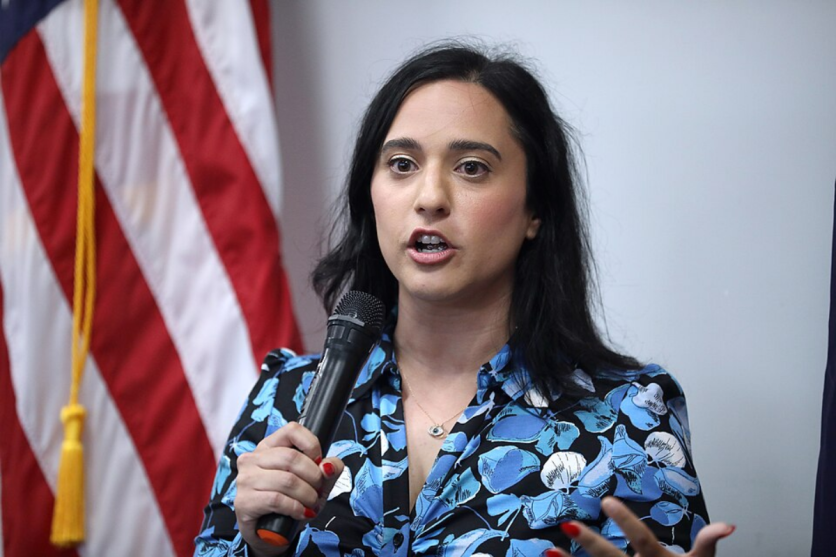
US Congresswoman Yassamin Ansari has called for a pause on advanced AI development, tighter industry regulation and a ban on artificial superintelligence, urging Democrats to make the measures a priority from day one.
The Arizona Democrat made the demand in a post on X on 4 November 2026, renewing attention on proposed legislation that could impose sweeping restrictions on the development of increasingly powerful AI systems.
'Top of the Democratic agenda on day 1 needs to be a pause on advanced AI development, regulation of this out of control industry, and a ban on artificial superintelligence,' Ansari wrote.
Her post drew widespread attention, but the call for AI restrictions is not new.
At a September press conference in Phoenix, Ansari urged an immediate pause on advanced AI development, tighter industry oversight and a ban on artificial superintelligence.
Yassamin Ansari's AI Proposal Has a Legislative Connection
Ansari's latest comments also connect to an existing legislative effort. She is among the original lawmakers who introduced the Ban Artificial Superintelligence Act of 2026 alongside Representative Greg Casar, who formally introduced the House bill, H.R. 10538, on 24 September.
A corresponding Senate proposal, S. 5493, was introduced by Senator Bernie Sanders on 23 September. Both bills seek to establish a Department of Artificial Intelligence with authority to oversee advanced AI development and enforce proposed safety requirements.
Top of the Democratic agenda on day 1 needs to be a pause on advanced AI development, regulation of this out of control industry, and a ban on artificial superintelligence.
— Congresswoman Yassamin Ansari (@RepYassAnsari) November 4, 2026
Neither proposal has become law. The House bill was referred to the Committee on Oversight and Government Reform, while the Senate version went to the Committee on Commerce, Science, and Transportation.
The distinction matters because Ansari's statement expresses her preferred political priorities, not an existing Democratic Party policy or a federal prohibition already in force.
What the Ban Artificial Superintelligence Act Would Actually Do
The House bill offers a clearer picture of how far the proposed restrictions could extend.
Under H.R. 10538, an advanced AI system is generally defined as one trained using computing power of at least 10²⁵ integer or floating-point operations.
The proposed Secretary of Artificial Intelligence would adjust the threshold annually to reflect improvements in training efficiency and other technological advances.
The bill would also impose a pause on covered advanced AI development until the new department was fully staffed and had established the required safety rules.
During that period, covered systems could not be trained, modified or fine-tuned, including through recursive self-improvement. Unreleased advanced AI systems would also be barred from deployment.
The proposed ban defines artificial superintelligence as AI that surpasses human cognitive abilities across most fields or can take actions capable of destroying or disempowering humanity.
Congresswoman Yassamin Ansari has said: Top of the Democratic agenda on day 1 needs to be a pause on advanced AI development, regulation of this out of control industry, and a ban on artificial superintelligence.
— unusual_whales (@unusual_whales) November 4, 2026
It would also restrict systems that could help create such AI, including those able to improve themselves, evade oversight or access secure digital infrastructure without authorisation. Individuals who recklessly breach certain provisions could face fines and up to 20 years in prison.
Others could face a 10-year ban from working in the AI industry, with an appeal process and possible exemptions for whistleblowers.
Companies could also lose their development charters following a violation finding, while any forfeiture of intellectual property or assets would remain subject to judicial review, including possible appeals to the US Court of Appeals for the Federal Circuit.
Ansari's AI Position Differs From Trump's Approach
The proposal also highlights a wider disagreement over the future of American AI development.
The Trump administration has prioritised domestic AI innovation and fewer regulatory barriers. Executive Order 14409, signed on 2 June 2026, rejects what it calls overly burdensome regulation and rules out mandatory licensing or government approval before new AI models are released.
However, it also includes measures to address national security risks posed by advanced AI. The administration is therefore not rejecting oversight altogether, but taking a different approach to regulating the industry.
🇺🇸 NOW: Democrat lawmaker Yassamin Ansari wants a pause on advanced AI and a ban on superintelligence after Democrats won control of Congress.
— Cointelegraph (@Cointelegraph) November 5, 2026
She says AI regulation should top the day-one agenda. pic.twitter.com/hYfjkiRUJL
Supporters of stricter controls argue that safeguards are needed before AI capabilities advance beyond the ability of governments and researchers to manage the risks.
Critics warn that slowing US AI development could weaken its technological competitiveness and delay advances in medicine and scientific research.
Others responding to Ansari's post argued that Democrats should prioritise everyday concerns, including the cost of living and fuel prices. Ansari has yet to outline a detailed implementation timetable or explain how a development pause would be enforced across the industry.
For now, the two congressional bills remain at the committee stage, with no federal ban on artificial superintelligence in force.


