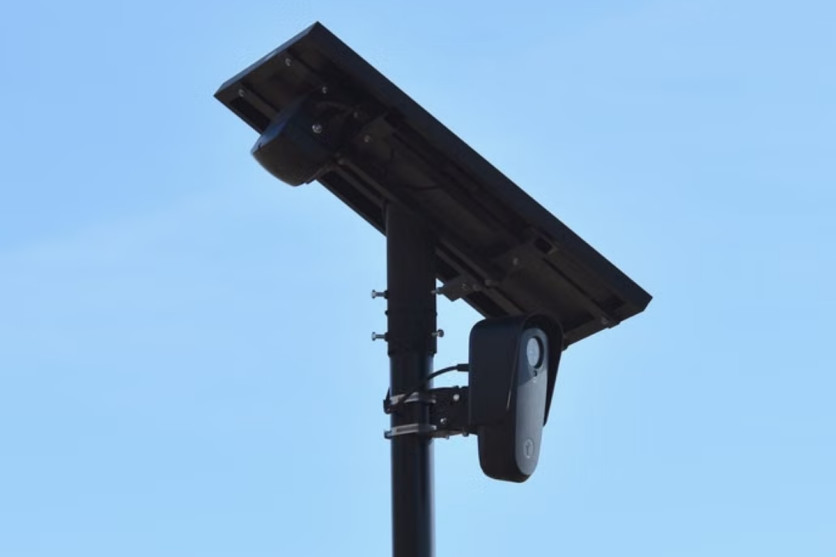
Flock cameras are at the centre of competing US proposals to restrict automated licence plate readers as lawmakers move to limit how police can collect, retain and access vehicle-location data.
The bills, introduced by Democrats and Republicans in September and October 2026, would take different approaches to Flock and similar systems, ranging from restricting federal funding to imposing new rules on police searches and data retention.
The legislation comes as automated licence plate readers, or ALPRs, have become increasingly common in policing.
The systems photograph passing vehicles and record information including a vehicle's location, date and time, along with its make, model, colour and other identifying features. Software can then make that information searchable.
What Flock Cameras Can Reveal About Drivers
For context, the technology itself is not new.
The concern among privacy advocates has grown as ALPR systems have become more sophisticated and increasingly connected to software that allows police to search large amounts of vehicle data.
A single photograph of a car may appear limited. A collection of records taken over days or weeks can be considerably more revealing, particularly when the same vehicle repeatedly appears at different locations.
Flock Safety said in a September letter to Republican Senator Josh Hawley that its ALPR systems store images and data for at least 30 days by default. That retention period can allow police to reconstruct patterns in a vehicle's movements, although the data does not necessarily identify the person driving the vehicle.
Flock and other companies also offer software designed to search and analyse information collected by ALPR systems. This is where the technology's AI capabilities enter the discussion.
The bills currently being considered by Congress, however, primarily concern automated licence plate readers and the data they generate rather than AI systems generally.
What is the 'Ban Flock Act'?
The Ban Flock Act, introduced on 2 October by Senator Bernie Sanders, Senator Jeff Merkley and Representative Alexandria Ocasio-Cortez, would prevent federal funds from being used to purchase ALPR systems, including Flock cameras. It would also restrict federal use of ALPRs and their associated data.
The proposal would use federal funding as an incentive for state and local governments to restrict ALPR use.
Governments with laws or policies prohibiting the technology could remain eligible for certain federal assistance from agencies including the Departments of Justice, Homeland Security, Transportation, Housing and Urban Development, and Health and Human Services.
Importantly, despite its name, the Ban Flock Act would not simply make Flock cameras illegal across the US.
The bill would leave local governments and private companies able to use AI-powered surveillance systems that fall outside its ALPR provisions. It would also allow Congress to authorise particular uses of ALPRs with privacy safeguards, including provisions concerning the deletion of collected data. ALPR systems used for toll collection would be exempt.
Ocasio-Cortez said the spread of AI-powered cameras was 'unconscionable', arguing that companies such as Flock Safety were collecting Americans' personal data without their consent.
That is her characterisation of the technology and its impact, rather than an established legal finding.
Republicans Also Propose Tighter Rules for Flock Cameras
Republican Senator Josh Hawley has taken a different approach with the Stop Flock Abuse Act, which he announced on 30 September.
Rather than cutting off federal funding for ALPR systems, Hawley's proposal would establish rules governing how police use the data. One provision would require police to audit ALPR searches, an attempt to identify inappropriate searches and establish greater accountability for how the systems are used.
The proposal would also require driver data to be deleted within 10 days, subject to exceptions including active criminal investigations.
Hawley said AI-powered cameras from Flock and its competitors are creating digital records of Americans' movements and argued that Congress needs rules governing their use.
Another Republican-backed proposal would impose funding restrictions of its own.
Representatives Thomas Massie and Eric Burlison introduced legislation on 2 September that would prohibit federal funding for ALPRs as well as connected cloud services, databases and data-sharing arrangements.
The bill would also restrict the integration of facial recognition and biometric technology with police ALPR systems, while including an exception for ALPRs used along the southern border.
The proposals differ over whether the priority should be restricting the technology itself or controlling how police use it.
There are documented concerns about inappropriate access to ALPR databases, including cases in which officers have allegedly used searches for personal reasons.
Multiple Concerns for Flock Amplified
Privacy organisations have also raised concerns about the possibility of inaccurate identification, while reports have documented motorists being stopped or detained after licence plate technology produced incorrect results.
There were also concerns over the sharing of ALPR information between law enforcement agencies, including federal agencies.
For now, the competing proposals remain legislation rather than new nationwide rules.
The immediate question for Congress is therefore not simply whether Flock cameras should exist, but how much control police should have over the vehicle data they collect, how long that information should remain searchable, and when government agencies should be allowed to access it.


