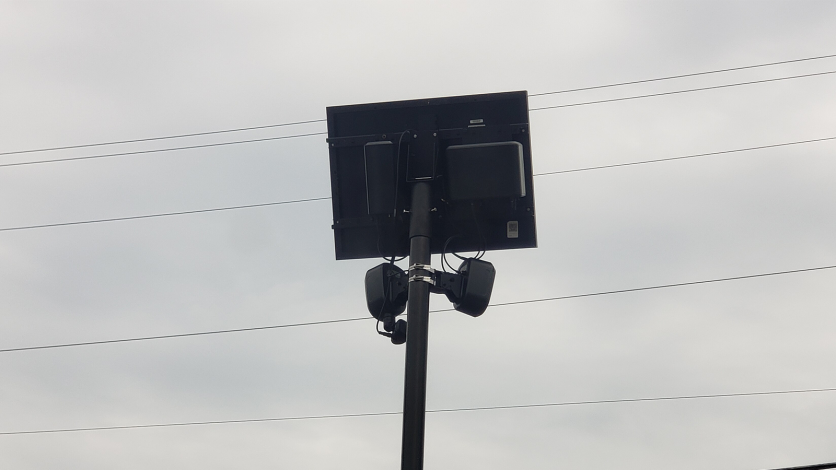
Flock Safety faces renewed scrutiny after two Minnesota communities reported problems removing its surveillance cameras following contract decisions, The Verge reported.
A surveillance network has two lives: the digital one, where search and retention rules govern data, and the physical one, where cameras remain on streets. A contract may end while the hardware is still there.
First, a city decides to end its contract. Then it asks for the cameras to be removed. If the request goes unanswered, local officials may intervene themselves. In Plymouth, Minnesota, the police chief said staff disconnected the cameras after the city had received no acknowledgement from Flock.
The reported disputes concern physical equipment. They are separate from the company's controls over searches and stored data; the available reporting does not establish that failures in one area caused problems in the other. Flock announced new privacy and accountability safeguards in August, after reporting on police misuse and wider criticism of its automated licence-plate reader network.
Two Minnesota Communities Reported Camera-Removal Problems
Plymouth's city council voted to terminate its Flock contract in September, The Verge reported. The city received no acknowledgement for more than a month, while Police Chief Eric Fadden said he directed staff to disconnect the cameras' power cords after hearing nothing for more than a week.
In nearby Dayton, city officials said Flock reconnected two cameras after the city had told the company not to complete a maintenance work order. Flock spokesperson Andrew Smith told The Verge that the company respected the city's decision and was working with the customer to remove the cameras.
'We're Not Big Brother': Flock CEO Unveils New Privacy Guardrails After Backlash
by u/lurker_bee in technology
The dispute is not the first reported case in which a customer has had difficulty removing Flock equipment. An Illinois college previously said the company had not removed cameras after it asked to end its arrangement, a case covered by TechTimes.
Flock's August 2026 Safeguards Target Searches and Retention
A Washington Post analysis of police and court records identified at least 50 law-enforcement officers accused, charged or convicted of misusing licence-plate reader systems. Flock's system appeared in 46 cases.
The Post said that 26 cases involved officers using the technology to spy on wives, girlfriends, former partners or other women; the cases involved Flock and competing systems.
On 13 August 2026, Flock announced changes including a recommended seven-day retention period, case codes for searches, mandatory audit assistance for law-enforcement customers, automatic review of unusual activity and additional controls over data sharing.
The company said existing customers could retain their current settings, so the seven-day period does not automatically apply across all existing systems.
Interesting developments 24 hours after I posted this - Flock announced it was reducing default data retention from 30 to 7 days, turning on audit assistance by default, automatically suspending access by users whose activity looks abnormal, and requiring case numbers for all searches.
— Rachel Levinson-Waldman (@rlevinsonwaldman.bsky.social) 2026-08-14T21:30:35.198Z
Flock said it would require law-enforcement customers to use case codes and adopt its Audit Assistance tool by the end of 2026. Those were announced commitments, not completed changes as of 4 November.
The company also said multi-factor authentication was mandatory and described 'Evidence Mode', which allows data to be preserved for active investigations beyond the usual retention period.
The ACLU questioned how Evidence Mode would work in practice. It said the effect would depend on whether the feature preserves only data identified as evidence in an active case or broader data returned by searches. That is the organisation's assessment, not an independent finding about the feature's operation.
Security Investigation Examined Data on a Removed Camera
A September investigation by WIRED and 404 Media examined data recovered from a physically removed Flock camera. The outlets reported finding an encryption key that allowed access to some footage stored on the device, as well as software that detected people and vehicles.
The investigation concerned access to the camera's physical storage; it did not establish that Flock's cloud network had been breached. Flock said it had not received a report through its vulnerability-disclosure process and could not assess the claims based on the information provided. TechTimes has reported on the camera investigation in more detail.
UK Relevance Is Limited to ANPR Context
For UK readers, the link remains contextual. Mill reported in July that it had found no confirmed deployment of Flock Safety cameras by a UK police force.
The Information Commissioner's Office has guidance on automatic number-plate recognition, or ANPR, as a technology category. That guidance provides UK data-protection context; it does not connect Flock to a UK deployment.


