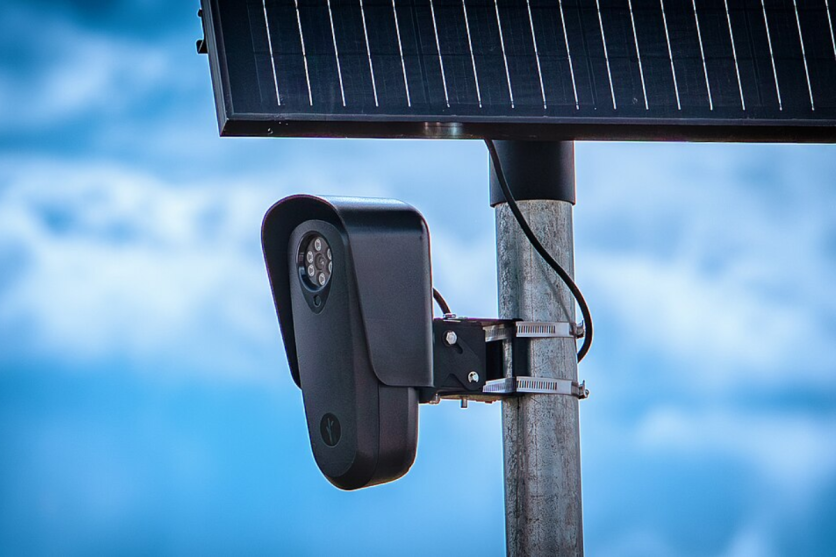
A California licence plate led a Tulsa County deputy to query automated licence plate reader systems that returned more than 50 historical location records spanning an entire month. On 1 October 2026, US District Judge Sara E. Hill ruled that the historical-location query was a Fourth Amendment search conducted without probable cause or a warrant.
The ruling in United States v. Kyle does not ban Flock cameras or automated licence plate reader, or ALPR, technology. Hill's opinion instead distinguishes between observing a vehicle on a public road and using a searchable network to reconstruct an extended history of its movements.
A California Plate Led to a Month of Location Data
Tulsa County Deputy Sheriff Freddie Alaniz was parked beside a highway when a Mazda SUV with a California licence plate passed his patrol vehicle. Hill found that Alaniz began following the Mazda 'for no apparent reason other than the fact that it had a California license plate'.
Alaniz had access to at least two ALPR systems, Flock and VehicleManager. The court said the systems have different capabilities but perform the same essential function: gathering and organising historical information about vehicles seen on public roads.
The searches returned more than 50 records of the Mazda's whereabouts across the country over an entire month. The data showed that it had travelled from Locust Grove, Oklahoma, towards the California-Arizona border area and was heading back towards Missouri after a short trip. Hill noted that Alaniz did not have access to Flock data from California, making the precise length of the vehicle's stay there unclear.
Alaniz entered 'traffic violation' and 'investigation' as reasons for the queries. Hill found that, when he ran them, all he knew about the vehicle was that it had a California licence plate.
Judge Calls Networked ALPR Surveillance 'Indiscriminate Mass Surveillance'
Hill held that searching Kyle's historical ALPR data amounted to a Fourth Amendment search because it intruded on her reasonable expectation of privacy in the 'whole of her physical movements'.
The judge distinguished a single observation on a public road from a network capable of assembling an extended travel history. She wrote that officers using such systems could access a continuously updated location history for vehicles captured across the network.
'This is a type of indiscriminate mass surveillance,' Hill wrote. She said historical location records could reveal sensitive information, including visits to a fertility clinic, liquor store, casino, doctor or lawyer.
Hill relied in part on the Supreme Court's location-privacy decisions in Carpenter v. United States and its 2026 decision in Chatrie v. United States. She acknowledged, however, that her conclusion diverged from nearly every court to have considered ALPR use under the Fourth Amendment, including three earlier federal decisions from Oklahoma.
Traffic Stop Was Lawful, but Extended Detention Was Not
Hill did not find the entire roadside encounter unconstitutional. The court found that the initial traffic stop was lawful because Alaniz had an objectively reasonable basis to believe Kyle was following another vehicle too closely.
During the stop, Kyle said she had travelled west for a short visit and explained that the drive itself was part of what she enjoyed about the trip. Alaniz regarded the length of the journey, the brief stay and other details as suspicious.
After returning Kyle's licence and giving her a written warning, Alaniz continued questioning her with her consent before asking for permission to search the SUV. Kyle refused. Alaniz then detained her while he deployed a police dog. The dog alerted, after which officers searched the vehicle.
The Tulsa County Sheriff's Office said deputies found about 91 pounds of methamphetamine. Kyle was later federally charged with possessing more than 500 grams of methamphetamine with intent to distribute. The charge is an allegation, and there has been no conviction. Hill separately ruled that Alaniz lacked reasonable suspicion to prolong the completed traffic stop for a drug investigation.
She also found a nexus between the unconstitutional ALPR search and the evidence obtained during the stop. Because prosecutors did not establish an applicable exception to the exclusionary rule, Hill ordered all evidence obtained after Alaniz initiated the ALPR search suppressed as 'fruit of the poisonous tree'.
What the Flock Ruling Means
The decision comes from the US District Court for the Northern District of Oklahoma and does not impose a nationwide warrant requirement for every ALPR search.
Nor did Hill rule that photographing a licence plate visible on a public road is inherently unconstitutional. Her decision concerned the warrantless use of historical ALPR databases to retrieve an extensive record of a vehicle's movements without probable cause.
Flock was not a party to Kyle's criminal case. In a statement reported by 404 Media, the company said the ruling went against the 'overwhelming weight of authority' in similar cases, was limited to the specific facts before the court and did not establish controlling precedent. Flock said it expected the decision to be appealed and ultimately overturned.
The ruling does not settle the national legal debate over automated licence plate readers. It does, however, sharpen a constitutional question confronting courts as surveillance networks expand: when do individual observations made in public, once aggregated and retrieved at scale, become a protected record of someone's movements?


