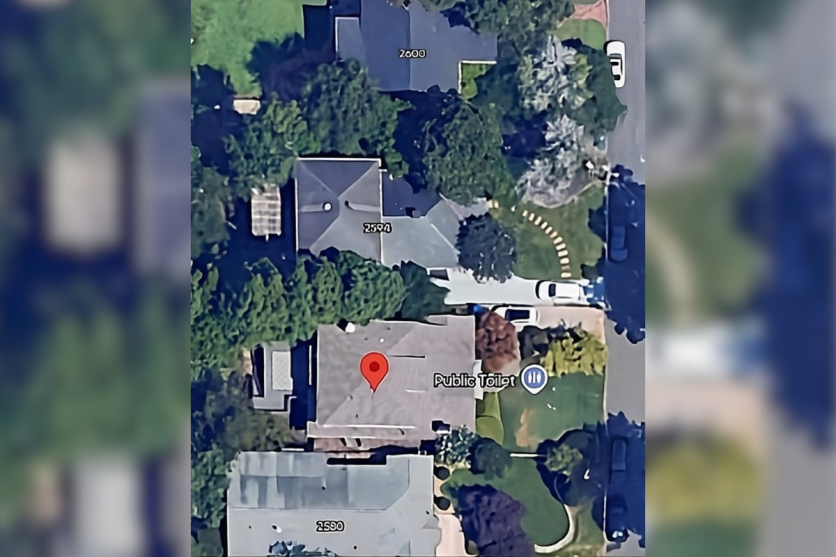
Garrett Langley, chief executive of Flock Safety, a company whose automated licence plate reader cameras track vehicle movements across thousands of American communities, is now the subject of a different kind of online scrutiny. Internet users reportedly flagged his property as a public toilet on Google Maps.
It all started when Langley stepped into the public debate during an appearance on Fox News, where he argued that people who focus on privacy or safety alone are 'prioritising the wrong thing'. The comments drew backlash on social media and online forums. What followed went further than typical online criticism.
Amid the privacy backlash, Langley's reported property appeared blurred on Google Street View, according to Cybernews. Users then reportedly went a step further and marked the location on Google Maps as a public toilet. However, it is unclear whether Langley himself requested the Street View blur.
🚨 #BREAKING: Internet users marked the Flock CEO’s lawn as a “public toilet” after it was revealed he redacted public streetview images of his house for privacy. pic.twitter.com/iAWp8P0kOQ
— R A W S A L E R T S (@rawsalerts) September 26, 2026
Google allows homeowners and tenants to request their residences be blurred on Street View, subject to Google's eligibility requirements and proof of address.
The public-toilet listing has not been independently verified, while it remains unclear who requested the Street View blur. The apparent contrast between Langley's public defence of a privacy 'compromise' and the reported blurring of the property quickly became a target for online critics.
Senate Scrutiny, Jailhouse Error and a CEO Apology
The Google Maps episode has arrived alongside mounting institutional scrutiny of Flock Safety and its surveillance technology.
Flock Safety, headquartered in Atlanta, Georgia, supplies automated licence plate reader (ALPR) technology to law enforcement agencies and private property owners across the United States. The cameras capture plate observations tied to locations and timestamps, building searchable records of vehicle movements that civil liberties groups have criticised as a form of mass surveillance.
The US Senate Judiciary Subcommittee on Crime and Counterterrorism has opened an investigation into Flock's AI-powered surveillance cameras. The investigation was followed by a 23 September Senate hearing titled 'Always Watching: Flock's Nationwide AI Surveillance Network'.
A Florida woman, Lindsey Isaacs, spent 13 days in jail after Flock data was used in a case in which she was wrongly accused. Langley addressed the case directly, telling CBS News: 'I apologise,' and 'It kills me that she went through that.'
Separately, five Indianapolis police officers have been charged with allegedly misusing Flock cameras to track romantic partners, spouses and women they met in public.
Amid mounting scrutiny over misuse of its technology, Flock Safety announced that it would cut its standard data retention period from 30 days to seven days and introduce new tools to flag abnormal search behaviour. Users whose activity triggers a review can be locked out pending an administrator's assessment.


