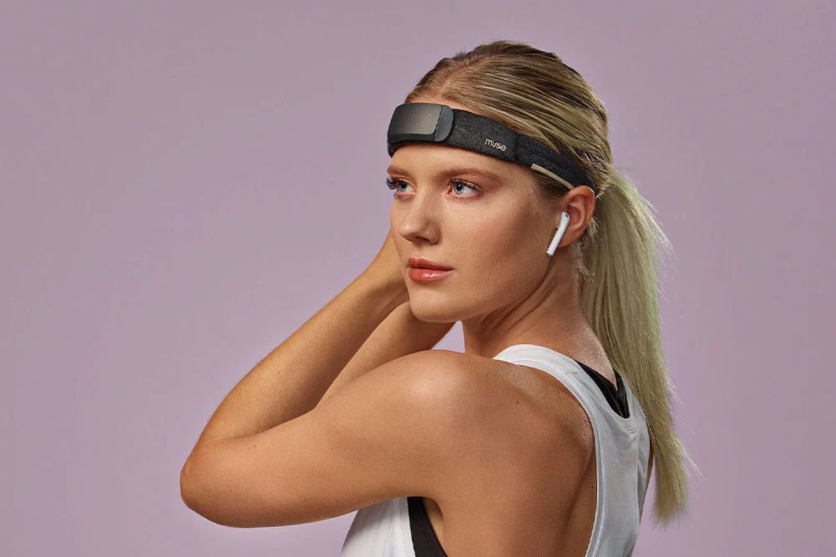
Canadian company Interaxon, maker of the Muse sleep and meditation headband, used approximately 50,000 hours of customers' brainwave recordings to train artificial intelligence (AI) without explicitly informing users, according to an investigation published in Science magazine.
The recordings were used to develop a 'brain foundation model', an AI system trained on large amounts of brain data. Models trained on brainwave recordings may learn to recognise patterns associated with neurological events, including seizures, although the investigation did not establish that Interaxon's model can detect them.
Muse Acknowledges Users Should Have Been Informed
When questioned by Science, Interaxon's chief marketing officer, Nadia Kumentas, acknowledged that customers should have been explicitly informed about the use of their brain data for AI training.
The company updated its privacy policy to disclose that de-identified user data could be used to train machine-learning models.
Interaxon, maker of the Muse sleep headband, trained a "brain foundation model" on about 50,000 hours of users' EEG data, Science reports.
— Hekate (@iCleanAI) November 8, 2026
Its privacy policy didn't say user data could train AI. It was updated after Science asked.#Interaxon #MuseHeadband pic.twitter.com/JJ6m64fHNk
Interaxon removed users' names and email addresses before using their EEG recordings. However, removing direct identifiers does not necessarily eliminate privacy risks. Research on clinical EEG data has highlighted re-identification risks, although it does not establish that the same risks apply to Muse recordings.
The recordings had already been used to train the model when the company updated its policy. Removing data's influence after it has been incorporated into a trained model can be extremely difficult, according to Malwarebytes' account of the investigation.
Brainwave Recordings Could Reveal More Than Expected
A 2018 study involving 17 participants, conducted by researchers at Korea University, found that a biometric identification method using resting-state EEG recordings achieved a mean accuracy of 88.4%.
🚨 𝗪𝗲𝗮𝗿𝗮𝗯𝗹𝗲 𝗦𝗹𝗲𝗲𝗽 𝗧𝗿𝗮𝗰𝗸𝗲𝗿𝘀 𝗛𝗮𝗿𝘃𝗲𝘀𝘁𝗲𝗱 𝗕𝗿𝗮𝗶𝗻𝘄𝗮𝘃𝗲𝘀 𝘁𝗼 𝗧𝗿𝗮𝗶𝗻 𝗔𝗜 𝗠𝗼𝗱𝗲𝗹𝘀
— SI Spotlight (@SISpotlight) November 9, 2026
An investigation by Science found consumer sleep headband makers collected tens of millions of hours of brainwave recordings.
Interaxon, maker of the Muse… pic.twitter.com/ESQcuaiTQK
Researchers at Ben-Gurion University found that analysing resting-state brain activity could provide insights into personality traits and cognitive abilities. A University of Southern California paper on EEG anonymisation discussed previous research suggesting that EEG data may contain information linked to mental health status, neurological conditions and substance-use history.
Researchers at the University of South-Eastern Norway wrote: 'Conventional anonymization methods are often insufficient for high-dimensional biomedical signals,' warning that removing direct identifiers does not necessarily prevent re-identification or sensitive information being inferred.
These findings do not establish what can be inferred from Muse recordings, which use fewer electrodes than clinical EEG systems.
Only Six of 57 Companies Ruled Out Selling Brain Data
The investigation examined 57 companies collecting neural data. Only six explicitly stated that they would not sell users' brain data. More than two-thirds allowed neural information to be transferred to a new owner if a company was acquired. Meanwhile, 11 companies had privacy policies covering only website visitors, while four had no privacy policy at all.
The 2024 Neurorights Foundation report found that 29 of 30 companies surveyed appeared to have access to consumers' neural data without meaningful limitations.
What Happens to Your Brain Data?
Colorado and California have introduced protections treating neural data as sensitive information. Illinois' Biometric Information Privacy Act lists identifiers such as fingerprints, voiceprints and face geometry, but does not explicitly name EEG recordings.
Muse owners should check whether their recordings are used for AI training, whether they can opt out and whether collected data can be deleted.
Ultimately, the controversy highlights a growing privacy challenge as AI developers seek increasingly detailed biological information to train their models. Users should be clearly informed when recordings collected to monitor sleep or meditation are also used to develop AI systems, and understand what choices they have over data already collected.


