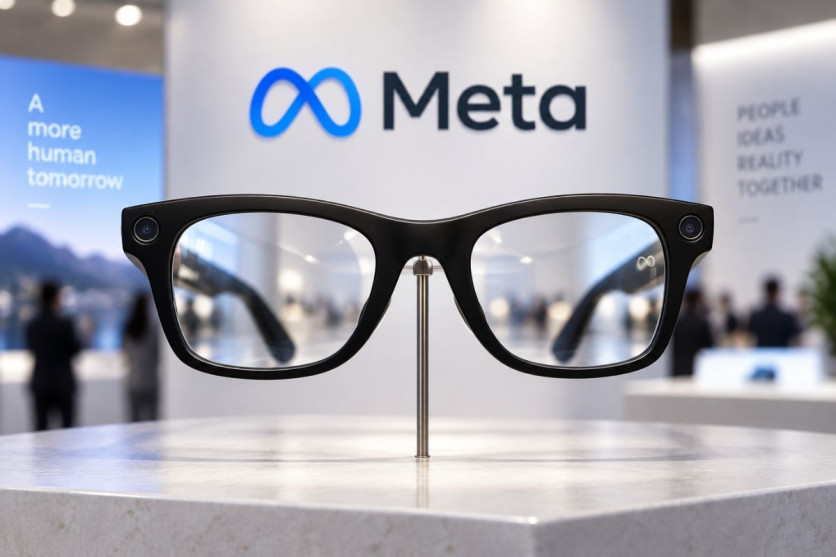
A woman who was secretly filmed at work by a customer wearing Meta AI Glasses says she still feels uneasy around people wearing glasses, after footage of the interaction attracted nearly five million views online.
Michelle De Jager said she had no idea she was being recorded when two men approached her during an early morning shift. The incident happened earlier this year, and the video was later shared across multiple social media platforms. De Jager said she received the footage from people she had not spoken to in about a decade.
'I Shouldn't Be Filmed without Consent'
De Jager told STV News she remembered being approached by two men who asked her 'quite odd questions'.
After the footage circulated, people asked why she had not noticed the glasses. She said: 'Because I didn't know at the time the glasses were a thing.'
'It was an early morning shift, I'd gotten ready in about five minutes, and then I'm being posted online – obviously not feeling my best, which I wouldn't do myself – so it felt a bit uncomfortable that somebody else has done that for me,' she told STV.
De Jager said some comments focused on her appearance.
'That's my workplace. I shouldn't be filmed without consent.'
She described the experience as 'a bit like an invasion of privacy' and said it had changed how she viewed customers wearing glasses.
'If anybody approached wearing glasses, I'd think: "Am I being filmed right now?". I still to this day feel a bit uneasy when someone asks me for anything.'
STV said De Jager is among a growing number of workers in supermarkets, coffee shops and fast-food restaurants who have been filmed and posted online.
Meta says its AI glasses have a bright white light, known as a capture LED, that flashes when a photo or video is being recorded. The company says the indicator cannot be turned off and that covering it automatically disables the camera. Meta has also introduced additional safeguards to detect physical tampering with or destruction of the indicator.
However, people have been sharing ways online to get around the recording indicator, raising questions about how effective the safeguard is at protecting people who encounter the glasses. Meta says it works to remove advertisements, posts and Marketplace listings promoting ways to tamper with the indicator.
Growing Concerns over Meta AI Glasses
De Jager's experience comes amid wider concerns about the use of wearable cameras in public spaces. STV reported that several organisations have taken action to ban Meta's glasses, including Comic-Con events.
Ferry operator CalMac separately suspended public visits to the bridges of its vessels after a passenger filmed in a restricted area without permission using smart glasses. The controversy has also reached the Scottish Parliament, where calls have been made to restrict the devices amid privacy and security concerns.
Employers Face Stronger Harassment Duties
The incident also raises questions about how employers can protect staff from unwanted behaviour by customers, particularly as new workplace harassment protections have come into force across Great Britain.
Since 30 October 2026, changes introduced by the Employment Rights Act 2025 have strengthened employers' responsibilities in two important ways. They must now take 'all reasonable steps', rather than simply 'reasonable steps', to prevent sexual harassment of employees. They must also not permit harassment of employees by third parties, including customers and clients.
The third-party harassment provision covers harassment under the Equality Act 2010, including sexual harassment and harassment related to protected characteristics, with certain exceptions. An employer is considered to have permitted third-party harassment only if it occurs in the course of an employee's work and the employer has failed to take all reasonable steps to prevent it.
However, the changes do not mean that every instance of covert filming automatically constitutes harassment. Whether the conduct falls within the Equality Act's harassment provisions depends on the circumstances.
Employment lawyer Liam Entwistle, a partner and employment law specialist at Wright, Johnston & Mackenzie LLP, said some businesses may not have prepared for customers recording staff.
'It's the tip of the iceberg, and I think a lot of the things you're seeing now are employers who are being caught cold because they haven't had a chance to put in place the risk assessments and the discussions, the signage, taking the steps that they need to take,' he told STV.
His comments highlight the challenges facing businesses where employees regularly interact with members of the public and may have little control over who records them.
The creators who posted De Jager's video did not respond to STV's request for comment.
In a statement to STV, Meta said: 'The people who use them and those around them need to trust them.'
Technology's Benefits and Risks
While concerns about privacy and unwanted recording continue to grow, some visually impaired users say the glasses can make a significant difference to their daily lives.
David Cox, who is registered blind, told STV the technology had been 'life-changing', allowing him to find items and read a newspaper.
'If they banned them, I would be back to square one,' he said.
His experience highlights the other side of the debate. The same technology that can give visually impaired people greater independence can also make others uncomfortable when they encounter its cameras without knowing they are being recorded.
As wearable cameras become more common, the challenge will be finding ways to protect people's privacy without taking away technology that can provide meaningful benefits to those who rely on it.


