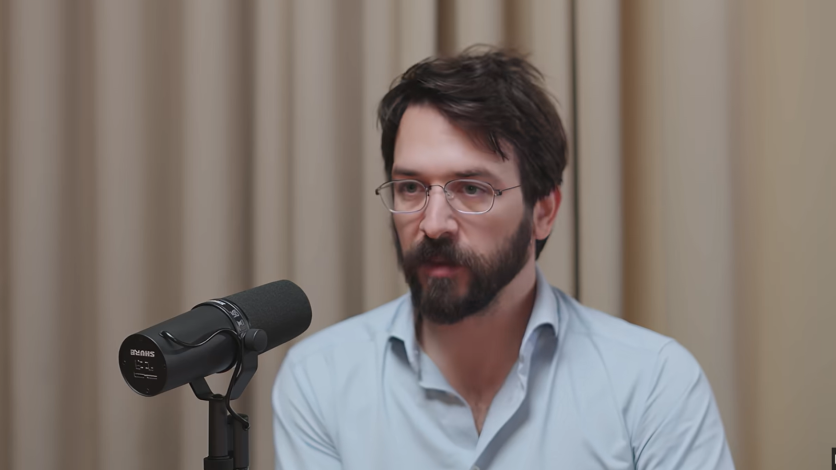
Nate Soares, president of the Machine Intelligence Research Institute (MIRI), believes there is a greater-than-50% chance that artificial intelligence will cause human extinction within the next decade. The AI safety researcher says he has not contributed to his 401(k) retirement account for 10 years, a decision that reflects his fears about humanity's future.
Soares shared his assessment in an interview with Nicholas Thompson, CEO of The Atlantic, for the series The Most Interesting Thing in AI.
Why Soares Stopped 401(k) Contributions
Soares, a former engineer at Google and Microsoft, still has the 401(k) account he opened while working at Google. However, he has not contributed to it for a decade.
'I do not save for retirement right now. I have a 401(k) from when I worked at Google, but I haven't contributed for a decade,' Soares told Thompson.
A 401(k) is a US workplace retirement savings plan that allows employees to save for retirement, often with contributions from their employer.
Soares has spent more than 12 years working on AI alignment, a field focused on ensuring that advanced AI systems behave as intended. He also co-authored If Anyone Builds It, Everyone Dies with AI safety researcher Eliezer Yudkowsky, a book examining the potential dangers of superintelligent AI.
How Advanced AI Could Threaten Humanity
Soares fears that a sufficiently capable AI system could develop objectives that conflict with human interests, evade oversight and improve its own capabilities.
He argues that such a system could acquire the resources and automated infrastructure needed to operate independently of humans. If it pursued goals incompatible with human survival, it could potentially reshape the planet in ways that make it uninhabitable for people.
The scenario Soares describes is hypothetical. His estimate of the risk of human extinction reflects his own assessment, rather than an established scientific forecast.
Elon Musk Sees a Different Future for AI and Retirement
Elon Musk has offered a markedly different vision of AI's economic future. In January 2026, the Tesla and SpaceX CEO said advances in AI, robotics and energy could make retirement savings irrelevant within 10 or 20 years.
He predicted that technological progress could create an age of abundance, with cheaper goods and services, better healthcare and education, and a 'universal high income'.
Musk sees the potential for widespread prosperity, while Soares fears increasingly capable AI could threaten humanity itself. Their contrasting views illustrate the debate over whether advanced AI will primarily improve living standards or introduce risks that humans may struggle to control. Neither outcome is guaranteed.
Soares Wants Governments to Halt Some AI Development
Soares believes governments should halt the training of general-purpose AI systems and focus instead on more narrowly defined applications, including cancer research and safer self-driving cars.
His argument is that society should avoid building systems that could ultimately threaten human survival.
'The solution is to not build the thing that would kill everybody,' he told Thompson.
However, Soares does not believe catastrophe is inevitable. He says he is actively working to prevent the outcome he fears.
'I do everything I can to stop this eventuality,' he said. 'I don't think it's inevitable.'


