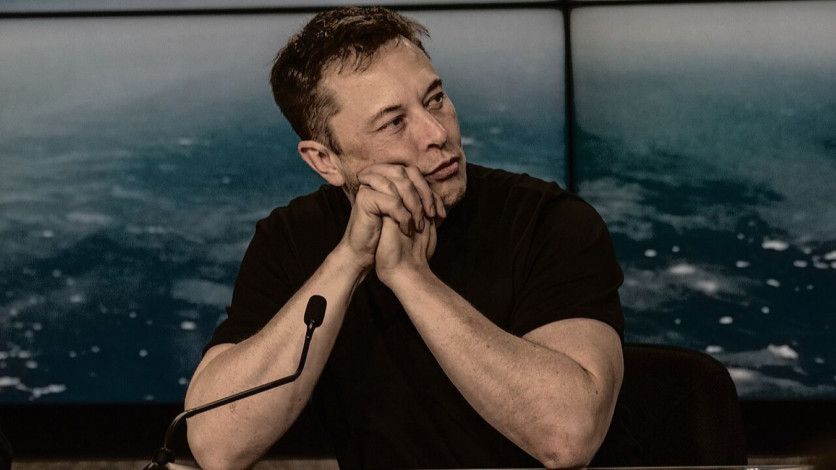
Elon Musk predicts that artificial intelligence could make working for a living optional within the next decade. But if AI and robots replace human jobs, who will pay the bills?
Speaking to The Economist at Tesla's Texas Gigafactory on 23 July 2026, Musk outlined a future where machines could produce enough goods and services to make traditional employment unnecessary. He also suggested that governments could provide payments to people who lose their wages.
Musk imagines a world where people work because they want to, rather than because they need a salary.
Yet his prediction leaves a pressing question: how will households pay their mortgages, rent, electricity bills and other expenses if their jobs disappear before that future arrives?
Elon Musk Says Working Could Become a Choice, Not a Necessity
During his 23 July interview with The Economist, editor-in-chief Zanny Minton Beddoes asked Musk what the world might look like in ten years.
He predicted that AI could exceed humanity's combined intelligence within roughly five years. He also envisaged a future where AI handles intellectual tasks while humanoid robots perform physical work.
Musk said he believed work would eventually become optional.
He compared employment to gardening, explaining that people might continue working for enjoyment or personal satisfaction. Just as someone might grow vegetables despite being able to buy them, people could choose to work without depending on it for survival.
He also predicted that money would no longer matter by 2036.
Musk argued that AI and robots could produce an extraordinary abundance of goods and services, reducing the financial constraints people face today. However, he did not establish a firm deadline for when work would become optional.
Producing goods cheaply is not the same as ensuring everyone can afford them. Even if robots dramatically reduce manufacturing costs, households would still need access to food, housing, electricity and other essentials.
Who Will Pay Your Bills If AI Takes Your Job?
Musk offered a possible answer when Beddoes questioned how people displaced by automation would survive. He suggested a 'universal, high income', envisioning financial support that would allow people to live without traditional employment.
'I think that the treasury should just simply issue people checks,' Musk said.
His argument centres on productivity.
If AI and robots dramatically increase the supply of goods and services, he believes governments could create more money without necessarily causing inflation. He even predicted that deflation could become a bigger economic concern if production grows faster than the money supply.
However, Musk did not explain how such payments would be introduced.
He provided no specific amounts, eligibility requirements or implementation timetable. His suggestion is not an established government policy. It also leaves unanswered how workers would survive if wages disappear before AI-driven abundance becomes a reality.
Automation also has practical limits.
Housing prices depend partly on land availability, local demand and planning restrictions. Electricity and healthcare require infrastructure and investment. Increased production could lower some prices without eliminating households' monthly expenses.
AI Could Transform Millions of Jobs, Research Shows
Research suggests AI could substantially reshape employment, although there is no consensus that paid work will become unnecessary within the next decade.
A 2025 joint study by the International Labour Organization and Poland's National Research Institute found that one in four jobs worldwide was potentially exposed to generative AI. However, the researchers concluded that existing occupations were more likely to change than disappear entirely.
The findings measure potential exposure, not confirmed job losses.
The World Economic Forum's Future of Jobs Report 2025 projected that technological advances and broader economic changes could displace 92 million jobs by 2030 while creating 170 million new ones.
That represents a potential net gain of 78 million jobs. However, these projections cover several economic forces beyond AI alone.
Those figures suggest a more complicated future than one without work.
New opportunities may emerge, but displaced employees will not necessarily have the skills needed to fill them immediately. Someone who loses their job in 2028 cannot pay their bills with the promise of an income system that might not exist by 2036.
A Future Without Jobs Could Still Have Winners and Losers
There is another question Musk's prediction leaves unresolved: who will own the AI systems and robots producing all this abundance?
Companies controlling advanced technology could benefit financially as automation expands. Whether those gains reach ordinary workers would depend on wages, prices, taxation, ownership and government policy. Greater productivity alone does not guarantee that displaced employees will share in the resulting wealth.
A universal income scheme could help people survive without traditional employment, but Musk has not presented a detailed programme for delivering his proposed future. He acknowledged that the transition could be difficult, describing it as 'a bumpy road'.
For now, working only when people want to remains a prediction rather than an economic reality. AI may eventually make goods and services dramatically cheaper, but that does not automatically mean people will no longer need wages.
Until there is a credible way to replace lost income, households will face the same problem every month: the bills will keep arriving, whether they have a job or not.


