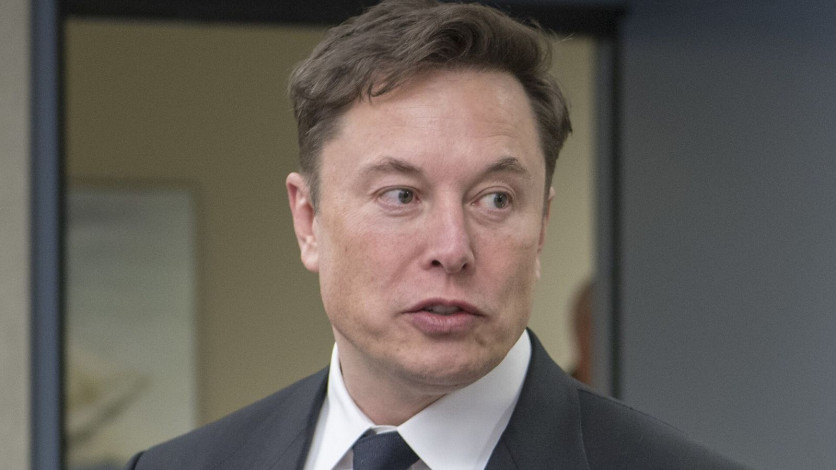
Anthropic has proposed allocating 5% of its shares to a new public-benefit fund, subject to shareholder approval, prompting Elon Musk to suggest a different way of distributing the wealth generated by artificial intelligence.
The company behind Claude AI announced the proposed Anthropic Public Benefit Fund on 18 October, outlining plans to use its equity to support projects intended to benefit the public.
Musk responded on X: 'I recommend giving the shares directly to the public.' He followed up on 19 October, writing: 'This is what I will be doing.' In the posts, Musk did not specify which shares he meant, who would receive them or when any distribution might take place.
The exchange comes as the AI industry faces questions about who should benefit financially from increasingly capable technology, with Anthropic proposing a dedicated fund and Musk favouring direct ownership for individuals.
I recommend giving the shares directly to the public
— Elon Musk (@elonmusk) October 18, 2026
How Anthropic's Public Benefit Fund Could Work
Anthropic says the proposed fund would be established as a wholly owned limited liability company, rather than a conventional charitable organisation. At the time of the announcement, the company had not published full details of the fund's governance, beneficiaries or distribution process.
Under the proposal, the board could add another 2% of Anthropic's shares for every 50% increase in the company's value above a baseline that has not yet been disclosed. These additions would be discretionary rather than automatic. Anthropic says it will provide further information about the structure and valuation milestones in the coming months.
The fund could support established non-profit organisations, make direct payments to particular groups and finance responses to the effects of AI on employment. Anthropic has also ruled out using the fund's equity for lobbying or political contributions in the United States or elsewhere.
The company has already committed $200 million (approximately £150 million) to research and initiatives addressing AI's potential labour-market effects. Its latest proposal is intended to give it greater flexibility to support different forms of public assistance as the technology develops.
The employment question has an economic basis. In a January 2024 analysis, the International Monetary Fund estimated that almost 40% of jobs worldwide were exposed to AI, rising to around 60% in advanced economies.
Exposure does not necessarily mean job losses: the IMF said some workers could benefit from AI-assisted productivity, while others could face reduced demand for their work, lower wages or fewer opportunities.
Anthropic's approach also builds on existing commitments. Its co-founders pledged to donate 80% of their equity holdings when the company was established, while an employee programme matches shares pledged for donation. Around half of its employees participate, according to the company.
Anthropic estimates that these arrangements, combined with the proposed fund, would dedicate roughly 20% of its shares to public-benefit purposes, excluding possible future additions.
Elon Musk's Proposal Raises Questions About Direct Share Distribution
Giving shares directly to individuals would differ from placing equity in a fund that can finance non-profits, make targeted payments or support research. The practical consequences would depend on who qualified to receive shares, how ownership was allocated and whether recipients could sell their holdings.
Direct distribution could give recipients ownership of an asset that may rise or fall in value. However, it would also raise questions about eligibility, access, administration and how any distribution would be funded.
Without further details, it is not possible to assess how Musk's suggested approach would work in practice or how it would compare with Anthropic's proposal.
The announcement comes as Anthropic prepares for a possible stock-market listing. Reuters reported on 14 October that the company had told investors its third-quarter revenue reached $16.8 billion (approximately £12.6 billion).
It was also reported that the anticipated IPO was expected after the US midterm elections. The listing would put the company's governance commitments under greater scrutiny from public-market investors as it pursues commercial growth.
Anthropic is organised as a public benefit corporation, a structure that allows its directors to consider a stated public purpose alongside shareholders' financial interests. It also has a Long-Term Benefit Trust intended to help oversee the company's mission.
The proposed fund would provide an additional mechanism for directing some of its ownership towards public causes.
The key question is how these commitments will be governed and translated into measurable public benefits. Anthropic has yet to disclose its complete governance arrangements or the criteria for choosing beneficiaries.
Musk has not set out the mechanics of his preferred approach either. The eventual impact of either model would depend on how shares or funds are allocated, who makes those decisions and how the outcomes are measured.


