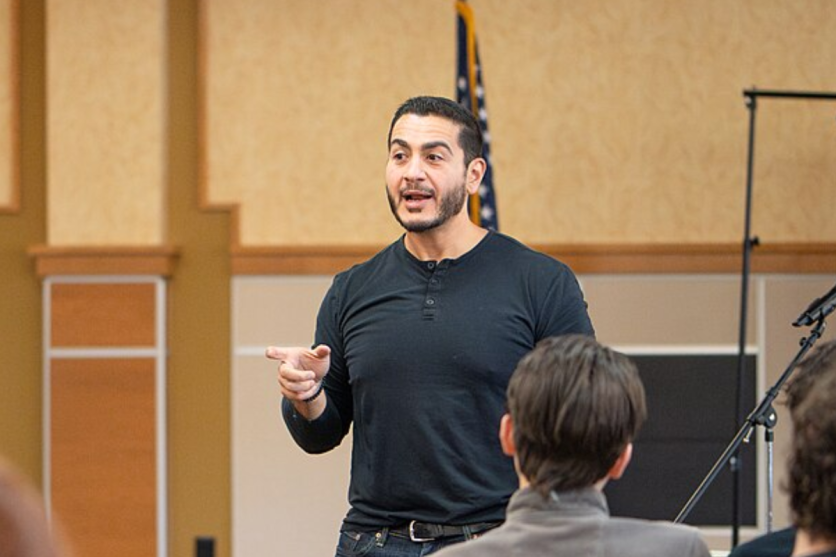
Michigan senator-elect Abdul El-Sayed has accused US President Donald Trump of prioritising the stock market over national security following Jensen Huang's reinstatement as NVIDIA chief executive.
In a 25 November post on X, El-Sayed questioned Trump's intervention and the chipmaker's growing influence over the American economy.
The criticism followed NVIDIA's decision on 23 November to reinstate Huang as president, chief executive and board member. Trump subsequently acknowledged his involvement during a CNBC interview, saying he had spoken to the company's directors and persuaded them to bring Huang back.
El-Sayed wrote that Trump 'clearly chose the stock market over national security' and was 'all but admitting' that NVIDIA is 'too big to fail'. He urged Congress to examine whether one corporation and its chief executive should wield such considerable economic influence.
Abdul El-Sayed Questions Trump's Intervention in NVIDIA
NVIDIA announced on 8 November that its board had launched an independent investigation following reports that Huang had been targeted by a foreign intelligence effort. Huang resigned on 12 November, with chief financial officer Colette Kress appointed interim chief executive.
In its 23 November announcement, NVIDIA said its board unanimously supported Huang's return after receiving input from senior US government officials. Directors concluded that his reinstatement posed no national security risk.
However, the company confirmed that its independent investigation would continue. It also announced the establishment of a National Security and Export Control Committee.
Trump's 2025 annual financial disclosure also listed NVIDIA shares across multiple investment accounts. One holding was valued between approximately $5 million (€4.6 million and £3.8 million) and $25 million (€22.8 million and £19.1 million).
The White House has said independent financial institutions manage Trump's investment portfolio. The disclosure does not establish that his financial interests influenced his intervention.
El-Sayed also questioned the potential consequences of a serious disruption to NVIDIA's operations, asking about the 'ripple effects for the economy as a whole'. He called for measures to protect the wider economy against such risks.
Abdul El-Sayed Calls for Greater Democratic Oversight of AI
El-Sayed's criticism reflects his broader concerns about artificial intelligence (AI) and corporate influence. During a July 2026 interview with POLITICO's Dasha Burns, he criticised technology companies for encouraging communities to compete for data centre developments.
In a separate January interview with WDET, El-Sayed said Michigan had received 15 data centre proposals in the preceding year. He raised concerns about electricity costs, water resources and the benefits these developments offered residents. He also criticised DTE Electric's involvement in a proposed data centre in Saline Township, alleging inadequate community consultation.
The Michigan Public Service Commission conditionally approved electricity-supply contracts for the facility in December 2025. Although it held a public comment forum, it did not conduct the formal contested-case hearing requested by Michigan Attorney General Dana Nessel.
El-Sayed has advocated federal regulations protecting utility customers from additional costs and safeguarding local water supplies. His proposals also include closed-loop water systems, union jobs and community benefits agreements, backed by enforceable penalties.
Under his AI Under Democracy policy platform, El-Sayed supports Senator Bernie Sanders' proposal for a 50% public ownership stake in major AI companies.
He wants to extend that proposal by requiring a majority of board members at frontier AI companies to be publicly appointed or democratically elected. He argues that democratic oversight would ensure technological advances serve the public interest rather than primarily benefiting wealthy corporate executives.


