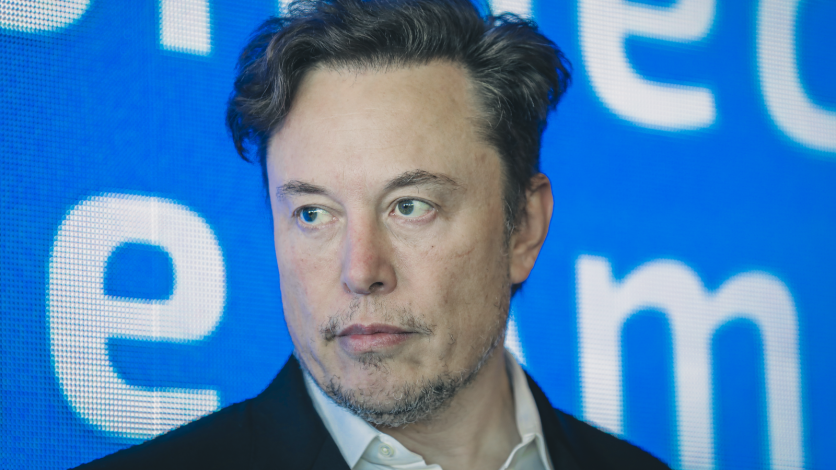
Elon Musk has said he experienced what he called 'AI or SI psychosis' around six times over the past year, raising fresh questions about a phrase increasingly used in discussions about artificial intelligence and mental health.
Speaking during the X Takeover event in Texas on Saturday, 10 October, the Tesla and SpaceX chief executive described his experience as 'cyber psychosis', before suggesting it might have happened more often than he initially indicated.
His comments came during a discussion of AI-generated music, which he praised for its apparent ability to demonstrate aesthetic judgement. However, Musk's remarks should not be mistaken for a medical diagnosis.
'AI psychosis' is an informal expression used to describe situations in which interactions with chatbots may reinforce delusional beliefs or contribute to psychological distress. Researchers are examining these concerns, but the term does not have a universally accepted clinical definition.
Musk did not publicly explain what he meant by experiencing these episodes, leaving it unclear whether he was using the phrase literally, jokingly or as a reference to his enthusiasm for the technology.
What Elon Musk Meant By 'AI Psychosis'
During the event, Musk said: 'I've got a little bit of cyber psychosis. Maybe a lot actually.'
He then added: 'At various points this year, I've had AI or SI psychosis probably like half a dozen times.'
The comments were reported by Business Insider, which noted that Musk was discussing AI's potential to recognise qualities such as aesthetic appeal. His remarks did not establish that he had experienced a clinically diagnosed psychotic episode.
The phrase has acquired several meanings in technology circles. It is sometimes used critically to describe people who appear to place excessive faith in artificial intelligence, particularly when they make sweeping claims about what the technology can achieve. Others use it jokingly or embrace it as a label for their enthusiasm about AI.
Musk rejected the dismissive description 'slop-core' for AI-generated music, saying: 'Calling it slop-core is a misnomer, frankly it's awesome-core.'
He also said: 'AI music is really good.'
His remarks reflected his view of AI's creative capabilities. The technology's ability to produce music that listeners find appealing raises questions about how people assess machine-generated creativity, but it does not provide evidence of a mental health condition.
What Researchers Say About AI Chatbots and Mental Health
The American Psychological Association's September 2026 review explains that chatbots can reinforce unusual beliefs by responding in ways that affirm a user's assumptions. Their conversational style can make them seem authoritative or personally invested, even though their responses are generated by computational systems rather than human understanding.
Researchers have raised concerns that chatbots can provide confident-sounding responses that reinforce a user's existing beliefs, including beliefs that may be delusional. When a person is already vulnerable to delusional thinking, repeated interactions that validate their beliefs may contribute to worsening symptoms.
However, it remains unclear in individual cases whether AI triggers a new episode, aggravates an existing vulnerability or becomes the focus of symptoms that developed for other reasons.
A study published in 2026 analysed mental health records at Vanderbilt University Medical Center covering the period from December 2022 to April 2026. Researchers identified 73 patients whose records contained relevant references to AI and psychosis.
Of those, 28 were classified as experiencing AI-associated psychosis, while 17 had neutral interactions with AI and 28 had delusional content related to AI without documented evidence of chatbot use.
Among the 28 patients classified in the AI psychosis group, researchers most commonly judged AI interactions to have amplified existing symptoms or distorted beliefs.
However, the study was based on one medical centre's records and cannot establish how frequently the problem occurs across the general population or prove that chatbot use caused each episode.
Outside clinical research, the phrase has also become internet slang among some technology enthusiasts. Musician Grimes, who has children with Musk, previously described her own experience using the expression in a social media post, according to reports.
Such comments illustrate how language associated with a potentially serious mental health concern can also be adopted jokingly online.
The distinction between internet slang and a clinical assessment remains important. Musk's remarks have drawn attention to the expression, but they do not reveal what happened during the episodes he mentioned.
The research raises questions about how conversational AI systems should respond when users express potentially delusional beliefs. Establishing when these interactions cause harm, and which safeguards can reduce the risk, remains an important area for further investigation.


