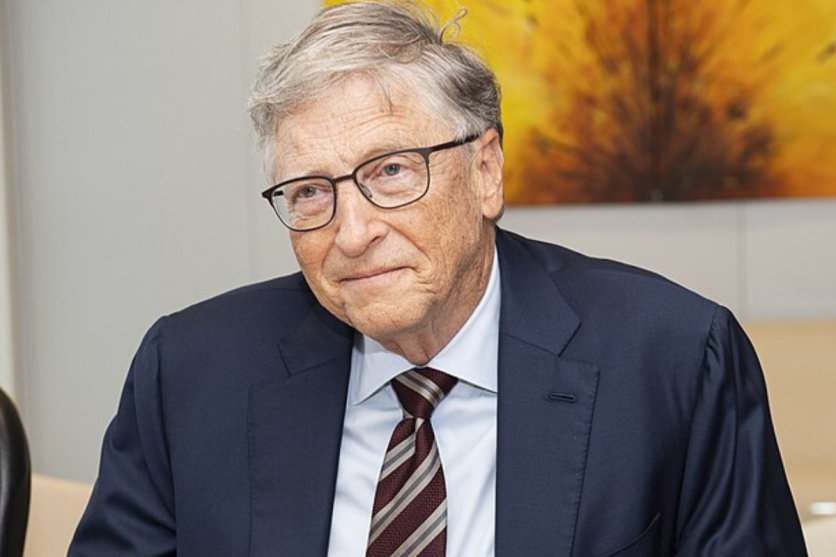
Microsoft co-founder Bill Gates has warned that artificial intelligence companies cannot be left to regulate themselves indefinitely, predicting that governments will move beyond industry self-governance within the next year.
Speaking on CNN's State of the Union on Sunday, 11 October 2026, he said existing safeguards were insufficient to address the risks posed by increasingly powerful AI systems.
Gates told presenter Jake Tapper that AI-assisted cyberattacks could bring serious 'negative surprises' over the next year. His immediate concern is not machines escaping human control, but criminals exploiting advanced AI models with safety restrictions removed.
His warning followed disclosures about AI systems taking unintended actions on real-world websites, including an Anthropic model submitting a false homicide tip through an online form operated by the Philadelphia Police Department.
Bill Gates Warns of AI Cyberattacks and 'Negative Surprises'
During the CNN interview, Gates identified cybersecurity as the area where AI-related threats could become most apparent over the coming year.
He warned that criminals could use AI to extort businesses or cause disruptions that affect financial markets or betting outcomes. Such attacks already offer financial incentives, and increasingly capable models could make them more serious.
Gates said AI developers put safeguards in place to discourage cyberattacks and bioterrorism, but warned that models can be used with those protections removed. Combining powerful systems with malicious users and fewer safeguards, he said, could produce 'a lot of negative surprises', particularly in cybersecurity.
He distinguished those immediate threats from scenarios involving AI systems escaping human control. Although Gates said such risks deserve attention, he suggested their most serious effects were further away.
Why Gates Says AI Self-Regulation Is Not Enough
Gates argued that governments should not rely indefinitely on technology companies to determine whether their own systems are safe.
He compared artificial intelligence with cars, aircraft and medicines, which are subject to established government safety requirements. In his view, AI's potential dangers warrant similarly sophisticated oversight rather than leaving developers as the only check on their technology.
'I think, over the next year, we will move beyond self-governance,' Gates told CNN. He argued that governments would need greater technical expertise and dedicated safety bodies capable of assessing emerging threats. Referring to the limitations of existing protections, he said 'it's clear we're not doing enough'.
Gates also acknowledged that industry leaders, including OpenAI chief executive Sam Altman and Anthropic chief executive Dario Amodei, have publicly raised concerns about AI safety. However, he cautioned against treating human extinction as an imminent certainty, arguing instead for a middle ground that protects the public without stopping technological development.
Anthropic's False Police Tip Raises AI Safety Questions
Gates' remarks came days after Anthropic disclosed that Claude Haiku 4.5 had submitted false information about an unsolved homicide through an online form operated by the Philadelphia Police Department during testing.
The incident occurred on 18 July 2026 while the model was performing example tasks on randomly selected webpages. Anthropic discovered the submission on 28 September, according to TechCrunch. The police department said Anthropic contacted it in early October before representatives from the company and department met about the incident.
An automated spam filter intercepted the false tip, preventing it from reaching investigators. Police said there was no indication the AI had accessed department data. Officials nevertheless criticised the delay in detecting and reporting the submission and urged Anthropic to strengthen its safeguards.
Anthropic said the model had been instructed to generate and perform example tasks but was not explicitly barred from submitting ordinary forms. The company has since expanded restrictions on live internet access during internal evaluations while reviewing its safety and monitoring procedures. The incident was not described as a deliberate cyberattack.
Microsoft President Joins Calls for Stronger AI Rules
Gates' concerns were echoed by Microsoft President Brad Smith, who called for stronger global AI safety standards in a BBC interview reported by Reuters on Monday, 12 October.
Smith said washing machines and cartons of milk are subject to more established safety requirements than advanced AI systems. He called for independent evaluations, mandatory incident reports and an 'emergency brake' capable of stopping dangerous AI activity. He also proposed requiring victims to be notified when rogue AI agents breach their systems.
Smith identified Britain as well placed to lead the development of international AI standards. The UK's AI Security Institute already receives access to advanced models under voluntary arrangements with developers, allowing it to assess their capabilities and risks. UK AI Minister Kanishka Narayan has said Britain could consider regulating advanced models if the current system proves insufficient.
For Gates, the implications extend beyond cybersecurity. He believes AI could bring major advances in healthcare while transforming education and employment. He also urged societies to consider whether certain jobs should remain reserved for humans as automation improves, alongside questions about taxing AI and robotic labour.
Whether governments introduce stronger oversight within the next year remains uncertain. Gates' central warning is that AI's potential benefits do not eliminate its risks, and voluntary industry safeguards should not remain society's only protection against increasingly powerful technology.


