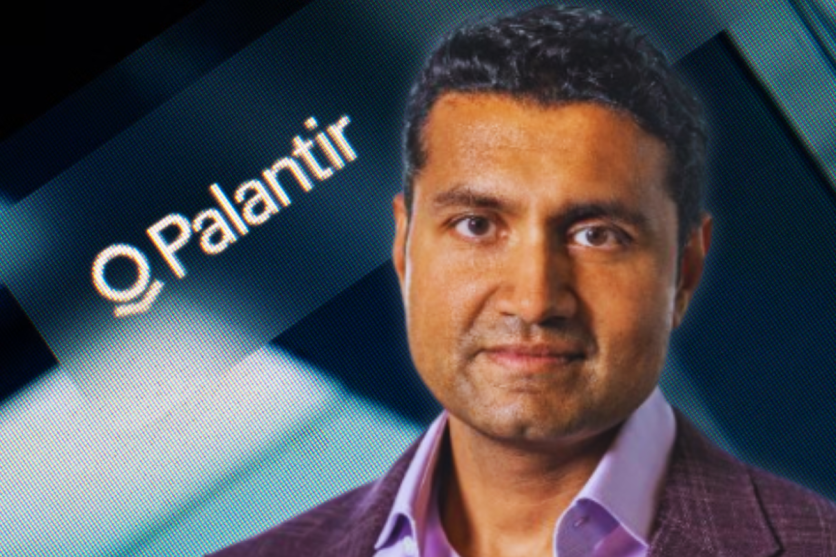
Palantir chief technology officer Shyam Sankar has accused some artificial intelligence researchers of treating artificial general intelligence (AGI) like a 'machine God', describing what he sees as an almost religious belief in the technology as a 'mass psychosis'.
In an interview recorded on Friday, 9 October, and partly aired on CBS News' Face the Nation on Sunday, 11 October 2026, Sankar argued that extreme predictions about AI either saving or destroying humanity were distracting attention from its practical benefits, risks and human accountability.
He also made the unverified claim that some AI researchers had started smoking cigarettes to demonstrate their confidence that the technology would eventually cure cancer. Presenter Margaret Brennan immediately questioned the assertion, which Sankar did not substantiate.
His remarks highlighted a wider disagreement over AI safety, particularly whether warnings about catastrophic consequences help researchers manage emerging risks or overshadow more immediate questions about accountability, regulation and oversight.
Why Palantir's CTO Calls AGI a 'Machine God'
During the CBS News interview, Sankar argued that some researchers had elevated AGI from a technological ambition into something resembling religious belief.
AGI generally refers to AI capable of performing a broad range of intellectual tasks. However, researchers have yet to agree on a universally accepted definition or benchmark for determining when such intelligence has been achieved.
Sankar singled out effective altruism and criticised what he described as its influence on AI safety discussions, arguing that the movement places excessive emphasis on catastrophic scenarios.
He further claimed that roughly 2,000 AI researchers work in America and that the vast majority share an effective altruist worldview. He provided no supporting evidence for either assertion during the interview, leaving those claims unverified.
Sankar Claims AI Researchers Are Smoking Because AI Will Cure Cancer
Sankar's most unusual allegation concerned researchers supposedly taking up smoking to signal their confidence in future medical breakthroughs.
He claimed that some AI researchers had started smoking to demonstrate their belief that the technology would eventually cure cancer. Brennan immediately challenged the assertion, responding: 'What? That makes no sense.'
Sankar did not identify any researchers or provide evidence that such behaviour was occurring. His comments therefore remain an unverified allegation rather than evidence of an emerging trend within the AI industry.
The health risks of smoking are well established. According to the World Health Organization, tobacco use is a major risk factor for cancer, cardiovascular disease and respiratory disease.
AI Safety Researchers Warn of Catastrophic Risks
Sankar also questioned warnings from researchers who believe increasingly powerful AI systems could pose severe or even existential risks to humanity.
He specifically referenced Jacob Coxon, a former Anthropic engineer who has publicly raised concerns about the industry's approach to developing advanced AI.
At a New York City Council hearing on 5 October, Coxon warned that AI companies were developing increasingly capable systems without sufficient transparency and safeguards. According to the Associated Press, Coxon said that on the current trajectory, humanity was more likely than not to lose control of advanced AI and that the outcome 'could end in human extinction'.
Sankar characterised such warnings as part of a broader ideological outlook and argued that predictions about catastrophic AI risks should be weighed against empirical evidence. However, researching severe AI risks does not necessarily amount to treating human extinction as inevitable. Google DeepMind's Frontier Safety Framework, for example, evaluates potentially dangerous capabilities and sets out safeguards intended to mitigate severe risks.
Palantir CTO Says Humans Must Remain Responsible for AI
Despite his criticism of catastrophic predictions, Sankar rejected the suggestion that artificial intelligence should operate without safeguards.
He argued that existing laws provide a significant starting point for determining liability when AI products cause harm. Under the distinction he outlined, technology companies could be responsible for defective products, while people who misuse properly functioning systems could be held accountable. He acknowledged that additional rules might still be needed.
Sankar also supported an incident-response and reporting regime that would give authorities greater visibility into AI safety testing before products are launched. He favoured using existing regulatory institutions, pointing to sector-specific oversight in areas such as medicine, transport and defence.
Public concern about AI remains substantial.
During the interview, Brennan cited CBS polling showing that 50% of respondents believed AI would create more problems than it solves, compared with 29% who expected it to solve more problems than it creates. Another 21% were unsure, while 45% supported government restrictions on AI use and development.
For Sankar, the central issue is whether society treats AGI as an inevitable force or as technology whose development humans can still influence. While his claims about researchers' behaviour and beliefs remain unsubstantiated, his broader argument places accountability, practical safeguards and human control at the centre of the AI safety debate.


