An ICE agent created a case-database record on a Maine observer's spouse, and it later led to a US border stop, court filings made public on 2 October 2026 allege.
Carlyn Williams was not at the arrest; her spouse, Polyxenia Pantos, photographed the scene from at least 10 feet away. The couple were held at the Jackman crossing for about an hour on 16 March 2026, the plaintiffs' motion says.
How a Number Plate Led to Carlyn Williams's 16 March 2026 Border Stop
In Hilton v. Noem, a First Amendment retaliation case in federal court in Maine, the plaintiffs' injunction motion says an agent identified only as J.C. used the plate of the car Pantos was driving on 20 January 2026 to identify its owner, Williams.
A LexisNexis law-enforcement database, Accurint, then showed Pantos lived at her address. J.C. then created records on Williams and her car in Investigative Case Management (ICM).
ICM is the case system of Homeland Security Investigations, the investigative arm of US Immigration and Customs Enforcement (ICE). Plaintiffs say J.C. made the records after a colleague said she was not at the scene.
A 2016 DHS privacy assessment says ICM continually publishes subject records to the TECS system of US Customs and Border Protection (CBP), where they can serve as lookout records for border screening. The motion says Williams's records require secondary inspection through 20 January 2027.
Returning from Quebec on 16 March 2026, the couple had their phones taken and car searched, the motion says. A CBP report found no evidence of unlawful conduct, and the public record does not identify which flag triggered the stop.
The same assessment warned that records on people who are not investigation targets may cause 'difficulties at ports of entry'.
DHS Denies a Terror Database as Filing Cites Six ICM Records
Todd Lyons, then acting ICE director, wrote in a letter dated 21 April 2026 that ICE keeps no database of US citizens protesting its activity, though information gathered at encounters is kept as an official record.
A DHS spokesperson has said there is no database of 'domestic terrorists' run by the department.
The motion does not ask the court to find that one exists.
It seeks an order archiving Williams's ICM and TECS records and an injunction against watchlist threats and home drive-bys in Maine.
J.C. testified that he regarded one observer as a threat to officer safety, the motion says. It counts six records he made on observers.
Palantir's ICE Case System Meets NHS England's February 2027 Break Clause
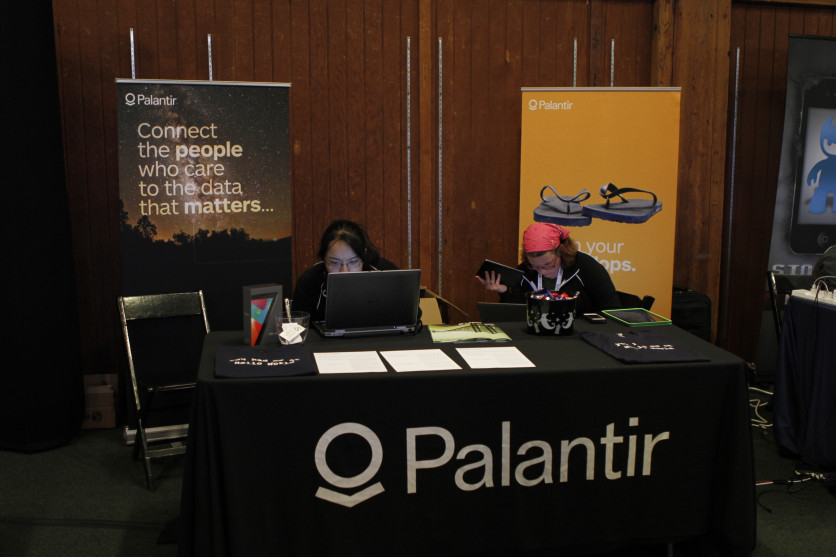
ICE's procurement record indicates ICM was built by Palantir, the US data-analytics company, under a 2014 contract. The motion attributes the records to J.C., and neither court filing names Palantir.
Palantir said in 2025 that it does not operate its customers' systems, access their data or decide how it is used.
In the UK, NHS England's Federated Data Platform, built under a reported £330m ($443m) Palantir-led contract awarded in 2023, approaches a break clause in February 2027.
On 3 June 2026 the Commons Science, Innovation and Technology Committee urged ministers to use it. The British Medical Association cited Palantir's ICE ties on 27 January 2026 in urging doctors to limit its use.
Hundreds of protesters gathered outside Palantir's London headquarters on 1 October 2026.
Nothing in the Maine filings alleges that NHS or UK police systems do anything similar, and ICM and the platform are separate products.
Two Dates: Williams's 20 January 2027 Lookout and a Pending Ruling
Judge John A. Woodcock Jr. denied emergency relief on 23 March 2026. No ruling on the injunction motion had been reported by 7 October 2026.
An archived record stays in the database but stops border alerts, the motion says.


