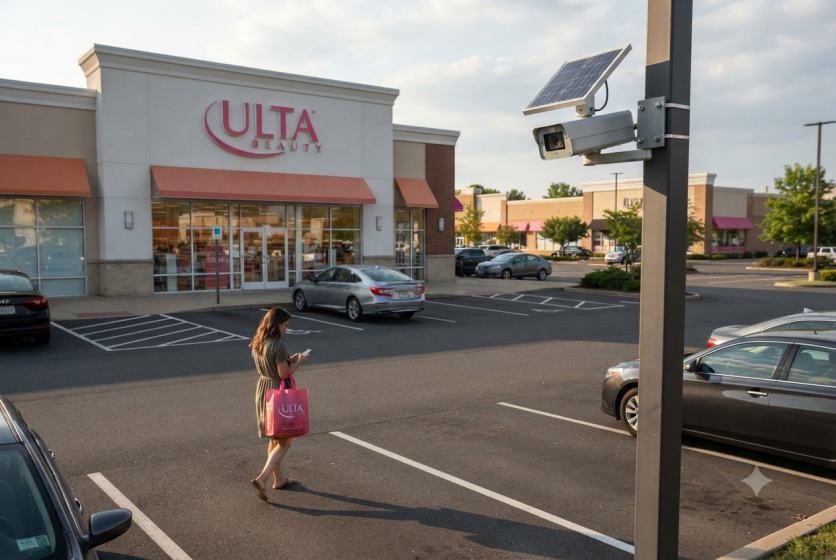
Police investigating a $25 package theft in Colorado searched roughly a month's worth of Flock Safety camera records to examine a woman's vehicle movements before accusing her of stealing the parcel in September 2025.
The criminal summons against Chrisanna Elser was withdrawn 18 days later after she submitted evidence that she says showed she was elsewhere when the theft occurred.
Elser is now suing Flock Safety, the towns of Columbine Valley and Bow Mar, Sgt Jamie Milliman and Police Chief Bret Cottrell. The federal lawsuit, filed on 5 October 2026, alleges unlawful searches, invasion of privacy and constitutional violations.
The case raises broader questions about how police use historical vehicle-location records and whether accessing them without a warrant violates privacy protections.
'You Can't Take a Breath' Without Police Knowing
The investigation began with a package reported stolen from a porch in Bow Mar. On 27 September 2025, Milliman visited Elser's home and issued her a criminal summons for theft.
According to ABC News, body-camera and doorbell footage showed Milliman telling Elser that police had identified her Rivian and reviewed its movements using surveillance cameras. 'We have cameras throughout the town. You can't take a breath of fresh air in or out without us knowing,' Milliman told her.
He later added: 'I wouldn't come here if I weren't 100% sure.'
Elser denied stealing the package. She acknowledged driving through Bow Mar with her husband but maintained she had not visited the property. She offered vehicle footage and phone-location records, but Milliman declined to examine them before issuing the summons, according to the recorded encounter.
Evidence Challenged Police Accusation
Elser later determined that she had been at a tailor getting fitted for a gown when the package was stolen. According to her lawsuit, she submitted vehicle-camera footage and phone-location records supporting her account. Axios reported that footage from the tailor also backed her version of events.
The complaint also describes doorbell footage showing a woman who allegedly did not resemble Elser and who left the scene on foot. Police voided the summons on 15 October 2025. It remains unclear whether another suspect was identified or charged.
Elser alleges that her employer nearly placed her on administrative leave because of the summons. Columbine Valley subsequently maintained that Milliman had a 'reasonable belief' when issuing it and received evidence clearing Elser approximately two weeks later.
According to the complaint, Police Chief Bret Cottrell reprimanded Milliman over his conduct and directed him to undertake additional training in community relations, de-escalation and interviewing. The reported discipline concerned his behaviour during the encounter rather than his alleged misuse of Flock's technology.
Flock Disputes Claims Against Its Technology
Flock Safety disputes allegations that its technology and safeguards contributed to Elser's mistaken accusation.
In a statement to ABC News, spokesman Paris Lewbel said the system accurately recorded Elser's vehicle location and maintained that law enforcement remained responsible for interpreting that information alongside other evidence. Flock said it intended to vigorously defend itself against the lawsuit.
The distinction is central to the case because Elser's complaint extends beyond the criminal accusation. It challenges how automated number-plate readers collect vehicle-location information and how police can search historical records without judicial authorisation.
According to Axios, Elser seeks unspecified damages and class-action status on behalf of Colorado vehicle owners and lessees whose number plates have been recorded by Flock cameras. She is also asking the court to require safeguards including warrants, case numbers, supervisory approval and audits for police searches. The proposed class has not been certified, and the allegations against Flock and the other defendants remain unresolved.
Flock Faces Growing Surveillance Scrutiny
The lawsuit comes amid growing scrutiny of Flock's surveillance technology and police access to historical vehicle-location records.
Reuters reported that the Atlanta-based company plans to cut approximately 270 jobs, representing about 18% of its workforce, following a voluntary buyout programme. The report cited people with direct knowledge of the plans. Flock declined to comment.
According to Reuters, Flock has raised more than $950 million and supplies cameras and software to more than 4,800 law-enforcement agencies and nearly 1,000 businesses. Its network includes about 120,000 cameras across 49 US states that automatically read number plates and record vehicles as they pass.
The legal debate intensified on 1 October when US District Judge Sara Hill ruled that a warrantless police search using Flock records in an unrelated Oklahoma criminal case violated the Fourth Amendment. Hill described the system as 'indiscriminate mass surveillance'. The decision concerned the circumstances of that case and does not establish a nationwide ban on the technology. Flock disputed the judge's reasoning and said it expected the ruling to be overturned.
A $25 Theft Raises Bigger Privacy Questions
For Elser, the dispute extends beyond the withdrawn summons. She says she was unaware that a private company was recording information about her vehicle's movements or that police could search those records.
Her experience highlights the difference between identifying where a vehicle travelled and establishing whether its driver committed a crime. A number-plate sighting may place a vehicle in an area, but it does not independently prove that its owner stole a package.
Flock maintains that its technology provided accurate location information. Elser alleges that inadequate safeguards allowed police to examine her historical movements and use those records to support an accusation she disputed.
The Colorado court has yet to determine whether the defendants violated her rights. Meanwhile, Elser's warning captures the wider concern surrounding automated surveillance: 'If it can happen to me, it can happen to you.'


