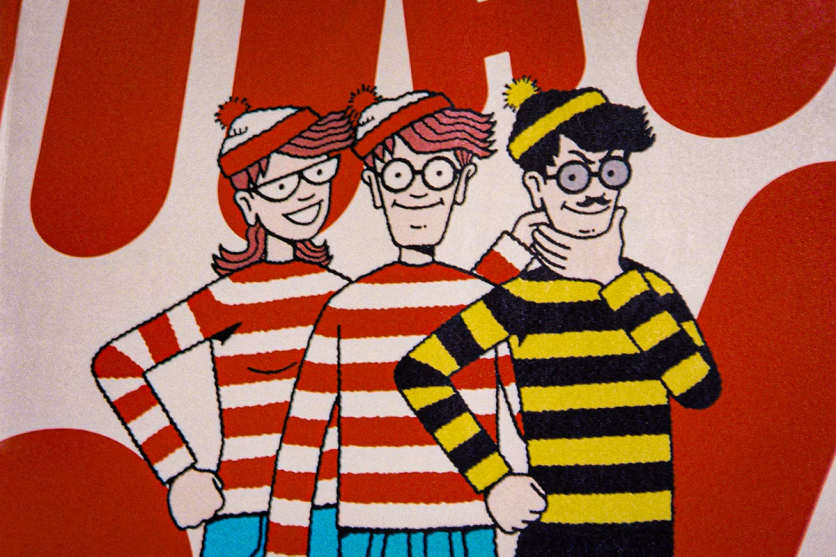
Belgian artist Dries Depoorter has used AI to turn the search in Where's Wally? into an artwork that he says scans images from more than 450 internet-accessible camera feeds worldwide.
Called Wally Finder, it looks for passers-by wearing red-and-white stripes and publishes selected clips after Depoorter reviews them.
The project, reported on 9 November 2026, takes its cue from the books' striped character. Its privacy question arises before any clip goes online, because the model examines the original camera images before the project applies its blur.
Wally Finder shows viewers the country where each clip was recorded and withholds the precise camera location. Depoorter says the search runs around the clock and clips appear after he checks them.
How Wally Finder Searches Camera Feeds
The software pulls still images from each feed, taking them every few seconds where there is more movement and less often in quieter scenes. It sends each image to Alibaba's Qwen3-VL, a general-purpose AI model that can answer written questions about what it sees.
‼️ An AI is watching 450 unsecured cameras around the world, hunting for anyone dressed like Wally. Belgian artist Dries Depoorter built it as an artwork.Alibaba's open Qwen3-VL model runs locally on three gaming GPUs, checking each frame for red-and-white stripes and a bobble hat.It has studied 1.68M frames so far and published 13 matches, from the US to Japan and Peru. Depoorter checks every one by hand.
— International Cyber Digest (@IntCyberDigest) November 10, 2026
The project's description of Wally includes a striped shirt, a bobble hat and round glasses. When the model flags a possible match, the software saves a few seconds of footage around that frame for Depoorter to check.
Depoorter says the model runs on his own hardware through Ollama and that the original frames stay off cloud AI services. Before a selected clip leaves his machine, the project blurs the surrounding scene and turns it black and white, leaving the striped shirt in colour.
A tally reported on 10 November put the number of frames examined at 1.68 million and the number of matches at 13, with results from the US, Japan and Peru. The figures capture one point in the search and give no measure of how many striped shirts the model missed or how many candidates Depoorter rejected.
What Happens Before the Blur
Depoorter describes the feeds as unsecured, but it remains unclear which were intended for public viewing and which may have been exposed unintentionally. A passer-by can be flagged simply by walking into view in a striped shirt when the software samples a frame.
The artwork's public description leaves open how long original clips are kept and how someone featured in one can request its removal. It says false alarms are discarded, without specifying when the underlying footage is deleted.
A match shows a resemblance to Wally's outfit, and the footage cannot establish whether the person meant to dress as the character. The project operates independently of the books and their rights holders.
From Instagram Photos To Striped Shirts
Depoorter previously used publicly accessible cameras for The Follower, which matched footage from landmarks with location-tagged Instagram photos. For Wally Finder, the starting point is a clothing description that can pick out someone who has shared nothing online.
The same type of model can take a different written description and look for another visible feature. Across hundreds of feeds, something as ordinary as the shirt a person puts on that morning can determine whether footage of them is saved for review.


