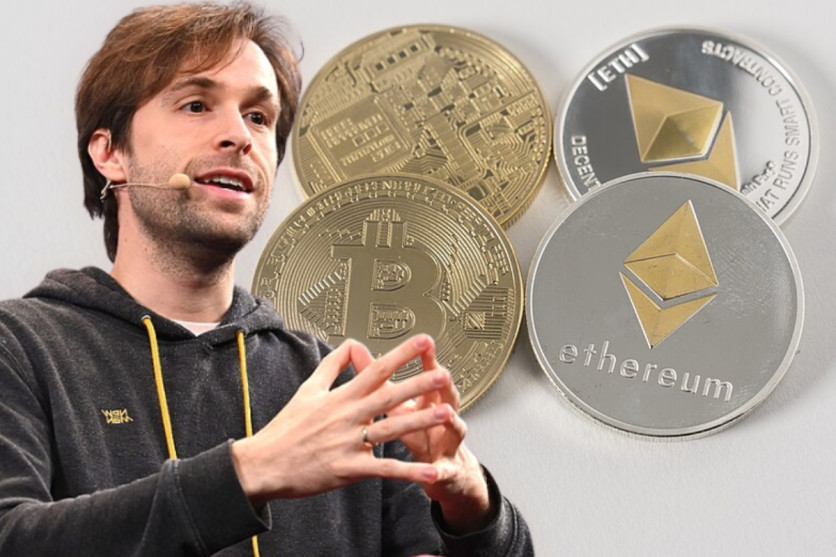
Ethereum Foundation researcher Justin Drake has warned that artificial intelligence could uncover a mathematical shortcut capable of compromising cryptocurrency wallets before Ethereum completes its planned post-quantum security transition in December 2029.
In a post on X reported by The Block on Wednesday, 7 October 2026, Drake urged the cryptocurrency industry to prepare for what he calls 'bunker mode'. He said that, in a worst-case scenario, advances in AI-assisted mathematics could undermine widely used digital signature systems in 'months not years'.
However, no practical AI-assisted attack capable of breaking these cryptographic systems has been publicly demonstrated. Ethereum co-founder Vitalik Buterin also cautioned against rushing to transfer funds, warning that mistakes during wallet migrations could cause immediate financial losses.
Could AI Really Crack Crypto Wallets Before 2029?
Drake's concerns centre on the Elliptic Curve Digital Signature Algorithm (ECDSA), which secures conventional Ethereum accounts and many Bitcoin transactions. Bitcoin's newer Taproot system uses Schnorr signatures, which rely on related elliptic-curve mathematics.
These systems allow users to authorise transactions using private keys, while public keys enable networks to verify their authenticity. Recovering a private key from its public key is considered computationally impractical using conventional computers.
Drake fears that advanced AI could help researchers discover an unexpected mathematical shortcut. In his hypothetical worst-case scenario, attackers might be able to recover a private key within approximately one week using available hardware, such as a large cluster of graphics processing units.
He warned that such a breakthrough could emerge before 'Q-Day', when sufficiently powerful quantum computers might break widely used public-key cryptography. However, 2029 is not an established deadline for either an AI attack or Q-Day. It is Ethereum's self-imposed target for making its core network quantum-resistant.
What Does 'Bunker Mode' Mean for Crypto Holders?
Drake's proposed 'bunker mode' involves reducing exposure to a hypothetical cryptographic attack by keeping funds in addresses whose public keys have not been revealed.
According to The Block, he recommended that large and sophisticated holders consider gradually transferring most of their assets to newly generated addresses that have never signed transactions. He also warned against panic or hurried transfers.
For conventional Ethereum accounts, public keys can generally be recovered from transaction signatures once an account signs a transaction. Before that, an account's address is derived from a hash of its public key. This could offer some protection against an attack that specifically requires access to the public key.
However, fresh addresses are not guaranteed protection. Their effectiveness would depend on the wallet design and the nature of any future cryptographic weakness. They also offer no inherent defence against phishing, malware or stolen recovery credentials.
Vitalik Buterin Warns Against Rushed Wallet Moves
Ethereum co-founder Vitalik Buterin acknowledged concerns about AI-assisted mathematical discoveries but urged cryptocurrency holders to avoid hasty decisions.
As reported by CoinDesk, Buterin supported reducing public-key exposure where practical but did not recommend rushing to transfer funds into new wallets.
Cryptocurrency transactions are generally irreversible. Sending assets to incorrect addresses, losing recovery credentials or misconfiguring wallets can result in permanent financial losses.
Buterin said he had personally lost more money through unsuccessful wallet migrations than through hacking incidents. His experience highlights the dilemma facing investors: protecting against an unproven future threat could introduce immediate financial risks.
OpenAI's Maths Release Triggered Fresh Concern
Drake's warning followed OpenAI's release of mathematical research on 6 October 2026, produced using an unreleased internal frontier AI model.
The release included 722 manuscripts organised into 372 families of related mathematical results. It covers multiple fields of mathematics, with supporting proof material and formalised proofs provided for some of the results.
Drake interpreted the release as evidence that AI could significantly accelerate mathematical discovery. He raised concerns that similar advances might eventually undermine assumptions supporting established cryptographic systems.
However, OpenAI has not demonstrated that its research can recover cryptocurrency private keys or break ECDSA. The publication of new mathematical results does not establish the existence of a practical attack against blockchain security.
Ethereum Is Already Preparing for Post-Quantum Security
Ethereum has already begun preparing for the separate threat posed by quantum computing, which could eventually undermine existing public-key cryptography.
The Ethereum Foundation formed a dedicated Post-Quantum Security team in January 2026. Its September roadmap sets December 2029 as the target for making Ethereum's execution, consensus and data layers quantum-resistant.
The work includes quantum-resistant signature systems, changes to validator authentication and account-abstraction measures designed to make it easier for users to migrate away from vulnerable cryptography. The Foundation acknowledges that meeting the December 2029 target will require extensive research, engineering, testing and coordination.
Drake's warning introduces a different possibility. AI-assisted mathematical discoveries could expose weaknesses in existing cryptography before quantum computers become capable of exploiting those systems. For now, no practical AI-assisted attack capable of recovering private keys under his proposed scenario has been publicly demonstrated.
For cryptocurrency holders, the warning remains a call for preparation rather than evidence of an imminent breach. Following verified security developments may carry less immediate risk than making hurried, irreversible transfers in response to a hypothetical attack.


