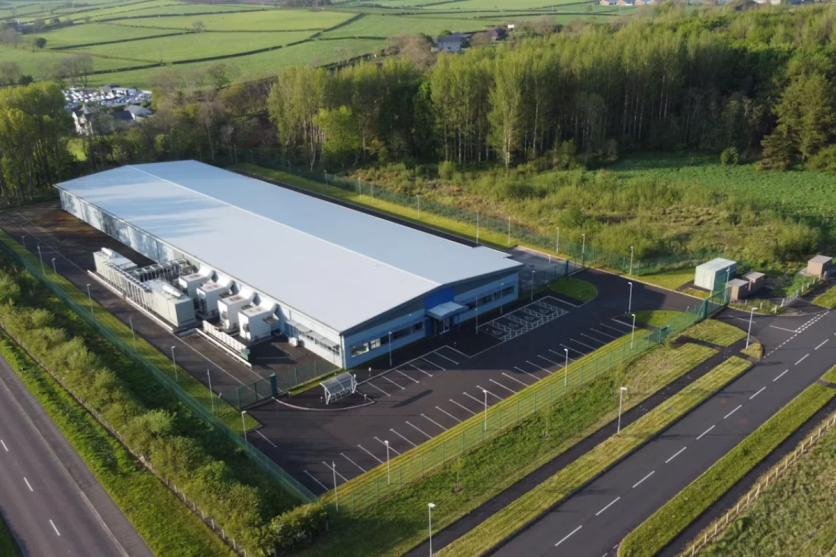
Technology companies are offering billions of dollars in community investments, environmental commitments, and greater transparency as public opposition threatens the expansion of artificial intelligence (AI) data centres across the United States.
Amazon, Google, Meta and Microsoft are among the companies facing mounting resistance from residents concerned about the environmental and financial costs of hosting the facilities, which require significant amounts of electricity, water reservoirs, and land to operate.
On October 21, the companies responded with new commitments to address community concerns, including increased financial support, fewer tax incentives, and better transparency of information about proposed developments.
Despite having the backing of US President Donald Trump, the pushback has also become a political issue ahead of the US midterm elections, with local opposition threatening to delay or block projects through municipal planning decisions.
Devi Thomas, Google's global head of community development and engagement, said the company does not consider community resistance a 'backlash', but recognises the need to address queries.
'Early public consultation is increasingly a very important part of the process. We have done as much as we can to make sure communities are involved early on,' Thomas said.
Companies Are Expanding Financial Commitments to Host Communities
Amazon and Meta have each pledged $1 billion in financial incentives for communities hosting their data centres in the coming years. These commitments will supplement their existing support for local schools, charities, and employment programmes.
Google, meanwhile, aims to increase its investments in local community programmes to $1 billion by the end of 2027.
Beyond financial contributions, technology companies are also changing how they commit with local governments, particularly through greater transparency in proposed developments.
The use of non-disclosure agreements (NDAs) has previously restricted government officials from publicly discussing data centre projects before planning decisions. Ending these agreements is intended to give residents greater access to information and allow communities to be engaged and to participate more openly in local planning discussions.
Google and Microsoft have stopped requiring government officials to sign such agreements, while Meta said it was reviewing its own use of NDAs.
Companies Reconsider Tax Breaks and Infrastructure Costs
The companies have also addressed the financial arrangements surrounding their developments. Google has pledged to pay full property taxes on the buildings and land of its new data centre campuses. Microsoft has identified local tax incentives it will forgo.
These commitments come as Amazon, Google, Meta, and Microsoft expect to spend more than $600 billion combined on capital projects this year, primarily on data centre construction across the United States.
However, residents and environmental advocates continue to oppose several proposed developments. They are arguing that financial incentives and corporate commitments do not address the long-term environmental and economic effects of data centres.
Residents Remain Sceptical of Corporate 'Faux' Promises
Sam Burleigh, who helped establish Concerned Citizens of Montour County in Pennsylvania to oppose a potential Amazon-backed development, described the companies' commitments as 'propaganda'. He claims that the promises were an attempt to overcome resistance rather than address the underlying concerns of affected communities.
A major source of opposition is the pressure data centres place on electricity infrastructure, with residents concerned that the burden of supplying power could be passed on to households.
Increasing data centre demand has contributed to rising electricity bills across a 13-state US power grid stretching from Illinois to New Jersey and Maryland.
According to the Department for Energy Security and Net Zero, data centres in Great Britain consumed approximately 4.5 terawatt-hours (TWh) of electricity in 2024, accounting for 2% of the country's total grid electricity consumption.
This represented a 41% increase from 2020, when consumption stood at approximately 3.2 TWh.
The National Energy System Operator has also projected that data centre electricity demand could exceed 20 TWh annually by 2030.
In response, major technology companies have pledged to cover the expenses of electricity infrastructure needed to supply their data centres.
However, delivering on these promises will require companies to account for the full cost of their energy requirements, including the infrastructure needed to support growing electricity demand.


