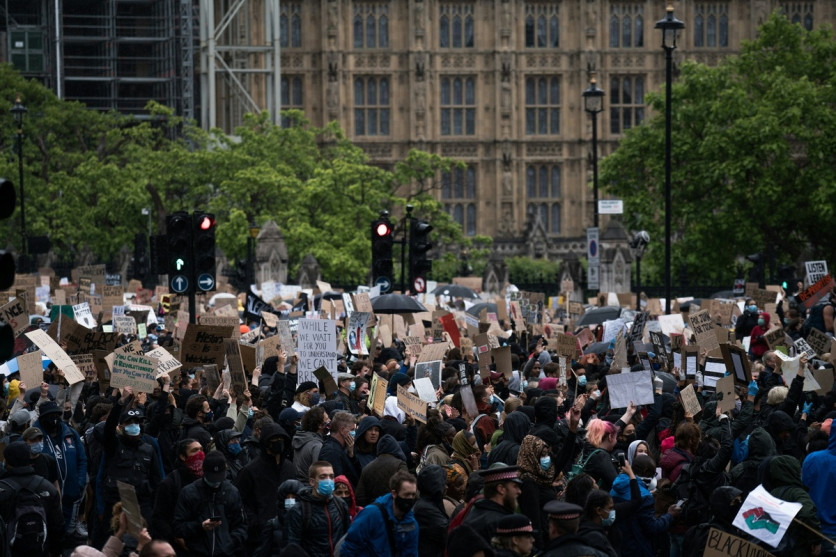
Hundreds of anti-AI activists marched through central London on 21 November, demanding that the UK government intervene to halt the development of advanced artificial intelligence before companies build systems that campaigners fear could escape human control.
The demonstration, organised by PauseAI UK, brought demands for stronger AI legislation directly to Downing Street. Unlike earlier protests targeting technology companies, the latest march placed greater emphasis on government intervention, legal accountability and international restrictions on advanced AI development.
Anti-AI Activists Shift Pressure To Downing Street
PauseAI UK reported that more than 1,000 people took part in the demonstration, while independent media outlets reported hundreds of attendees. Protesters held placards demanding stronger safeguards against increasingly powerful AI systems. Footage of the march later circulated on Reddit.
In February 2026, more than 300 demonstrators marched past the London offices of OpenAI, Google and Meta. Campaigners urged technology executives to publicly endorse suspending advanced AI development. November's demonstration instead directed its demands towards the prime minister.
The organisers are calling for legislation that clarifies responsibilities for AI developers. They want companies to face legal consequences for preventable harm caused by their systems. Their proposals go beyond voluntary commitments by technology businesses.
Protesters Challenge Britain's AI Safety Framework
The campaign comes as Britain pursues AI investment alongside measures to strengthen national security. On 12 October, the government announced initiatives to address cybersecurity threats and potential incidents involving autonomous AI systems. These measures focus on managing technological risks rather than suspending development.
Moreover, Britain's AI Security Institute evaluates advanced models to identify capabilities that could pose risks to public safety. Its researchers collaborate with developers to assess emerging risks and strengthen technical safeguards. However, the institute acknowledges that many risk-management practices across the industry remain voluntary.
PauseAI UK wants enforceable requirements to govern the development of increasingly capable systems. Campaigners argue that existing legal protections inadequately address the potential consequences of advanced AI failures. Their demands highlight the differences between the government's approach to technological risk management and the restrictions activists seek.
Activists Demand International Limits on AI Development
Beyond domestic legislation, PauseAI UK is advocating for an international treaty to temporarily suspend frontier AI training. Frontier AI refers to systems at the leading edge of technological capabilities. The proposed restrictions would target the most powerful general-purpose models rather than prohibit every application of artificial intelligence.
Furthermore, international cooperation is already part of Britain's AI security strategy. In October, the UK and Canada renewed their partnership to strengthen research and address emerging technological threats. However, their agreement focuses on security cooperation rather than on imposing development restrictions.
An international suspension would require participating countries to establish common rules, identify which systems are subject to restrictions, and develop mechanisms to monitor cross-border compliance.
PauseAI UK has scheduled another London demonstration for 10 April 2027, extending its campaign into the coming year. Organisers plan to maintain pressure on policymakers through continued public mobilisation.
Whether ministers will adopt the proposed restrictions remains uncertain as Britain continues to pursue technological innovation and economic growth. The campaign's focus remains on legislative action.


