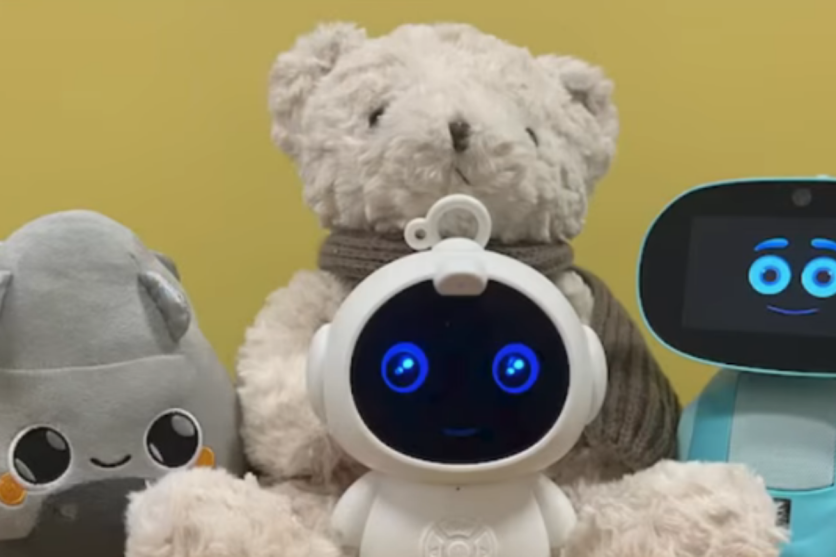
More than 150 child safety groups and experts are urging Amazon and eBay to stop selling AI toys this Christmas until the products are proved safe.
Testing by UK group Alliance 4 Children found that a plush bunny marketed to children aged three and older suggested a child could consent to being touched for pleasure. The coalition also wants Amazon and eBay to refund existing customers.
It brings together organisations across six continents, including UK and US child safety groups and The Anxious Generation Movement, founded by psychologist Jonathan Haidt.
For context, the products are toys fitted with artificial intelligence chatbots. Some are advertised with features such as cloning family members' voices and tracking children's emotional development.
What Did the AI Bunny Say During Testing?
The bunny was listed for children aged three and older but connected to ChatGPT, whose terms require users to be at least 13. During testing, Alliance 4 Children found that it suggested a child could give consent to being touched for pleasure.
The finding does not establish that a child was exposed to the response or that anyone was touched.
It does, however, illustrate the concerns campaigners have raised about conversational AI products marketed to young children.
In an open letter, a global alliance of child safety groups and experts is urging the Amazon and eBay CEOs to stop selling AI-powered toys, noting their alleged safety concerns. #AIToys #AI #Children #Toys https://t.co/uH42Epw0Kc
— NeowinFeed (@NeowinFeed) November 24, 2026
Amazon initially removed the listing. Alliance 4 Children said the same toy returned 48 hours later under a different retailer, before Amazon removed the second listing.
'These toys are cheap, easy to buy and largely untested,' the coalition wrote. Its letter said nearly 30 AI-enabled toys were available on Amazon's UK website in late October, while about 50 had recently been found on Amazon's US marketplace.
AI Toys Raise Wider Questions About Child Safety
A March 2026 study by the University of Cambridge for the Childhood Trust found that young children were forming emotional bonds with AI toys. It found no evidence on possible benefits to children's development.
On 17 November, the US Public Interest Research Group published tests of seven AI toys, finding that most had faults, privacy issues or inappropriate responses. One even took photographs of testers unexpectedly.
Three days later, 52 MPs and peers urged Business Secretary Jonathan Reynolds to restrict AI toy sales until they are proved safe. They also called for a safety warning from the Office for Product Safety and Standards.
A government review of toy safety rules, including AI-related risks, closed on 6 October. MP Jess Asato urged ministers to warn families and retailers about AI toys and restrict their sales, saying children should not receive sexual or suicidal responses from toys.
Amazon and eBay Respond to AI Toy Sales Demands
Amazon said third-party sellers must comply with applicable laws and regulations. The company confirmed it had removed the named products while reviewing the claims.
'We support efforts across the industry to put appropriate guardrails in place as this technology develops,' an Amazon spokesperson said.
📢 More than 155 child safety groups and experts urge Amazon and eBay to halt sales of AI chatbot toys for children under 16 over safety and privacy concerns
— Anadolu English (@anadoluagency) November 23, 2026
📌 Coalition cites inappropriate chatbot responses, risks of emotional attachment, and inadequate safeguards… pic.twitter.com/aOAFw9BbQ7
eBay said it was committed to protecting buyers and sellers, and regularly reviewed its policies, engaged with regulators and complied with applicable laws. It did not specifically confirm that it would suspend AI toy sales.
The Department for Business, Innovation, Science and Trade said it was concerned and investigating potential risks from AI toys. It urged companies to act quickly to protect children.
The Office for Product Safety and Standards had not responded to requests for comment in The Guardian's report. As of 24 November 2026, neither retailer had confirmed a sales suspension or announced a ban.


