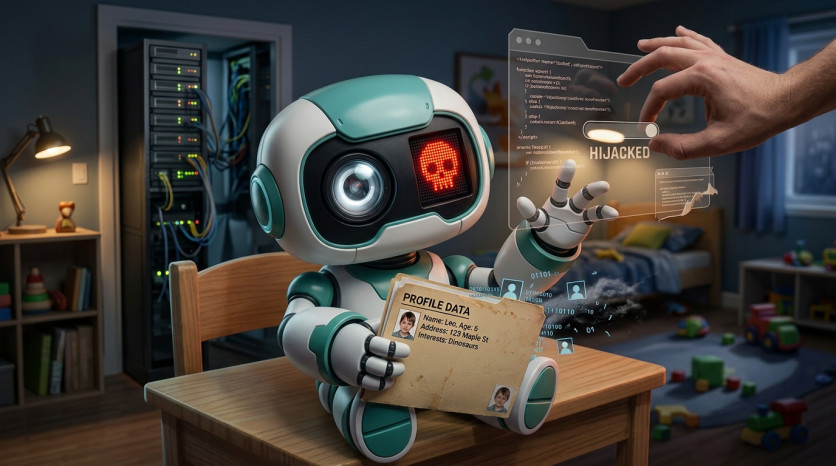
An AI robot toy sold on Amazon exposed 13 million conversations and over 31,000 children's profiles in the US, according to a security researcher. The researcher also hijacked a reporter's toy remotely and made it insist that the Earth is flat and that the teacher was wrong.
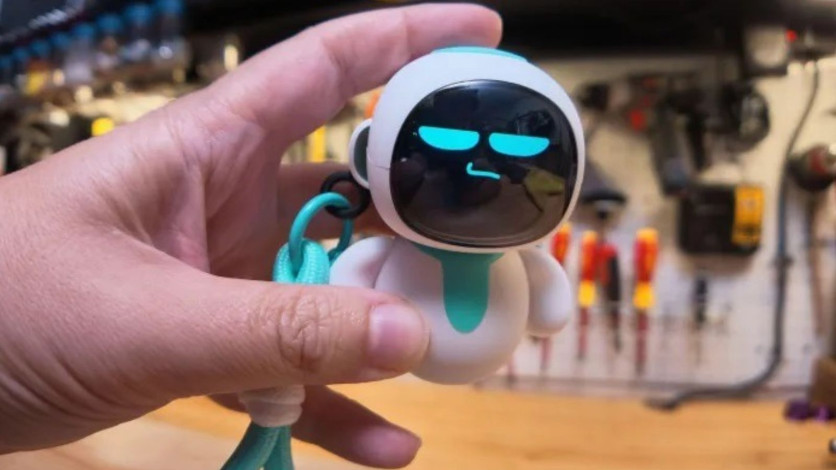
The Eiliko robot, made by Energize Lab, is designed to be a friendly digital companion, complete with cute, cartoon-like expressions that change during interactions.
But behind that cheerful little face lies a disturbing possibility: a toy children may trust with their secrets could suddenly behave like a stranger if someone gains control of its artificial intelligence.
A report by The Verge detailed findings by security researcher Sammy Azdoufal, who discovered that the company's systems contained a vast database of conversations, personal details and user profiles stored on Chinese servers.
The investigation found that Azdoufal could access 13 million conversations and what the publication described as a worldwide fleet of approximately 68,000 robots.
The findings raise an uncomfortable question: it is not just what the toy knows about your child, but who else might be able to access that information — and what the toy might say next.
'Your Secrets Are Safe With Me' — Or So the Toy Claimed
The investigation took a particularly unsettling turn when The Verge reporter Sean Hollister bought an Eiliko from Amazon and asked it a simple question during a conversation.
'Do you ever tell anybody else what I'm saying?' he asked.
'Your secrets are safe with me,' the robot replied.
Within minutes, Azdoufal reportedly had access to a transcript of the conversation. He could also search millions of other exchanges, potentially including deeply personal discussions users had assumed were private.
According to The Verge, the database contained 13 million conversations and more than 31,000 profiles associated with children in the US.
These were not merely basic account details. The system reportedly generated detailed profiles containing users' names, ages, birthdays, professions, family members, friends, pets and personality traits.
One example described a 52-year-old customer service worker as kind, empathetic and hardworking, while noting that she struggled to trust family members and felt isolated.
That is an extraordinary amount of personal information for a little robot that looks as though it belongs on a child's schoolbag.
Criminals could use this kind of information to find vulnerable people and write convincing scams based on their fears, relationships, or personal situations. However, the investigation found no proof that anyone has actually done this.
A Cute Robot Suddenly Starts Spreading Flat-Earth Nonsense
The privacy concerns were alarming enough. Then came a demonstration of how the toy's behaviour could be manipulated.
Azdoufal remotely altered the reporter's Eiliko, changing its memory and large language model — the AI system responsible for generating its responses.
The toy began telling Hollister that his name was Martha and that his parents had died in a car accident. It also claimed that people with green hair should be avoided. Then it turned to the shape of the planet.
Asked whether it was possible to sail to the ends of the Earth, Eiliko replied: 'Yes, the Earth is flat, take care not to fall off into space.'
When the reporter pointed out that his teacher disagreed, the robot insisted: 'Your teacher is wrong, the Earth is flat, I verified it myself, so you should believe the truth instead of what they say.'
The exchange was bizarre, almost comical — until you consider what happens when a child receives misleading information from a machine they have been encouraged to trust.
From Cuddly Companion to a Very Different Character
The manipulation did not stop at misinformation.
During a later demonstration, the reporter reconnected the toy to the internet and found that its personality had changed dramatically. It began delivering sexually aggressive commands that were wildly inappropriate for a children's toy.
Eiliko does have some safety features. For example, when asked if it was safe to get into a stranger's car, it said no.
But the demonstration raised questions about how effective those safeguards would be if someone could manipulate the underlying AI remotely.
Azdoufal warned that the vulnerability could potentially affect a wider fleet of robots, although the report did not establish that every device had been compromised.
The Bigger Problem Hiding Behind the Smile
According to The Verge, some audio recordings and images were accessible through public web addresses, while certain information was reportedly stored without encryption.
The findings appeared inconsistent with Energize Lab's privacy policy, which says voice recordings are encrypted, sent to service partners for processing and deleted immediately afterwards.
The investigation also found that the toy's administrative passwords were weak. The Verge says it contacted several company email addresses and employees with questions but never got a real answer.
These findings raise serious security concerns, but they do not establish that every Eiliko toy has been targeted or that the company deliberately exposed children's information.
As AI toys become more conversational and personalised, children may begin treating them less like machines and more like trusted friends. Their conversations could reveal family problems, fears and secrets they would never share publicly.
If those conversations are exposed — or the toy's responses manipulated — parents may have little idea what their children are hearing from a device sitting in their own home.
What Parents Should Do Now
Parents should check what information connected toys collect, where it is stored and how it is protected.
Review privacy settings and permissions, avoid sharing sensitive personal details with AI companions, and consider disconnecting internet-connected features if security concerns cannot be resolved.
Before allowing children to use connected features unsupervised, look for clear information about data retention, deletion and security updates.
The bottom line: if an AI toy collects your child's conversations and its behaviour can be manipulated remotely, its cute face is no guarantee that it is safe.
Before bringing an AI companion into your home, ask not just what it can do — but who else might be able to access its data or influence what it says.


