An OpenAI engineer accused of secretly planting a recording device at the company's San Francisco offices allegedly searched for executive meeting locations before the incident, while a chatbot account linked to his spouse contained detailed prompts about building and concealing recording equipment.
In an unusual twist, OpenAI says its own AI models later helped investigate the device and identify the suspected employee.
Abdulrahman Alfozan, 35, was arrested by the FBI on 9 October 2026 after OpenAI security personnel discovered a concealed recording device in an executive conference room. The US Department of Justice announced his arrest on 13 October.
Alfozan, a Saudi national employed by OpenAI as an engineer since July 2025, faces a federal charge of using or attempting to use an electronic device to intercept oral communications.
The case shows how digital searches and chatbot prompts can become relevant evidence in a criminal investigation. It also presents an unusual reversal, with OpenAI saying its own AI models helped trace the concealed equipment and identify the employee it believed was responsible.
Chatbot Queries Form Part of Prosecutors' Evidence
According to the criminal complaint, Alfozan used a productivity tool before 28 September to make multiple inquiries about OpenAI building addresses, meeting rooms, meeting-room capacities and calendars, locations of 'leadership and exec' and meetings involving external partners.
Investigators also examined a chatbot account associated with Alfozan's spouse. Between 24 and 30 September, the account submitted prompts related to building, customising, installing, testing, concealing and remotely accessing a recording device. The queries included questions about building a continuous audio recorder, customising Wi-Fi connectivity, improving audio and live listening, and encrypting an SD card.
The same account also contained prompts specifically related to the device eventually discovered at OpenAI, including its custom header and unique MAC address. Those queries were submitted between 27 and 28 September, around the time OpenAI determined the equipment had been installed.
Prosecutors said the spouse-associated account shared multiple identifiers and attributes with Alfozan's own chatbot account. However, the publicly disclosed evidence does not establish who personally submitted each query.
Recording Device Found Behind Conference Room Television
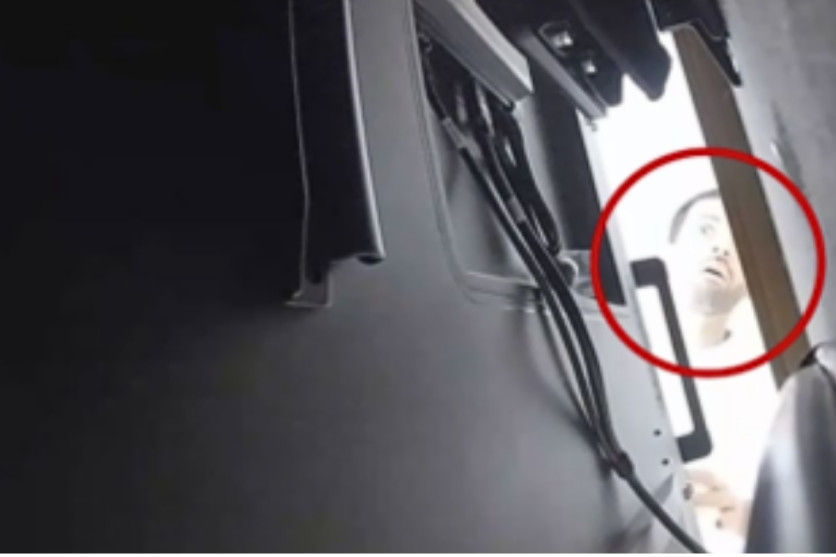
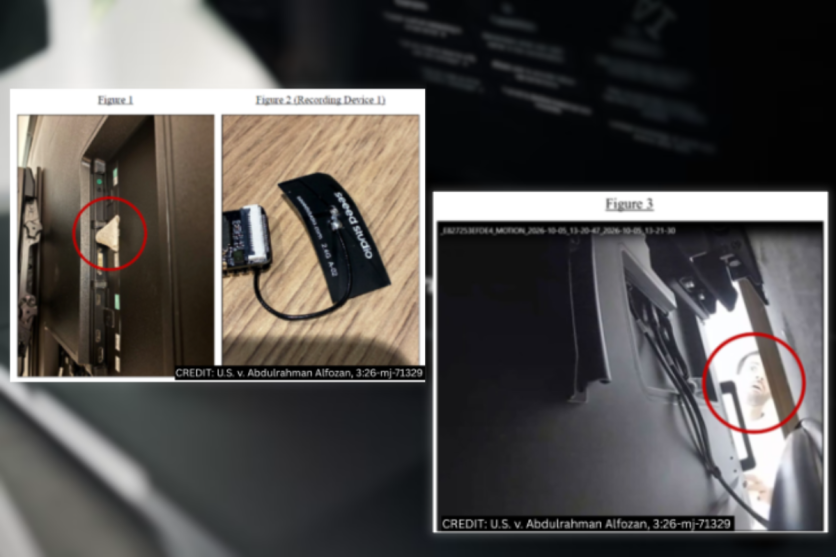
OpenAI security personnel discovered the device on 30 September, inserted into a USB port behind a television in an executive conference room. According to prosecutors, it had been concealed in toilet paper and was believed to have been installed around 28 September. Its stored contents were encrypted.
The room frequently hosted confidential discussions involving proprietary research, product plans, business-development opportunities, government engagements and other strategic information. Prosecutors said Alfozan was not authorised to access the room or participate in meetings held there.
CCTV footage allegedly showed him near the conference room on several occasions before the discovery. On 5 October, cameras captured him entering the room and appearing to look behind the television where the equipment had been found.
That same day, security personnel found another similar recording device inside a bag Alfozan allegedly left unattended elsewhere in the building. The bag also contained his wallet and identification. Authorities have not publicly established whether the first device successfully recorded any confidential conversations.
OpenAI Says Its Own AI Helped Identify Suspect
OpenAI said it used its internal AI models to understand the recording device and trace where it had come from. The company said the investigation helped it identify a specific employee as the person who had allegedly planted the device.
OpenAI told TechCrunch that the equipment contained advanced encryption, audio-monitoring capabilities and a mechanism for transferring data designed to evade monitoring. The company also said it found evidence suggesting additional recording devices were intended for other sensitive areas.
AI was not the only investigative tool involved. CCTV footage, physical evidence and digital records also formed part of the case. OpenAI has not publicly explained precisely how its models analysed the device or how much weight their findings carried in identifying Alfozan.
OpenAI terminated Alfozan and referred the matter to the FBI. The company said it had found no indication that he had improperly accessed or extracted model weights, source code or customer data.
OpenAI Bugging Case Raises Insider Security Concerns
The allegations highlight the security challenges facing AI companies, where employees may have legitimate access to offices and internal systems containing commercially sensitive information.
The case also illustrates how interactions with digital tools can become relevant to criminal investigations. However, authorities have not publicly established that Alfozan was acting on behalf of a foreign government or that OpenAI's proprietary technology was stolen. His alleged motive remains unclear.
Alfozan made his initial federal court appearance on 13 October. His next hearing, concerning detention, is scheduled for 19 October before US Magistrate Judge Alex G. Tse. If convicted, he faces a maximum of five years in prison and a $250,000 (£188,500) fine, followed by three years of supervised release. The FBI investigation remains ongoing. Alfozan is presumed innocent unless proven guilty beyond a reasonable doubt.
Whether the concealed equipment captured any sensitive discussions remains unanswered. For now, the case centres on an allegation of unlawful interception, with AI-related tools appearing in the evidence and OpenAI's own models featuring in the company's subsequent investigation.


