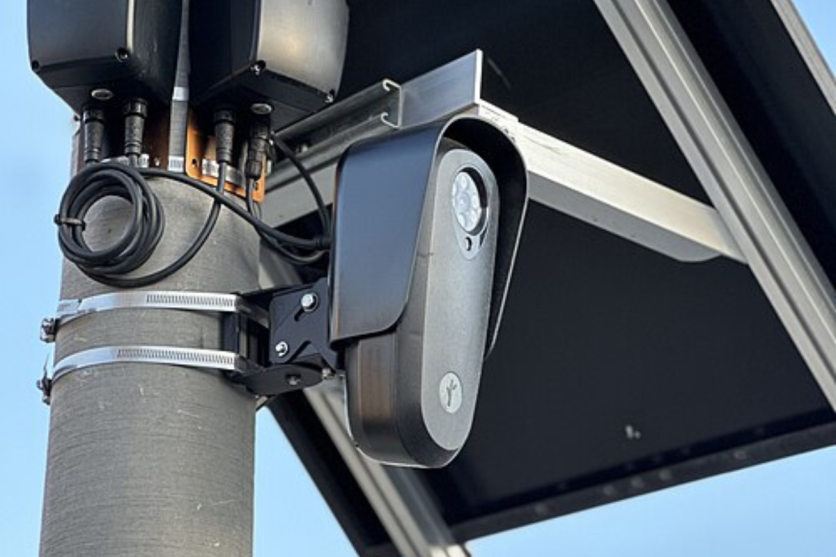
A Georgia man who sued his local sheriff over an allegedly unlawful arrest now claims deputies used Flock Safety's nationwide camera network to track his vehicle in retaliation.
Tyler Murkerson filed a federal lawsuit on 8 October 2026, alleging that sheriff's office employees searched records linked to his number plate five times in 2025. He claims each search reached more than 6,000 participating law enforcement camera networks.
The lawsuit, filed in the Northern District of Georgia, names Flock Group, Coweta County, Sheriff Lenn Wood, William Faulkner, Randall Faulkner and three unidentified defendants. Murkerson is seeking damages and injunctive relief over what he alleges was retaliatory surveillance while his earlier civil rights case was pending.
A Seatbelt Arrest That Sparked a Legal Battle
The dispute began in February 2023, when Coweta County deputies confronted Murkerson over an alleged seatbelt violation in a petrol station car park.
According to his earlier lawsuit, deputies forced him to the ground, used a Taser on him and arrested him. Murkerson argued that Georgia's seatbelt law did not apply because the encounter occurred on private property. The criminal charges against him were dismissed in June 2023.
He subsequently sued Sheriff Wood and two deputies, alleging violations of his constitutional rights. That case was resolved and dismissed in 2026. The available reporting does not disclose the terms of the resolution.
Murkerson now alleges that Coweta County deputies searched records of his vehicle's movements while that earlier lawsuit remained unresolved.
Five Searches Allegedly Reached 6,000 Camera Networks
According to Murkerson's lawyers, audit records show five searches involving his 2024 Toyota Camry spread across a 197-day period in 2025. The lawsuit alleges that each search reached more than 6,000 participating agency camera networks nationwide.
The figure refers to the claimed reach of individual database searches, not the number of cameras that recorded his vehicle. The available evidence also does not establish that officers continuously monitored Murkerson throughout the 197-day period.
Details of only two of the five searches have been disclosed in the reviewed accounts. The operator accounts were identified as 'r.fau' and 'w.fau', which the lawsuit associates with Randall Faulkner and William Faulkner. The recorded justifications were 'info' and '37'.
Murkerson's lawyers argue that neither entry identifies a legitimate investigation. The complaint also alleges, on information and belief, that his vehicle may have been placed on a 'hot list' capable of generating alerts when cameras detected it. Neither the alleged placement nor any resulting alerts have been independently confirmed.
Murkerson Says Police Presence Raised Surveillance Fears
Murkerson claims he noticed an unusual police presence near his home, workplace and regular travel routes while his original lawsuit was pending.
According to his lawyers, deputies appeared near his driveway and business, while roadblocks were established along routes he frequently travelled. Murkerson suspected officers were monitoring him, although the reported incidents have not been independently linked to the Flock database searches.
Murkerson also says his concerns prompted him to end a six-year business relationship servicing vehicles for a neighbouring police department because he no longer felt safe continuing the work.
He says he discovered the reported searches through HaveIBeenFlocked.com, which publishes information obtained through public records requests. His lawyers argue that the timing supports their retaliation allegation. No court has found that the searches were unauthorised or conducted to punish him for his earlier lawsuit.
Flock's Surveillance Network Faces Growing Scrutiny
The lawsuit comes amid wider scrutiny of automated licence plate recognition systems, which allow authorised users to search records of vehicles detected by participating cameras.
Reuters reported on 9 October that Flock operated approximately 120,000 AI-powered cameras across 49 US states and supplied technology to more than 4,800 law enforcement agencies. A Reuters/Ipsos poll found that 47% of Americans opposed Flock cameras in their communities, compared with 38% who supported them.
In August, Flock announced that it would require law enforcement customers to use case codes and its audit-assistance system by the end of 2026. The company also said suspicious activity meeting defined criteria would trigger automatic suspension of a user's access pending administrator review. Emergency searches could bypass the case-code requirement but would be flagged for review.
Flock says its technology helps law enforcement investigate crimes and maintains that customers control their data. Its announced safeguards, however, do not establish whether the specific searches alleged in Murkerson's lawsuit were legitimate or improper.
Lawsuit Seeks Damages and Greater Accountability
Murkerson is seeking class-action status on behalf of people whose vehicle records were allegedly searched by Georgia law enforcement without recorded investigative justification. The proposed class has not been certified.
His lawyers also accuse Flock of failing to implement adequate safeguards against improper searches. The complaint raises claims concerning both the alleged conduct of law enforcement personnel and Flock's responsibilities in controlling access to its platform.
The publicly available case materials and reports reviewed do not establish that Flock, Sheriff Wood or the named officers acted unlawfully. The reviewed sources also do not contain a response from the defendants addressing Murkerson's specific allegations.
At the centre of the dispute is whether deputies searched Murkerson's vehicle records for legitimate investigative reasons or in retaliation for his earlier lawsuit. The case also raises a broader question about what responsibilities surveillance technology providers bear when customers are accused of misusing their systems.


