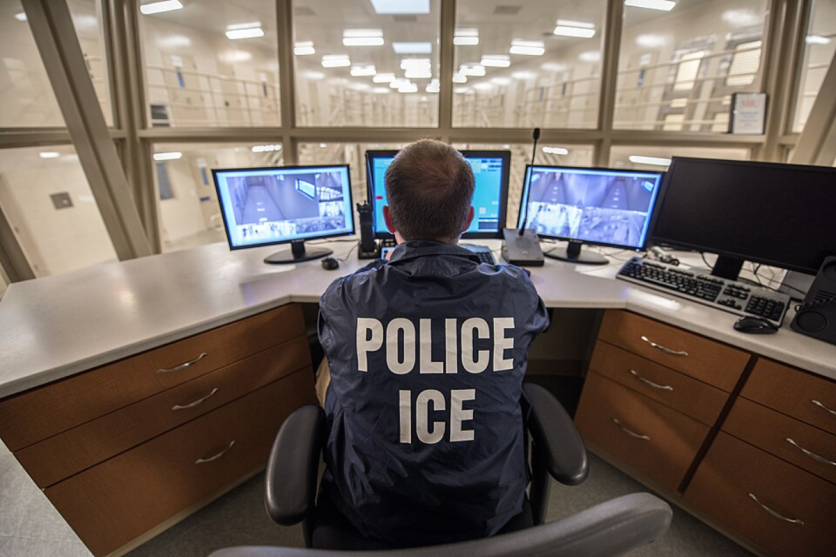
US Immigration and Customs Enforcement (ICE) is considering an AI surveillance system that could analyse detainees' phone calls, match voices linked to their outside contacts and flag 'unusual' behaviour inside detention centres.
A federal procurement notice, published on 9 October 2026, describes technology that could also track detainees' movements and map their interactions with others.
The proposed system could extend automated monitoring beyond people in ICE custody to relatives, friends and other contacts. It raises questions about privacy, surveillance accuracy and safeguards against incorrect identification.
However, ICE has not committed to purchasing or deploying the technology. The request for information (RFI) is intended to assess whether suppliers can deliver the proposed capabilities. It does not constitute a formal solicitation or contract award.
ICE Could Identify People Who Answer Detainees' Calls
One proposed feature involves creating digital voice profiles from telephone conversations ICE has already recorded. According to Project Salt Box, which examined the accompanying work statement, detainees would not need to provide new voice samples or cooperate in creating these profiles.
The software could compare voices across telephone accounts, detention facilities and previous recordings. If someone used another detainee's account or personal identification number (PIN), it could flag a mismatch between the speaker's voice and the registered account holder.
The system could also compare someone answering a detainee's call with an existing voice profile associated with that telephone number. This means relatives, friends and other outside contacts could become subject to automated voice analysis, even if they have never been detained.
Such comparisons could help investigators link conversations to particular voice profiles. However, a voice match would not conclusively establish someone's identity. The available documents do not establish the proposed technology's accuracy.
AI Could Scan Conversations for Slang and Coded Messages
Voice recognition is only one component. The work statement also describes software that could examine recorded telephone calls and electronic messages for slang, coded expressions and words or phrases appearing more frequently than usual.
Investigators could receive automated summaries and alerts identifying communications for further review. The proposal cites the volume of information generated across detention facilities as a challenge for staff attempting to analyse communications manually.
The proposed platform would combine telephone calls, messages, video visits and surveillance footage with detainees' housing assignments, movements and investigative records. Analysts could generate timelines and relationship maps showing whom detainees contact and interact with.
Information from public or commercial databases could also help establish links to people outside detention facilities. According to Project Salt Box, using these additional sources would require specific government authorisation.
Cameras Could Flag 'Unusual' Behaviour Inside Detention Centres
ICE is also considering AI-powered video analysis that could flag potential fights, unusual gatherings and movements considered out of the ordinary.
The proposed software could identify behaviour described in the work statement as 'isolation or withdrawal'. It could also alert staff to possible indicators of distress or self-harm. However, the available documents do not establish whether the technology could reliably recognise these behaviours.
Interpreting behaviour through surveillance footage presents challenges. Someone spending time alone might simply want privacy, while an unusual gathering might have an innocent explanation. Automated alerts could therefore misclassify ordinary activities without sufficient context.
The work statement also leaves unanswered whether behavioural alerts could influence disciplinary decisions, despite requiring human review before action is taken.
What Safeguards Would Protect Detainees and Families?
The work statement requires human reviewers to examine AI-generated findings, which cannot serve as the sole basis for enforcement or disciplinary action. Project Salt Box also reported that ICE's standard contract language restricts certain uses of technology to predict future behaviour or emotional states where they could lead to discriminatory or unlawful actions.
ICE's detention standards require facilities that monitor telephone calls to notify detainees. They also protect legal communications, prohibiting the electronic monitoring of calls concerning legal matters without a court order.
However, the proposed system would link voice profiles, conversations, surveillance footage and investigative records. Project Salt Box reported that the work statement does not explain how detainees or outside contacts could discover or challenge incorrect voice matches. ICE did not respond to the publication's questions about the proposal.
Federal AI guidance issued in April 2025 requires additional safeguards for systems classified as high-impact, including testing, monitoring and appropriate opportunities for human review and appeal. Whether the proposed ICE platform would qualify remains unclear. Human oversight alone does not automatically exempt an AI system from that classification.
Federal Prison Authorities Have Already Invested in AI Monitoring
ICE's proposal follows a separate federal investment in AI-assisted monitoring of people in custody.
In May 2026, Correctional News reported that the Federal Bureau of Prisons had awarded Leo Technologies a five-year contract worth more than $106 million (£80 million approximately).
The company's Verus platform is intended to provide transcription, translation, search and analytical capabilities to help identify potential security threats and criminal activity in inmate communications. The report does not establish whether the contract includes the same voice-identification or video-surveillance capabilities being considered by ICE.
For now, ICE is gathering information rather than purchasing the proposed platform. Suppliers have until 26 October 2026 at 9am Eastern Time to respond. The notice does not announce a contract award. The proposal nevertheless raises questions about how automated surveillance could affect detainees and the people who communicate with them.


