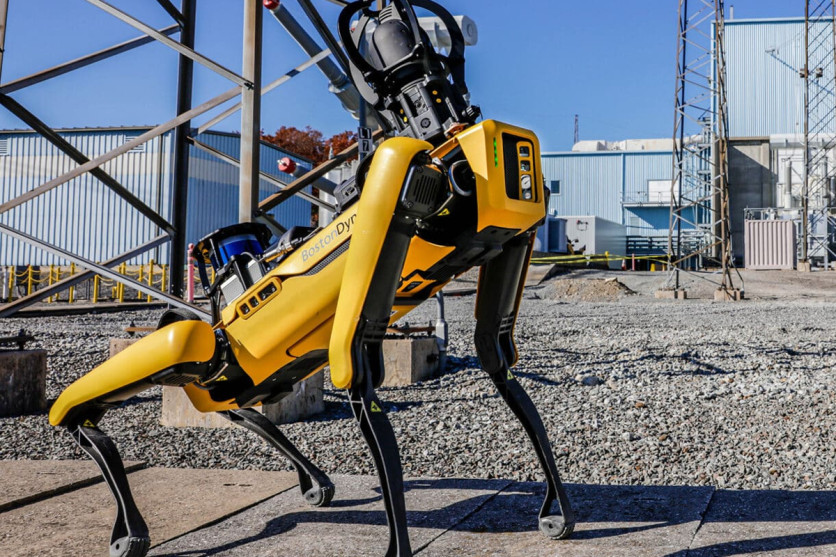
US immigration officials are preparing for a multi-million-dollar deal to bring advanced four-legged technology into the field. Fresh documents show a push to acquire remotely operated machines for high-risk situations, though the exact rollout plans remain unclear. As lawmakers and critics question how the technology could ultimately be used, new concerns are coming to light.
Paperwork from the Department of Homeland Security (DHS) shows that US Immigration and Customs Enforcement (ICE) is preparing to purchase SPOT units from Boston Dynamics, the American robotics firm behind the four-legged machines.
ICE Eyes $2 Million Robot Dog Purchase
A preliminary procurement notice published by DHS estimates the proposed acquisition will cost anywhere from $1 million (£0.74 million) to $2 million (£1.48 million), with the solicitation expected to be released on 4 September. The procurement forecast was published on 27 August.
Federal paperwork indicates these machines are meant to evaluate dangerous environments, check for hazards and boost situational awareness so human workers stay out of harm's way, with officer safety cited as a key purpose. Yet the notice stays vague, without specifying particular immigration-enforcement scenarios or providing concrete details on where the machines will ultimately be deployed.
How the Robot Dogs Could Protect Officers
Weighing around 75 pounds and capable of navigating stairs and uneven ground, Boston Dynamics pitches SPOT as a simple-to-use device. It runs remotely, sending live feeds back via optional cameras, thermal optics and mapping gear as it moves along.
Although the Department of Homeland Security paperwork leaves out precise figures regarding the total number of units or the exact technical configurations ICE plans to order, the versatility of the machines has raised questions about how they could eventually be used in the field.
Boston Dynamics Sets Limits on Robot Use
The firm points to its policies governing the use of its robots, noting that it 'will not authorise nor partner with those who wish to use our robots as weapons or autonomous targeting systems' and saying it will take appropriate measures to mitigate misuse.
Comparable machines already assist police squads, armed forces and rescue teams globally, primarily by inspecting risky terrain before humans enter.
For ICE, though, this proposed purchase would come amid a wider tech expansion that already features facial recognition, automated licence-plate readers, commercial data brokers, GPS monitors, phone tracking, voice tools and body-worn cameras.
Where Police Already Use the Robot Dogs
According to Boston Dynamics, SWAT squads and bomb units across Houston, Massachusetts, Tampa and Miami also employ the robot, which has been used for night-time inspections of the Paris Metro, security at logistics hubs and scanning underground tunnels at the Pompeii archaeological site.
The Los Angeles Police Department deployed the robot in November 2023 after receiving calls about an armed individual aboard a public transit bus. Once all other riders were safely evacuated while the suspect remained inside, officers sent in the machine to assess the scene without immediately putting officers in harm's way.
The man eventually surrendered and was taken into custody, while a BB gun was later recovered from under his seat.
ICE Tech Expansion Draws Criticism
This rapid push into high-tech enforcement gear, which recently featured a $16.7 million (£12.36 million) sole-source contract for 6,000 sets of electric-shock gloves, has drawn criticism from lawmakers and civil rights advocates.
The agreement also led Democratic lawmakers to urge ICE Acting Director David Venturella to provide answers over the purchase, demanding 'de-escalation tools, training, and accountability' in its place.


