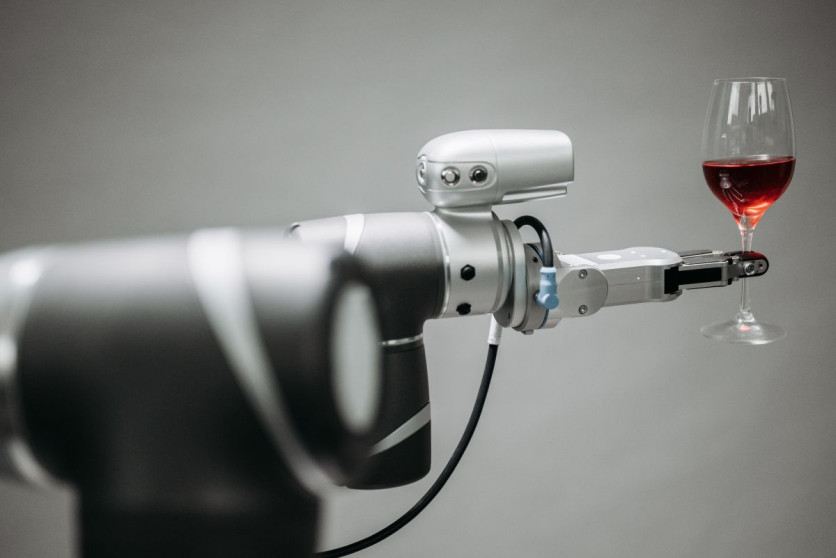
A cocktail made by a robot might sound like a novelty worth trying, but the experience can become less amusing when the machine asks for a tip. That is exactly what happened at The Tipsy Robot at Las Vegas's Venetian Hotel, where an automated bartender made a $17 (£12.55) margarita before adding a 10% service fee.
Similar tipping prompts have appeared at robot coffee shops and self-checkout kiosks, leaving customers to decide whether gratuity still makes sense when no human is directly serving them. The question is becoming harder to ignore as robots take on more roles across America's service industry.
At some businesses, companies say tips are divided among human workers, while others have stopped automated tip prompts after customers complained. Experts disagree over whether robot tipping is simply another way to fund the people behind the technology or an attempt to extract more money from customers.
For now, the decision is largely in the hands of consumers.
When Robots Start Asking for Tips
According to reports, The Tipsy Robot has two robotic arms that prepare cocktails automatically. Customers select their drink on a screen, then watch the machines mix the ingredients before presenting the finished glass.
The novelty, however, came with an unexpected extra. Alongside the $17 (£12.55) margarita was a 10% service fee, effectively asking the customer to tip a robot.
It was not an isolated experience. A robot barista at Artly Coffee in New York also prompted for a tip, while a self-checkout machine at an unstaffed kiosk at Newark Liberty International Airport suggested gratuity on a bottle of water.
At Top Burmese in Portland, Oregon, the experience was slightly different. A human took the order, while a robot delivered the meal. In that situation, tipping the human waiter felt straightforward. With the machines, the question was much less clear.
Representatives for The Tipsy Robot and Artly Coffee say their human employees receive the tips and that the companies take nothing. Artly has since switched off its tip prompts after customers complained.
Abigail Smathers, director of content at Artly, said the company does not want automation to come at the expense of its employees. 'We don't believe in automating for cost savings at the expense of humans.'
The question becomes more complicated when there is no clear answer about where the money goes. Holona Ochs, an associate professor of political science at Lehigh University and co-author of Gratuity, says there is currently no established legal standard for who owns tips given to robots.
'The critical question is who benefits, and who pays the price,' Ochs says.
The Customer Now Has To Decide
Tipping in America has already become a source of frustration, with digital payment systems making requests for gratuity increasingly common. Tip percentages have risen over time, while consumers have complained about feeling pressured to pay.
The issue is particularly sensitive in the US because tips can form an important part of workers' earnings. The federal minimum wage is $7.25 (£5.35) an hour, while tipped employees can receive a cash wage as low as $2.13 (£1.57) an hour under federal law.
Traditional tipping also comes with rules about who can receive the money. Companies, owners and supervisors cannot take a cut of employees' tips. Robot tipping creates a less settled situation, according to Ochs.
'A legal standard for who owns robot tips has not been established,' she says.
That does not necessarily mean robots are harmful to service workers. Artly argues that its machines can help businesses deal with labour shortages rather than simply replace employees.
Katerina Berezina, an associate professor at the University of Mississippi who studies hospitality technology, also cautions against assuming that every robot tipping prompt is designed simply to increase profits. 'The tip or the service fee can just be something that covers the necessary labour or updates that the robot needs,' she says.
There is also evidence that customers may be more willing to tip when they know human workers will receive the money. In one study, around 11% of participants said they would tip a robot bartender. People who had previously experienced robot bartenders were more likely to say they would tip.
Around 42% changed their minds when they were told the money would go to human employees.
Michael Lynn, professor emeritus at Cornell University and author of The Psychology of Tipping, believes the usual reasons for tipping do not apply to machines. 'Almost none of that applies to robots, so clearly there's no reason to tip,' Lynn says.
That could ultimately determine whether robo-tipping becomes a lasting feature of American life. If customers routinely refuse, businesses may have little reason to keep asking. If enough people continue paying, however, the prompts could become harder to avoid.
'There is no god of tipping, no one can make you pay. And the norms come from the bottom up,' Lynn says.
Frequently Asked Questions
- What is robot tipping?Robot tipping refers to the practice of prompting customers to leave a gratuity for services provided by automated machines or robots.
- Why is robot tipping controversial?Robot tipping is controversial because it raises questions about who benefits from the tips and whether it is appropriate to tip machines when no human is directly serving the customer.
- Do human employees receive tips from robot services?In some cases, companies claim that human employees receive the tips from robot services, but this can vary by business.
- Is there a legal standard for robot tips?Currently, there is no established legal standard for who owns tips given to robots.


