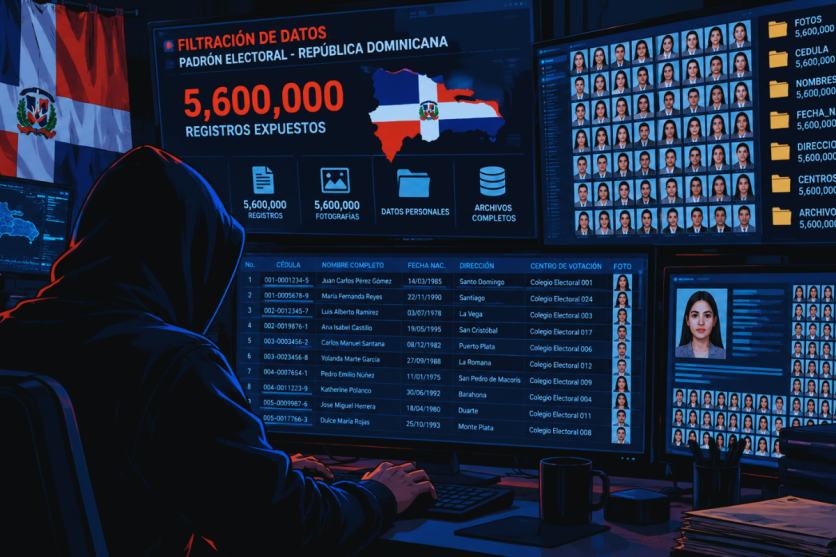
An alleged threat actor claims to have obtained 6.8 million voter records and 5.6 million photographs purportedly linked to the Dominican Republic's electoral registry, raising concerns about the possible exposure of citizens' personal information.
The allegation surfaced on Tuesday, 13 October 2026, but neither the authenticity of the data nor a breach of government systems has been independently confirmed.
Cybersecurity account Dark Web Informer publicised the claim on X, identifying the purported threat actor by the online alias 'wenhao'. The collection is reportedly around 20.7GB, although its contents, origin and claimed size remain unverified.
If genuine, the figures would suggest a potentially substantial exposure. However, there is no verified evidence establishing how the information was obtained, whether it originated from the electoral authority or how many individuals might be affected.
Hacker Claims to Have Obtained Millions of Dominican Voter Records
According to TechNadu, an individual using the alias 'wenhao' claims to have obtained 6.8 million electoral records and 5.6 million photographs. The individual's identity and claimed possession of the material have not been independently verified.
Those figures do not necessarily mean that 6.8 million people have been affected. The alleged collection could contain duplicate records, outdated entries or information drawn from different sources. The photographs could also belong to people already represented among the records.
It remains unclear what the collection contains, including whether the alleged files feature names, identification numbers, addresses or other personal details. There is also no independent confirmation that the photographs are genuine identification images.
Crucially, the alleged possession of government-related information does not establish that government systems were hacked. Investigators would need to authenticate the material and determine its origin before concluding that any unauthorised access or extraction occurred.
Dominican Electoral Authority Previously Denied Data Breach Allegations
The latest allegation follows an earlier dispute involving information attributed to the Dominican Republic's civil registration system.
In July 2026, a forum user identified as 'sc4r_0x00' claimed to have exposed approximately 105,000 civil registration records. According to Dominican news reports, the claim was accompanied by screenshots purportedly showing samples of the information.
The Junta Central Electoral (JCE), which oversees elections and civil registration, denied that its systems had been compromised. El Caribe reported on 26 August that the authority said it had recorded no security incident compromising its systems or databases and denied that information from its databases had been exposed.
Those statements addressed the earlier allegations, not the October claim. There is no verified connection between 'sc4r_0x00' and 'wenhao', nor evidence that their alleged datasets originated from the same source.
Why the Alleged 5.6 Million Photos Raise Privacy Concerns
The reported photographs could make the alleged collection particularly sensitive if they are genuine and can be linked to identifiable individuals.
Photographs combined with personal information could potentially be exploited for impersonation or fraudulent applications. However, such misuse would depend on what information is available and the identity-verification safeguards used by targeted organisations. There is no verified evidence that the alleged collection has been used for fraud.
The allegation comes amid the Dominican Republic's national identity-card renewal programme. In an official announcement published on 27 August, the JCE said 3,066,520 people had renewed and received their new identity cards. It placed the electoral roll at 8,569,272 people at the time.
According to official JCE guidance, the new cards feature laser-engraved greyscale photographs, while colour versions are stored in the authority's database, electoral roll and digital identity system. The guidance underscores the sensitivity of identity photographs, but there is no evidence linking the renewal programme or those stored images to the alleged collection.
Has the Dominican Republic Data Leak Been Confirmed?
As of 13 October 2026, the alleged exposure of 6.8 million Dominican voter records and 5.6 million photographs remains unconfirmed. No independently verified technical findings reviewed for this report establish the authenticity or origin of the purported 20.7GB collection.
Confirming the claim would require investigators to examine the material, identify its source and determine whether any systems were accessed without authorisation. They would also need to establish whether previously private information was exposed and how many people, if any, were affected.
Residents concerned about identity theft should avoid sharing identification documents, passwords or verification codes in response to unexpected messages. Suspicious requests should be checked through official channels rather than through links supplied by unknown senders.
For now, the distinction remains critical: an alleged threat actor claims to possess millions of Dominican electoral records and photographs, but neither the alleged leak nor a breach of the country's electoral systems has been independently established.


