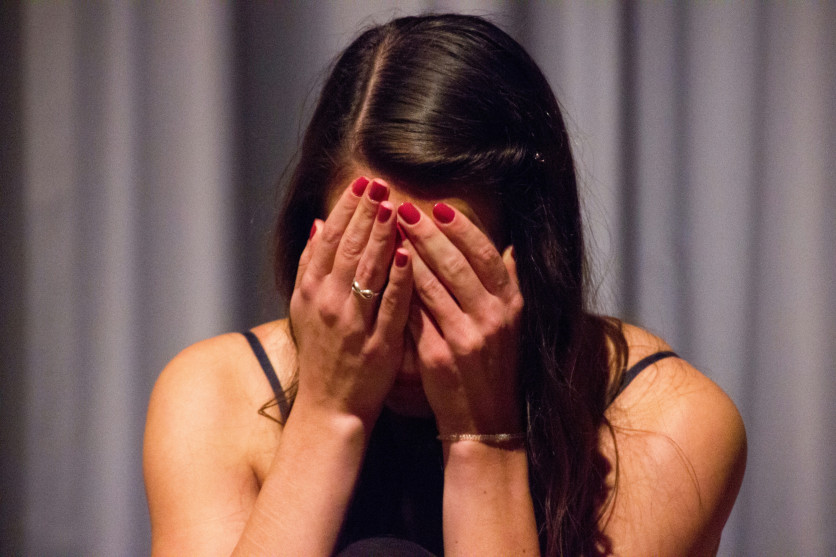
A journalist sat down in front of a computer screen and saw herself naked. She had not posed for the image. She had not consented to it. The original photo showed her fully clothed, arms folded, composed.
Per the account published by Crimeworld journalist Denise Smith, fifteen seconds and one freely available app later, she was not.
The report is a direct, first-person demonstration of a technology that has moved faster than the legislation written to stop it.
The Tech Is Already Faster Than the Law
It starts with one journalist and one photo. It ends somewhere else entirely.
YouTube and X drove more than 5.7 million visits to nudification websites between December 2025 and March 2026, with promotional videos appearing openly on both platforms as discovery mechanisms rather than fringe content.
The Institute for Strategic Dialogue (ISD), a London-based research organisation focused on disinformation and tech-enabled harm, identified almost 290,000 mentions of non-consensual intimate image tools on X alone between June 2020 and July 2025. That is not a niche community. That is an ecosystem.
The UK Parliament passed the Crime and Policing Act 2026 earlier this year, creating criminal liability of up to three years on indictment for developers and suppliers of nudification tools. Under the Online Safety Act 2023, platforms and search engines face regulatory obligations to address illegal intimate imagery on their services.
The law is real, written, and in force.
What 'Banned' Actually Means When the App Is Overseas
The Crime and Policing Act 2026 targets the supply of nudification tools.
Separately, the government's factsheet describes a new statutory framework requiring platforms to remove reported non-consensual intimate images as soon as is reasonably practicable, with a 48-hour deadline for valid reports, though Ofcom's implementation of the associated regulatory codes remains ongoing.
There is a nudifier for every journalist who has not yet reported hers.
The structural problem is not that the law is poorly drafted. It is that the law operates on platforms and developers, while the tools themselves are frequently hosted overseas, migrate across services when removed, and require no technical sophistication to use.
As Data & Society, a US-based technology research institute, noted in commentary on the ISD findings: the cost of generating a non-consensual intimate image has dropped to near-zero. Criminalising supply does not address ease of access.
“What AI changes is scale, speed, and accessibility. The technical barrier has dropped significantly, which means more people...can produce more convincing outputs with minimal effort. As with many AI-enabled harms, this results in a glut of content.” www.wired.com/story/deepfa...
— Data & Society (@datasociety.bsky.social) 2026-04-17T14:15:46.576Z
App-store screening is a separate pressure point. San Francisco's city attorney sent cease-and-desist letters to Apple and Google demanding the removal of nudification apps from their storefronts, generating significant debate about the limits of pre-distribution accountability.
Critics noted that face-swapping and generic image-editing functionality means no single app category is easily bounded. Developers know this too.
Who This Happens To
Women and girls are the principal targets, a pattern consistent across UK parliamentary debate, European political commentary, and the research communities tracking the technology's spread. The Crime and Policing Act 2026 sits within the government's violence against women and girls legislative agenda. That framing is accurate and it matters.
It does not fully account for younger victims.
The National Crime Agency and the Internet Watch Foundation have both issued guidance on the risk to children from AI-generated intimate imagery, and IWF reporting from mid-2026 noted that criminals are manipulating photographs found on school websites and social media to create sexually explicit material.
The harm profile extends well below the adult victim population the legislation primarily addresses.
The image Denise Smith saw on that screen was of herself. Composed, boardroom-ready, entirely fabricated. Fifteen seconds.


