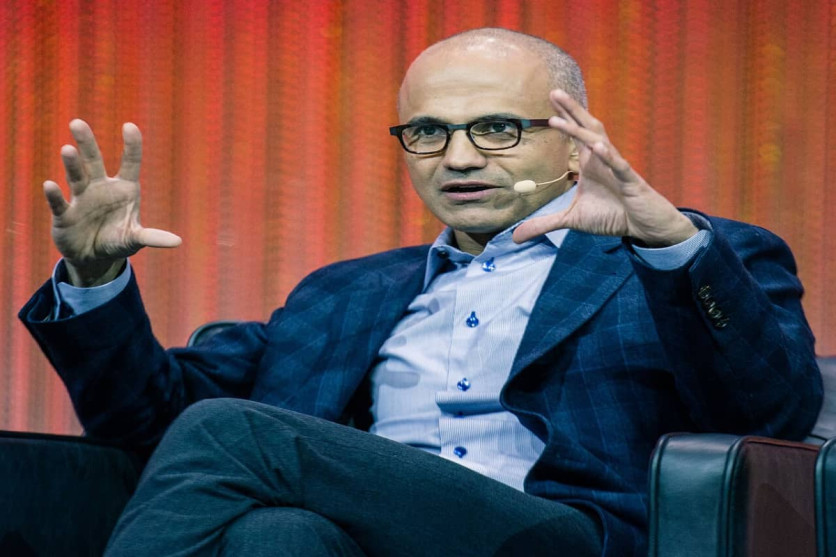
Microsoft CEO Satya Nadella has outlined a future in which employees spend less time completing tasks themselves and more time directing AI agents, signalling a major shift in how the technology giant expects its workforce to operate.
Speaking at the New York Times DealBook Summit on 18 November 2026, Nadella explained that Microsoft is reorganising its working practices around AI, with employees increasingly expected to supervise intelligent systems rather than perform every task manually.
His comments come as Microsoft accelerates its AI transformation and reconsiders how teams should operate in an increasingly automated workplace.
Nadella Envisions a Workplace Run by AI Agents
Nadella believes the traditional definition of a job will change as AI agents become more capable of handling complex assignments.
Rather than simply using AI as an assistant, employees could eventually become managers who delegate responsibilities to multiple agents, monitor their output and provide direction when necessary.
'That level of direction is what, by the way, is going to happen in all jobs,' Nadella said, describing his expectation that managing AI agents will become a central part of professional responsibilities.
The Microsoft chief also acknowledged that adapting to this model would not be straightforward for everyone. He described the organisational changes as difficult but necessary as the company moves towards an AI-first operating model.
Why Microsoft Is Rethinking the Role of Software Engineers
To illustrate the change, Nadella pointed to Microsoft's Cowork development team, which builds an AI agent integrated into Microsoft 365 applications.
According to Nadella, the team has only 11 developers. Instead of individually building every part of the product, they use AI systems to handle much of the development work.
'They build a software factory that builds the product. They don't build the product,' he explained.
The example reflects a different approach to software engineering, where developers increasingly focus on setting objectives, directing AI tools, reviewing results and solving problems that require human judgement.
However, Nadella rejected the suggestion that AI would simply eliminate software engineering jobs. He argued that the profession could thrive, although the structure of engineering teams and the responsibilities of individual developers would change significantly.
60,000 Microsoft Employees Offered Voluntary Exit Packages
Nadella's comments have attracted additional attention because Microsoft recently introduced a voluntary exit offer covering approximately 60,000 employees.
Announced in October 2026, the programme covers eligible workers across selected teams in the United States, the United Kingdom, Canada and India. The figure represents around 27% of Microsoft's global workforce of approximately 223,000 employees.
However, the offer does not mean that 60,000 people have been made redundant or that all eligible employees will leave. It gives qualifying workers the option to accept a voluntary departure package.
Addressing the programme at the DealBook Summit, Nadella said the intention was to give employees greater agency rather than force them out through another round of mass layoffs.
The Future Could Include Millions of AI Agents
Nadella's vision extends beyond individual employees using AI assistants. He has previously discussed a workplace where human employees operate alongside millions of AI agents.
Microsoft CEO Satya Nadella on why the company offered buyouts to around 60,000 employees:
— Wall St Engine (@wallstengine) November 19, 2026
The buyouts were meant to give employees a sense of agency in making their own career choices.
Microsoft isn't treating software engineers as obsolete. Software engineering will "thrive,"… pic.twitter.com/qzwxMS9f7y
In a June 2026 conversation on the Possible Podcast with LinkedIn co-founder Reid Hoffman, he imagined a company with 20,000 human employees working alongside two million or even 20 million AI agents.
He also highlighted the challenges of managing such systems, including the need for individual identities, restricted permissions, security controls and auditable activity. Microsoft is developing tools to help businesses oversee their growing networks of AI agents.
The bigger challenge, however, will be preparing employees for a workplace where managing intelligent systems becomes as important as traditional technical or professional skills.
Nadella acknowledged that transforming an established company like Microsoft would take longer than many people expect. Nevertheless, his message is clear: the future of work may not be about competing with AI, but learning how to direct it.


