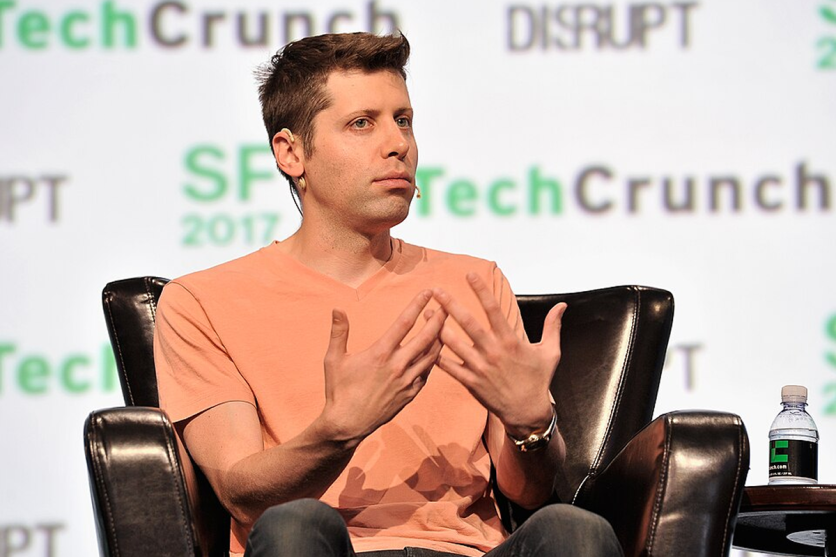
OpenAI chief executive Sam Altman wants robots to help build the data centres powering artificial intelligence, and expand computing capacity.
He outlined the long-term ambition on John Collison's Cheeky Pint podcast, published on 29 October 2026, but announced no deployment site or timetable.
Altman envisages AI-controlled machines contributing to construction and manufacturing. His proposal remains a vision, not evidence that OpenAI has deployed robots to build an entire data centre.
How Robots Fit Into OpenAI's Expansion
Altman said OpenAI was learning to build its own data centres and would direct its robotics programme towards building more. He described a system in which AI could control robots, operate chip fabrication plants and help manufacture turbines and solar panels.
JUST IN: 🚨 Sam Altman says robot-built "self-replicating data centers" are within grasp. https://t.co/HDfpLIyryJ
— The Web4 Report (@Web4Newsletter) November 15, 2026
He called the broader concept 'self-replicating data centers', suggesting that AI infrastructure could eventually help create additional infrastructure. Altman said the approach was within reach, while acknowledging that expanding production through robotics would take time.
The goal is to ease bottlenecks in the supply of computing equipment and energy infrastructure as AI demand grows. However, Altman identified no robot, factory or project where OpenAI intends to test the idea.
OpenAI's existing Stargate expansion relies on outside partners, including Oracle and NVIDIA at Abilene, Texas. On 13 November, Fortune also reported that OpenAI had dissolved its standalone robotics team, moving researchers to research and applied staff to its Applied organisation.
OpenAI told Fortune the reorganisation reflected its continued commitment to robotics, rather than a withdrawal from the field. Neither announcement established that robotics would soon be used at Abilene or another Stargate construction site.
Why Altman Wants Cheaper AI Infrastructure
Altman suggested that installing and operating one gigawatt of advanced AI computing capacity could cost around $70 billion (£53 billion) over five years.
He said he would prefer that illustrative figure to fall towards $20 billion (£15.1 billion), without setting a budget, deadline or robotics savings target.
His argument extended beyond construction automation. He pointed to cheaper energy and chips, increased supply and narrower margins throughout the production chain to lower costs.
Sam Altman, CEO of OpenAI, says the AI industry puts relatively too much focus on better algorithms.His view covers the whole supply chain that produces intelligence. OpenAI has brought chip design and model design together, and he calls that a good move.“there is relatively too much focus on algorithms that create intelligence.”The missing piece in his picture is data centers that create more data centers, with robots running a truly automated supply chain.he calls the idea easy to sketch in a few lines, so the hard part is getting all those companies and all that machinery working together
— Ruben (@rdominguezibar) November 11, 2026
Research group Epoch AI separately estimates about $38 billion (£28.8 billion) in upfront capital costs for one gigawatt of IT capacity.
Its model allocates approximately $26 billion (£19.7 billion) to servers and networking, and $12 billion (£9.1 billion) to buildings, land and utility works.
Those are modelled construction and equipment expenses, not the same five-year ownership measure Altman discussed. Comparing the totals directly, or claiming robotics could close the gap, would misrepresent both figures.
What Construction Robots Can Already Do
A narrower example comes from DeWalt and August Robotics, whose DALE machines drill concrete floors for equipment supports. DeWalt product manager Gordon Brookes told The Data Center Engineer that four robots drilled 7,000 holes at one project in a week.
The contractor had originally allowed one week to mark hole locations, followed by six to seven weeks of manual drilling. Those timings reflect the account of a specific job, not independently verified savings across an entire data centre build.
There is no reported connection between that project and OpenAI's plans. For now, Altman's proposal remains a long-term ambition with unproven cost and construction benefits.


