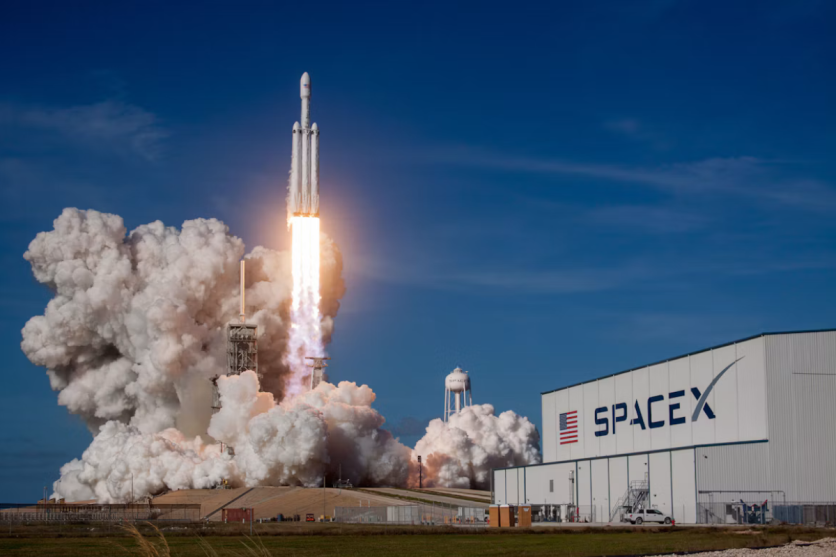
In a first authorisation of its kind, the US Federal Communications Commission on Wednesday, 25 November 2026, accorded SpaceX conditional approval to deploy up to one million satellites that would work as AI data centres in orbit.
The project, called Starmind, would run on solar power and, SpaceX says, cut the energy costs of computing on Earth. The licence does not require the company to launch every satellite, and it includes firm deadlines.
Scientists are already pushing back. Astronomers, including those at Britain's Royal Astronomical Society, say the plan threatens the night sky and risks a chain reaction of space collisions.
Strict Deadlines Come With the Licence
SpaceX must launch and operate its first Starmind satellite by 25 November 2033 or lose the authorisation. It must then have 10% of the fleet in orbit by 2035 and half by November 2038, according to terms reported by Newsweek.
The satellites would circle in six orbital shells between 500 and 1002 kilometres above Earth. Before launching any above 600 kilometres SpaceX must file a final debris plan.
The company must report twice a year on how many satellites it has deployed and removed from service. Deployment milestones run through 2040.
Why Musk Wants AI Computing in Orbit
Data centres are the physical backbone of AI and they swallow vast amounts of electricity. SpaceX told the FCC that near-constant sunlight in orbit would cut costs and energy use while reducing environmental harm compared with ground sites.
The plan leans heavily on Starship the company's giant reusable rocket that is still in development. Cheaper launches are central to making the sums work according to NBC News. Elon Musk has suggested the first Starmind satellite could fly as early as 2027.
SpaceX has around 11000 satellites in orbit today and originally sought permission for 42000 Starlink craft. FCC chairman Brendan Carr welcomed the decision as a bold step for American leadership in AI.
Astronomers Fear a Sky Full of Moving Lights
The American Astronomical Society says Starmind's larger spacecraft would shine brighter and for longer than existing satellites. It also warns of radio interference and waste heat and says public money spent on observatories could be wasted.
Astronomers credit SpaceX with reducing the glare of its Starlink craft but describe Starmind as a fundamentally different initiative. Dark sky consultant John Barentine estimated earlier this year that tens of thousands of star-bright moving objects could be visible at once even to the naked eye.
In Britain, the Royal Astronomical Society objected to the plan in a filing to the FCC. Its deputy executive director Robert Massey called the proposals intolerable and said they would destroy a central part of human heritage.
Debris Fears Cloud the Plan
Collision risk is another major concern. NASA scientist Donald Kessler described in 1978 how crashes between orbiting objects could create debris that triggers further crashes. A study reported in Science examined 16 planned constellations and found nine could produce unstable or runaway debris with Starmind the most notable example.
Astrophysicist Adam Becker dismissed the idea of launching a million satellites as a fantasy. Satellite operator Viasat and Amazon's Kuiper Systems also urged the FCC to refuse the application. The regulator maintains that Starmind operates within its orbital debris rules.
Approval is not the same as orbit. Between now and 2033, SpaceX must prove the technology works, and regulators and scientists will watch closely. How many satellites actually fly may decide whether Starmind becomes a new computing frontier or a warning about crowding the sky.


