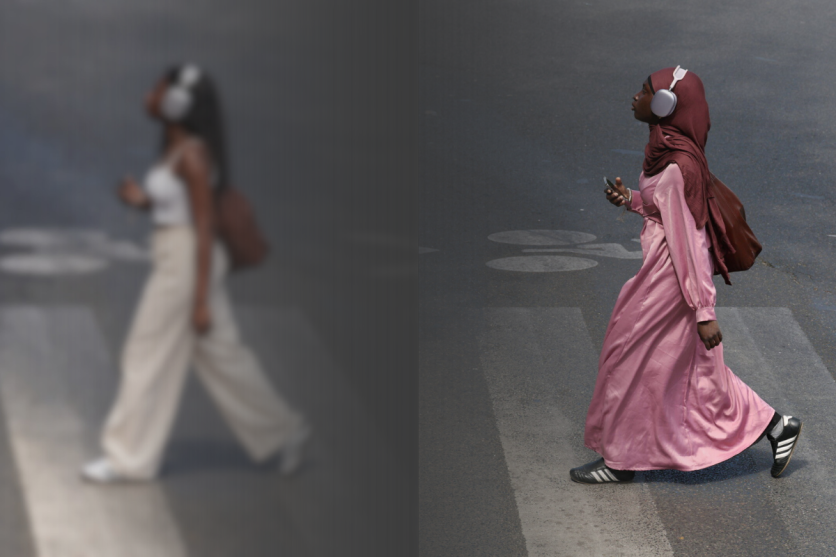
French National Rally MP Julien Odoul drew criticism online on 5 September after posting an AI-altered image on X that removed a woman's hijab and changed her clothes. The post came as the Rassemblement National renewed its push to restrict Islamic headscarves in public spaces.
Odoul, the MP for Yonne's third constituency and a spokesperson for the RN, captioned the image 'LIBERTÉ FRANÇAISE !', meaning 'French freedom'. He was responding to La France insoumise MP Aly Diouara, who had shared the original photograph a day earlier with the single word 'LIBERTÉ'.
In Odoul's version, the woman appeared with her hair uncovered, wearing a white sleeveless top and trousers instead of a headscarf and long pink clothing. The image had been altered using artificial intelligence, although Odoul did not identify the tool used or explain how the changes were made.
AI Edit Turns Viral Hijab Photo Into Political Flashpoint
The original photograph had already circulated widely online by the time Diouara posted it on 4 September under the caption 'LIBERTÉ'. Odoul replied the following day with the altered image, adding 'FRANÇAISE' to the phrase.
The alteration was not limited to the headscarf. Reports noted that the woman's hair and clothing had also been digitally changed, while much of the street scene around her remained intact.
The image quickly drew criticism on social media. Some users questioned the decision to alter the religious dress and appearance of a woman when there was no publicly documented indication that she had agreed to the changes.
Journalist Louis Pisano later said on X that the woman's family had contacted him. According to Pisano, relatives said the original photograph had been taken without her knowledge. The unidentified woman wanted to remain anonymous, and the family was trying to limit its circulation.
No direct public confirmation from the woman herself was identified in the sources reviewed.
'French Freedom' Lands in Heated Hijab Debate
The post appeared against the backdrop of the Rassemblement National's renewed proposal to ban Islamic headscarves in public spaces.
On 30 August, RN MP Jean-Philippe Tanguy said women who continued to wear the hijab under such a ban would face a fine if the party came to power. He compared the proposed penalty with fines imposed on people who do not wear seat belts.
RN president Jordan Bardella subsequently said voters would decide the issue through a referendum as part of a wider debate over what he described as 'Islamist ideology'.
The French government has questioned whether such a measure could withstand legal and practical scrutiny. Government spokeswoman Maud Brégeon said on 31 August that there were 'obvious reservations' over both its constitutionality and its applicability.
Odoul has previously criticised the Islamic veil in sport. A written parliamentary question published on 14 July was titled 'Coupe du monde 2026: Les Bleus exposés à la banalisation du voile islamique', which translates to '2026 World Cup: Les Bleus exposed to the normalisation of the Islamic veil'.
French law, however, does not currently impose a general ban on wearing an ordinary hijab in public streets.
French government guidance states that people are generally free to manifest their religious beliefs in public, including through religious clothing and symbols, provided they comply with other laws and public-order requirements. Different restrictions apply in certain settings, including state primary and secondary schools and public-service employees carrying out their duties.
France also prohibits clothing intended to conceal the face in public under its 2010 face-covering law. A headscarf does not fall under that prohibition when the wearer's face remains identifiable.
AI Manipulation Raises Questions Over Consent
Beyond the political dispute, the episode highlights a wider issue surrounding generative AI. Realistic images of real people can now be altered and redistributed rapidly, changing everything from clothing and appearance to religious symbols.
French law already contains provisions dealing with manipulated representations of individuals.
Article 226-8 of the French Penal Code covers making a montage involving a person's image or words available to the public or a third party without consent where its manipulated nature is not apparent or expressly identified. The provision also applies, under similar conditions, to algorithmically generated visual or audio content representing a person.
The baseline maximum penalty is one year in prison and a €15,000 fine. When an offence covered by the provision is carried out using an online public communication service, the maximum penalties increase to two years in prison and €45,000.
That does not establish that Odoul's post violated Article 226-8. Any legal determination would depend on the circumstances, including whether consent existed, the nature and presentation of the manipulation, and whether its altered character was sufficiently apparent or disclosed.
What is established by the public posts and contemporary reporting is that Odoul published an altered version of the photograph as a political response to Diouara's use of the word 'liberté', with multiple reports describing the alteration as AI-generated.
The controversy therefore extends beyond France's long-running debate over the hijab. It also illustrates how generative AI can place the appearance of a real person at the centre of political messaging, raising questions about consent, image rights and the use of manipulated personal images in public debate.


