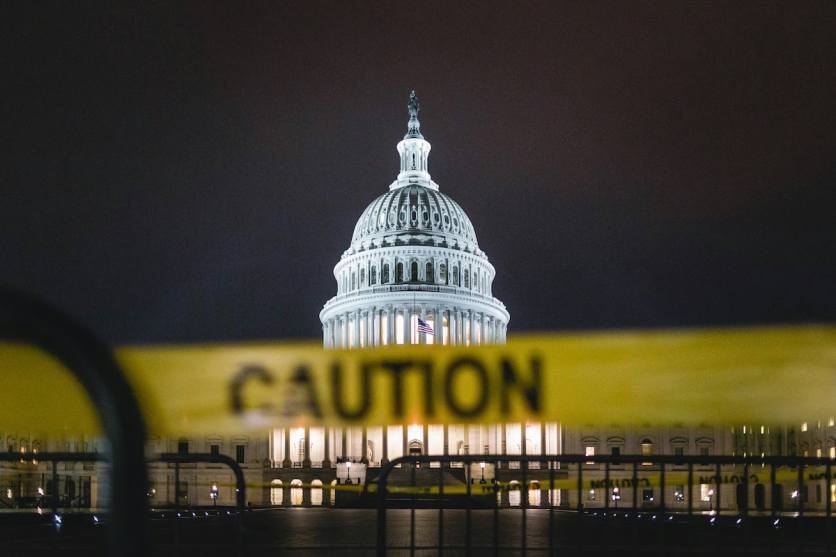
AI is accelerating cyberattacks on US government networks as investigators examine a reported breach of unclassified intelligence systems.
Nextgov/FCW reported that ARTEX was believed to have been used, citing sources familiar with the matter. Neither the FBI nor the affected agencies have publicly confirmed the link.
In an advisory dated 13 November 2026, the FBI warned that hackers are using ARTEX to automate intrusions, from reconnaissance to data exfiltration, significantly reducing the time required.
How ARTEX Automates Cyber Intrusions
ARTEX is an open-source AI framework that can automate several stages of a cyber intrusion. Rather than conducting reconnaissance manually, attackers can use it to survey networks, identify exposed services, and prepare for exploitation.
Traditional cyberattacks often require human involvement in reconnaissance, exploitation, lateral movement and data theft. AI frameworks can automate and coordinate these stages, reducing the time and expertise required.
This creates a speed imbalance: attackers can automate reconnaissance and exploitation, while defenders must still investigate alerts, assess risks and coordinate responses.
Conflicting Accounts Over Spy Agency Breach
According to The New York Times, the suspected breach targeted an analysis system used to search the open internet and generate intelligence. The breach reportedly affected systems used by the CIA and ODNI. CNN separately reported that the National Geospatial-Intelligence Agency (NGA) may also have been affected.
Investigators have reportedly considered possible Chinese involvement, but no attribution has been publicly established.
Reports on recent intelligence-system disruptions differ. The CIA/ODNI breach remains under investigation, with its scope unclear. Separately, DNI Jay Clayton blamed an NSA outage on software patching and upgrades. Officials said classified systems and critical capabilities were unaffected.
Even unclassified systems can contain strategically valuable information. Depending on what was accessed, adversaries could gain insight into intelligence priorities, workflows and organisational relationships. The extent of any exposure remains unclear.
Alert Fatigue and Dual-Use AI Risks
The pressure is not limited to intelligence agencies. Federal networks, defence contractors and other government-affiliated organisations face constant probing from automated tools that can generate large volumes of alerts.
Automated scanning can generate large volumes of alerts, making it harder for security teams to distinguish routine activity from genuine threats. This increases the risk that an actual intrusion could be missed among routine warnings.
The GAO examined these risks in its 20 November 2026 report, AI and Cybersecurity: Technologies Can Magnify Cyberattacks and Enhance Cyber Defense. It found that AI can amplify cyberattacks while helping defenders automate cybersecurity tasks. It also warned that defensive AI tools remain difficult to test and that guidance is insufficient.
Securing AI as an Attack Surface
Federal defenders need more than perimeter security: continuous monitoring, rapid patching, identity controls, network segmentation, and tested response plans. Automated attacks demand swift detection and containment.
Agencies must also consider AI systems as part of their attack surface. A compromised AI agent, a poisoned data source, or a misconfigured automation workflow could create additional routes into a network.
The real differentiator is not AI itself but how effectively it is deployed, with reliable data, proper validation and strong operational discipline. For US government systems, the priority is to detect, validate and contain intrusions before automated tools can exploit vulnerabilities.


