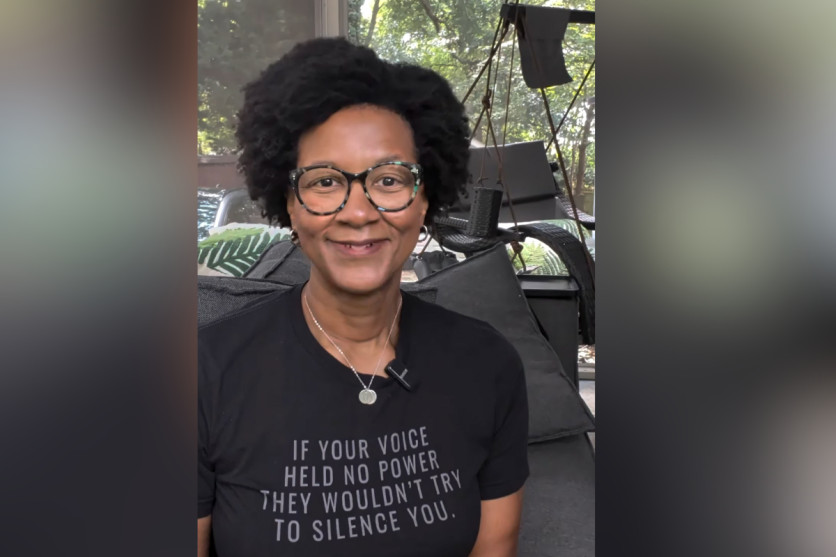
College Park Mayor Bianca Motley Broom is considering legal options after an apparently AI-generated image depicting her kissing a man who is not her husband circulated on social media, according to a 21 September 2026 report by the Atlanta Journal-Constitution.
Motley Broom has described the image as fabricated, saying it misrepresents an encounter during a January City Council retreat in Braselton, Georgia. The mayor has been married for more than 13 years, according to the newspaper.
The controversy has intensified political tensions in College Park while highlighting growing concerns about artificial intelligence being used to create misleading images targeting public officials.
Manipulated Image Fuels Political Tensions
The disputed image appeared on the Everything College Park, Georgia Facebook page on 6 September 2026, alongside another photograph showing Motley Broom talking to the same man at Louis' House of Bourbon, a bar at Château Élan Resort.
Allegations, fake social media profiles, and claims of AI-manipulated photos: The political divide in College Park is heating up following new attacks on Mayor Bianca Motley Broom. @AdrianneMarie19 https://t.co/X9ya74X8zM
— SaportaReport (@SaportaReport) September 13, 2026
Brian Magerko, a Georgia Tech Regents Professor of Digital Media who examined the photographs for the Atlanta Journal-Constitution, said he was 99.99999 per cent certain the kissing image was AI-generated.
He cited the identical positioning of background bystanders and objects, including a football game displayed on a television, in both photographs.
The controversy spilt into an 8 September City Council meeting, where Councilwoman Jamelle McKenzie denied taking the photograph, operating the anonymous Facebook page or knowing who created the profile.
McKenzie acknowledged sending real estate information to the account earlier in the year, maintained it was unrelated to the mayor's photograph and criticised Motley Broom's conduct at the bar.
Georgia's Legal Framework Leaves Gaps
Georgia Code Section 16-11-90 prohibits certain non-consensual electronic transmissions of nude or sexually explicit images, including falsely created images. Because the disputed image involving Motley Broom does not depict nudity or sexually explicit conduct, it does not appear to fall within that statute.
Georgia lawmakers also considered Senate Bill 9, the Ensuring Accountability for Illegal AI Activities Act, which addressed AI-related sentencing in its original Senate form and election interference penalties and campaign disclosures in a House substitute.
The Senate disagreed with the House substitute on 28 January 2026, leaving the bill un-enacted and establishing no comprehensive civil remedy for non-sexual reputational deepfakes.
According to the National Conference of State Legislatures' October 2026 summary, 31 US states have enacted laws regulating AI-generated media in political messaging, leaving Georgia without a comparable statewide framework.
Traditional civil defamation remedies may still apply, though as an elected official Motley Broom could face the constitutional actual-malice standard — requiring clear and convincing evidence of knowing falsity or reckless disregard for the truth — if the challenged implication relates to her fitness for office or a matter of public concern.
The Challenge of Accountability
The incident illustrates the difficulty of addressing manipulated content after it spreads online. Even when forensic experts identify visual inconsistencies, fabricated images can reach wide audiences before corrections gain comparable visibility.
Identifying those responsible can also prove difficult when posts originate from anonymous accounts, requiring investigators to establish who created, published or distributed the material.
Beyond individual reputations, AI-generated imagery can undermine public confidence, deepen political divisions and discourage women from seeking or retaining elected office.


