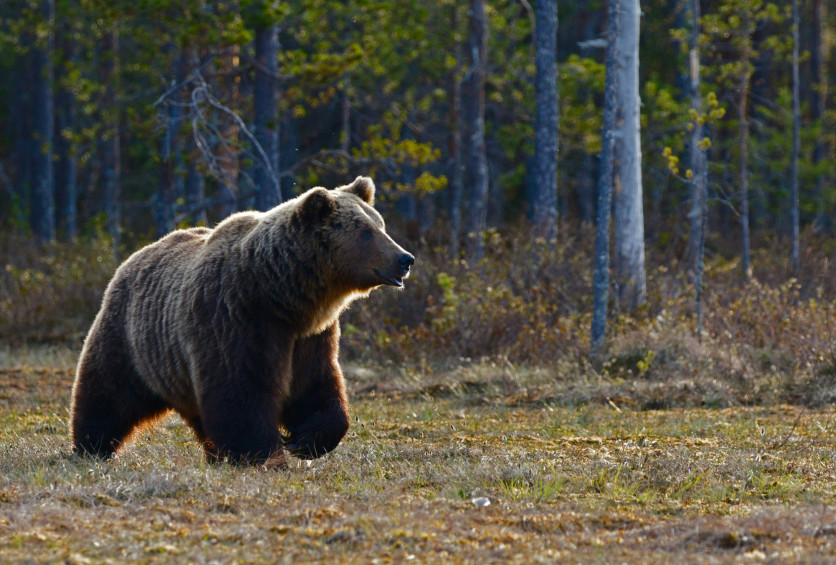
It was the bear that wasn't. A woman in Russia has been fined $178 (£134) after using ChatGPT to generate a fake photo of a bear wandering through her neighbourhood.
The image went viral, frightened residents and prompted wildlife rangers to scour the area. They found no bear. The authorities, however, found someone to fine.
The woman, from Magdagachi in Russia's Far Eastern Amur region, intended the image as a joke for a friend in September. Instead, the picture spread through messaging apps, triggering worried calls to police and prompting local officials to deploy wildlife specialists to track down the bear.
A court fined her 15,000 roubles (£134) this week after she admitted creating the image, according to the regional courts' press service.
The incident might sound like a bizarre comedy sketch, but the consequences were very real — particularly in a country where bear encounters can be deadly.
'The Bear Was AI-Generated, the Fine Was Not': Internet Reacts To Bizarre Prank
The bizarre case has all the ingredients of an internet punchline, and social media wasted no time capturing the absurdity of a fake animal causing very real trouble.
Few summed up the saga better than one user, who noted that a few seconds of AI image generation had ended with a real-world bill and wildlife rangers searching for a creature that never existed:
'The bear was AI-generated, the fine was not. Finally, a hallucination with consequences.'
Others, however, rushed to the woman's defence. Their argument touched on a growing concern about AI-generated misinformation: even when an image starts out as a joke, those who mistake it for reality can end up frightened, while authorities are left to deal with the fallout:
'Punishing her is wrong. She just proved AI is more dangerous than any bear.'
Then there were those who turned their fire on the technology itself, poking fun at AI's notorious image-generation flaws. The joke lands harder because this time the picture was apparently convincing enough to make people believe a dangerous animal was roaming their neighbourhood:
'Getting ChatGPT to generate a bear with the correct number of paws is the real miracle here.'
Not the First AI Animal Hoax: Singapore Faced a Fake Crocodile Scare
Russia's bear isn't the only beast to escape an AI image generator. Just weeks earlier, Singapore had its own scare, this time starring a very fake crocodile.
On 20 August, Singapore's national water agency received a report of a crocodile at Pandan Reservoir, accompanied by a photograph. The image prompted a search operation involving the national water agency and the National Parks Board, while water activities at the reservoir were suspended.
Authorities soon confirmed the photo was a fake, and the crocodile was nothing more than a few clever pixels.
A 30-year-old man, Ye Lin, was charged in September with communicating a false message and obstructing the course of justice over the incident. He told the court he intended to plead guilty, according to Channel NewsAsia. It's worth remembering that a charge isn't a conviction. Until a court rules, the person involved is still innocent in the eyes of the law.
The similarities are striking. In both cases, an AI-generated animal image escaped its original context and prompted authorities to respond to a supposed wildlife threat.
Neither prank required a real animal to cause disruption. All it took was a picture that people believed was genuine.
A Very Real Bear Problem Made the Fake Sighting More Frightening
In Russia, the prank landed at a particularly sensitive time.
At least 26 people have reportedly been killed in bear attacks since spring, according to Russian state news agency RIA Novosti. Hungry bears emerging from hibernation, combined with a poor crop of berries and pine nuts, have increased the chances of encounters with humans, experts say.
The country's brown bear population has more than doubled over the past three decades, reaching an estimated 308,000 animals. Milder, shorter winters are among the factors cited for the increase.
Officials are already wrestling with the problem. More than 3,440 bears considered threats to humans had been killed since the start of the year, according to figures compiled by state news agency TASS and published on 10 October, so a photograph of a bear in a residential street was never going to be dismissed as a joke.
For residents already nervous about a real-life bear, the photo was enough to set hearts racing. And one fake sighting was all it took to get public safety officials and wildlife teams scrambling.
When an AI Joke Becomes Everybody Else's Problem
Generative AI has made it remarkably easy to create convincing scenes that never happened. A few prompts can produce a bear on a street, a crocodile in a reservoir or almost any other unlikely sighting.
The difficulty begins when those images are shared without context. A private joke can become a public warning, and a rumour can trigger a chain reaction before anyone checks the evidence.
The consequences extend beyond embarrassment for the person who created the image. Think of it as a chain reaction. People get scared, officials have no choice but to investigate, and the resources that should be helping in genuine emergencies get pulled away
The Russian woman ultimately paid 15,000 roubles (£134) for her prank. In Singapore, the crocodile case escalated into criminal charges. If the bear and the crocodile prove anything, it's that the animals were imaginary, but the trouble wasn't.
AI can make a fake bear in seconds. Cleaning up the mess it leaves behind is a very real human job.


