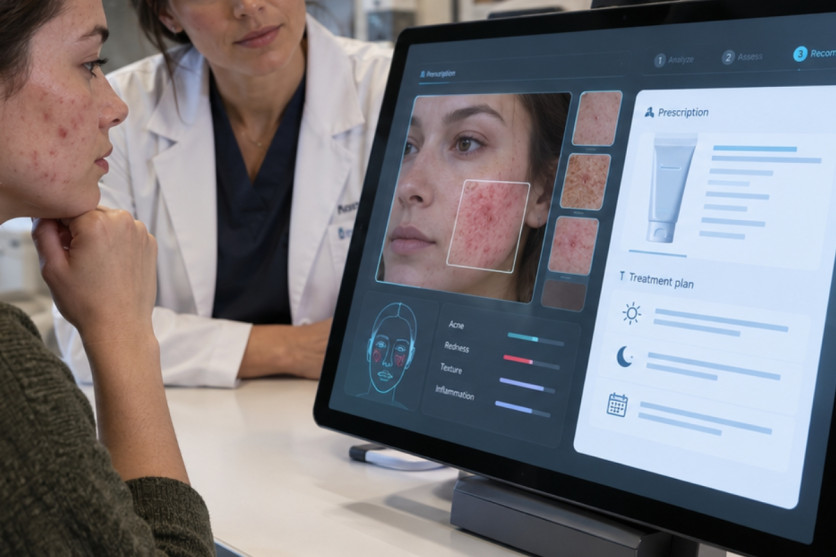
Utah has authorised a controlled pilot allowing Nolla Health's AI system to issue first-time prescriptions and refills for topical acne treatments. The one-year programme runs from 5 October 2026 to 5 October 2027 and is limited to Utah adults with mild-to-moderate acne.
But allowing software to take on part of a prescriber's role raises another question: who is responsible if an automated decision harms a patient?
Utah's agreement does not resolve every potential liability dispute in advance. It requires Nolla to carry professional liability insurance and bars the company's terms of service from limiting its liability for harm linked to the pilot.
The experiment therefore tests more than whether AI can prescribe. It also tests whether regulators can give software greater clinical authority while maintaining meaningful safeguards and accountability.
AI Gets Prescribing Authority, but Not Blanket Immunity
Utah has not abolished its prescribing rules statewide. Through the state's AI regulatory sandbox, the Division of Professional Licensing agreed not to enforce specified licensing, professional-conduct and telehealth provisions when Nolla operates within the approved protocol. That regulatory relief applies only to activities covered by the agreement.
Nolla Derm uses patient-supplied medical information and facial images before selecting from a restricted list of topical treatments. It cannot prescribe oral medication or isotretinoin, and patients with severe acne are excluded from the automated process.
Utah's authorised-pilots record also makes clear that sandbox participation is not a general licence to practise medicine or a state endorsement of the product. The agreement applies to one company, one product and a defined set of activities for a limited period.
Nolla must maintain professional liability insurance, while its terms of service for the pilot may not limit the company's liability for harm. Those safeguards preserve legal remedies for patients, but they do not determine in advance who would ultimately be responsible for damages in a disputed case.
Human Oversight Shrinks as the Trial Progresses
The pilot does not begin with autonomous prescribing. For the first 100 patients, Nolla says two Utah-licensed physicians independently review and approve every AI-generated prescription before it reaches the patient. The company says this stage lasts at least four weeks.
If safety benchmarks are met and Utah gives written approval, the programme can enter stage two. For the next 400 patients, bringing the total to 500, Nolla Derm may issue prescriptions directly while a physician reviews every case afterwards, at least weekly.
In stage three, physicians review at least 10% of prescriptions each month, plus cases involving an escalation or reported side effect. Nolla says moving between stages requires at least 95% agreement between physicians and the system, no serious adverse events and written approval from the state.
Severe acne, pregnancy or plans to become pregnant, breastfeeding, a weakened immune system and a previous reaction to a listed medicine stop the automated process. Pharmacists are also told when a prescription comes through the AI programme and receive a physician contact for questions.
Why Utah Is Starting With Acne
Nolla argues that acne provides a relatively controlled setting in which to test AI prescribing. Patients must verify their identity, complete informed consent and a medical questionnaire, and take a five-angle facial scan.
The company says the process can produce a personalised treatment plan and, where appropriate, an initial prescription in about 10 to 15 minutes. The Utah pilot subscription is advertised from $4.99, or about £3.77 at 7 October 2026 exchange rates, per month. Medication costs are separate.
Nolla promotes the service as a way to reduce the cost and waiting time associated with conventional dermatology appointments. Those are company claims rather than findings established by the newly launched Utah pilot.
Whether the programme can deliver those benefits while maintaining patient safety will be a central test as regulators gather real-world data from the experiment.
Doctors Have Already Raised Concerns
Utah's broader move towards AI prescribing has already drawn opposition from doctors. In April, the Utah Medical Licensing Board called for the suspension of an earlier pilot involving Doctronic, which uses AI to process renewals for medications already prescribed by licensed providers.
The board said it had learned of the agreement only after the system was already live. In a 20 April letter, it warned that proceeding without consulting the board 'potentially places Utah citizens at risk' and recommended suspension pending further discussion.
Nolla followed a different process. Bloomberg reported, in a story published by the Los Angeles Times, that the Medical Licensing Board was consulted before authorisation and that the pilot was amended to include a third-party physician appointed through the board to oversee prescription reviews.
In June, American Medical Association chief executive John Whyte said: 'AI has enormous potential in healthcare, but it cannot replace physician judgment.' The AMA's 2026 position calls for transparency, accountability and meaningful physician oversight as AI becomes more involved in clinical decisions.
AI Can Prescribe, but Liability Does Not Disappear
Utah's Nolla experiment does not resolve who would be legally liable in every case involving an AI-generated prescription. Regulatory permission for AI prescribing is not the same as blanket immunity.
Nolla must carry professional liability insurance, operate within detailed safeguards and refrain from using its terms of service to limit liability for harm linked to the pilot. Utah's healthcare sandbox framework also requires participating organisations to preserve traditional legal remedies for patients.
The ultimate allocation of responsibility in any dispute would depend on applicable law, the obligations established under the pilot agreement and the facts of the individual case. Bloomberg reported that Utah has also incorporated specific duty-of-care provisions into Nolla's agreement to help define the company's responsibilities to patients.
That question could become increasingly important as AI moves beyond advising clinicians and begins making decisions traditionally reserved for healthcare professionals. The challenge for regulators will not simply be deciding what machines may do, but determining where responsibility falls when an automated medical decision causes harm.
Frequently Asked Questions
- What is the Nolla Health AI pilot in Utah?It is a one-year program allowing Nolla Health's AI system to issue prescriptions for topical acne treatments to Utah adults with mild-to-moderate acne.
- What are the safeguards in place for the AI prescribing pilot?Nolla must carry professional liability insurance, and its terms of service cannot limit liability for harm. Physicians review AI-generated prescriptions in stages, and pharmacists are informed of AI prescriptions.
- What are the limitations of the AI prescribing system?The AI system cannot prescribe oral medication or isotretinoin, and it excludes patients with severe acne, pregnancy, or other specific conditions.
- Why was acne chosen for the AI prescribing pilot?Acne provides a controlled setting to test AI prescribing, allowing for a personalized treatment plan and initial prescription in a short time.


