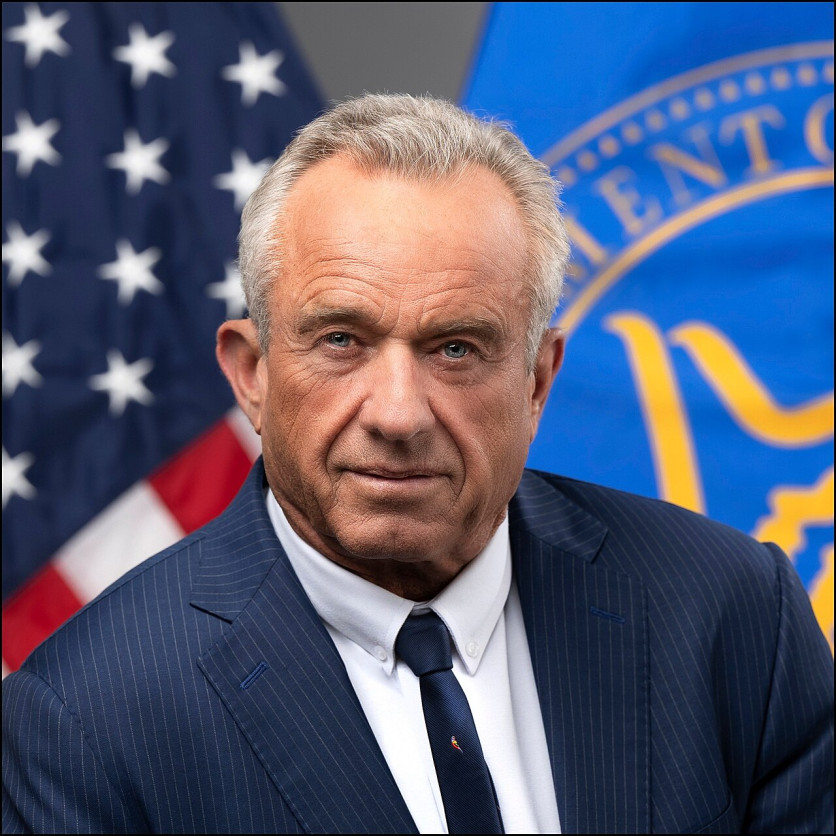
US Health and Human Services Secretary Robert F. Kennedy Jr. has claimed that OpenAI CEO Sam Altman told him it would now be 'malpractice' for doctors to make a diagnosis or prescription without first checking artificial intelligence.
Kennedy made the claim during a fireside chat with Vice President JD Vance at the Make America Healthy Again Summit in Washington, DC, on Tuesday, 29 September.
According to Kennedy, Altman's view of AI in medicine has changed significantly over the past two years. 'He said, but today it would be malpractice for a doctor to make a diagnosis or to make a prescription without at least checking AI,' Kennedy said during the event.
Kennedy presented AI as a tool that could give patients another perspective on their medical records, particularly when doctors have limited time to review lengthy histories.
Did Sam Altman Actually Say Doctors Must Check AI?
Kennedy said Altman had previously advised against relying on AI or ChatGPT for medical advice but now believes doctors should consult AI before making important medical decisions.
The distinction is important: Kennedy was recounting what he says Altman told him, rather than quoting a public statement made by the OpenAI CEO. Kennedy also argued that AI could help patients make sense of medical records that may run to hundreds or even 1,000 pages.
'You have six minutes with a doctor today. He's not going to be able to review it, but the AI can,' Kennedy said, adding that AI could distil the information and provide a second opinion that he described as 'much better informed than any doctor in the country.'
That comparison was Kennedy's characterisation of what AI could provide and should not be read as an established finding that AI is better informed than doctors.
RFK Jr.: Sam Altman was in the HHS office a couple of days ago. He said it would be malpractice for a doctor to make a diagnosis or to make a prescription without at least checking AI pic.twitter.com/BnygJvhHjo
— Headquarters (@HQNewsNow) September 30, 2026
OpenAI Executive Also Used the Word 'Malpractice'
Kennedy was not the only person at the summit to use the term. Felipe Millon, OpenAI's head of Government Go to Market, also told attendees that 'it is medical malpractice not to get a second opinion from AI today.'
Millon described AI as an additional viewpoint rather than a replacement for doctors. He also discussed his personal experience after his wife was diagnosed with breast cancer, saying she used ChatGPT to help understand her biopsy results before speaking with her doctor.
Millon's comments provide independent confirmation that an OpenAI executive at the summit advocated using AI as a second opinion.
AI Can Still Get Medical Answers Wrong
Research published in npj Digital Medicine on 24 September examined whether clinicians can reliably identify hallucinations produced by generative AI in simulated clinical decision-making.
Researchers assessed GPT-4o-generated medical hallucinations across different clinical scenarios and tested how well junior clinicians detected them. They found that clinicians identified only 15.8% of the hallucinations. The study also found that 13.1% of clinicians failed to detect any hallucinations across the scenarios they were given. Detection rates did not improve as the clinical risk increased.
The researchers said their findings highlight a gap between technical validation and real-world clinical use. They called for structured human-AI workflows and additional safeguards rather than assuming that simply placing a clinician in the loop will always catch AI errors.
The study was based on simulated clinical decision-making, so its results do not establish how often doctors would miss AI errors in actual patient care.
Even OpenAI Says AI Does Not Replace Doctors
OpenAI's own health guidance takes a more qualified position than the idea that doctors should simply follow AI recommendations.
When it launched Health in ChatGPT to US users in July 2026, OpenAI said the service was designed to help people understand their health information while 'supporting, not replacing' care from medical professionals.
OpenAI also states that ChatGPT can still make mistakes and does not replace the care and judgement of qualified medical professionals. It encourages users to verify important information and discuss medical decisions with healthcare providers.
Could Not Checking AI Actually Be Medical Malpractice?
Whether a doctor's conduct amounts to medical malpractice depends on applicable law and the circumstances of an individual case, including the relevant standard of care. Kennedy's statement about what Altman allegedly told him is therefore different from a legal ruling or professional requirement.
Research has nevertheless begun examining how AI could affect perceptions of medical liability.
A March 2026 study published in Nature Health involved 282 US participants who evaluated a hypothetical malpractice case involving a radiologist who failed to detect a brain bleed even though an AI system correctly identified an abnormality.
Participants were more likely to side with the plaintiff when the radiologist reviewed the scan with AI feedback in a single-read workflow than when the radiologist interpreted it twice, once before and once after seeing the AI feedback. The study examined perceptions of liability in a hypothetical scenario; it did not analyse actual malpractice cases.
What Kennedy's AI Claim Actually Means
Kennedy's comments reflect a growing debate over whether AI should become a routine second opinion in medicine.
His claim about Sam Altman is based on Kennedy's account of a private conversation, while Millon's separate comments at the same summit show that at least one OpenAI executive publicly encouraged people to use AI as an additional viewpoint.
At the same time, current OpenAI guidance says its health tools are intended to support rather than replace professional care, while recent research has shown that clinicians themselves can miss AI-generated medical errors.
The evidence therefore points to a more complicated question than whether doctors should simply 'check AI': how AI should be integrated into clinical decision-making, what safeguards should be required, and who remains responsible when an AI-assisted medical decision goes wrong.


