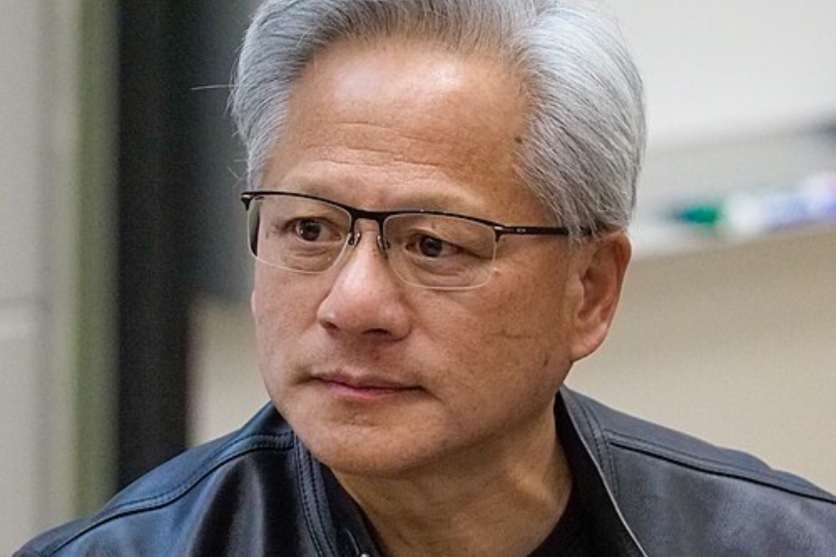
Jensen Huang's departure from Nvidia, announced on Thursday, 12 November, has intensified concerns about Chinese espionage following reports of his relationship with a businesswoman suspected by US officials of spying for Beijing.
Separately, researchers found alleged Nvidia Blackwell chip fingerprints in six Chinese AI models, raising questions about access to restricted American technology.
Neither development establishes that Beijing obtained Nvidia's confidential designs or research. No evidence links the six AI models to the alleged intelligence targeting.
Why Jensen Huang Left Nvidia
Huang, who co-founded Nvidia in 1993, resigned as chief executive and director amid scrutiny of reported personal relationships.
Nvidia announced his departure on 12 November, although its regulatory filing says the resignation took effect on 11 November.
Reports linked Huang to Alice Huang, also known as Huang Le, a former executive at Singapore-based Megaspeed International. US officials suspect her of links to Chinese intelligence, but the allegation remains unproven.
The New York Times also reported a relationship involving an Nvidia employee. The Associated Press said it could not independently verify that account.
On 8 November, Nvidia's board announced an independent investigation into reports that Huang had been targeted by foreign intelligence. Independent directors and external lawyers are overseeing the inquiry, and Huang agreed to cooperate.
Six Chinese AI Models Raise Chip Questions
On 12 November, researcher Will DePue of Unemployment Labs published an analysis of publicly released AI model weights. These numerical parameters help determine how AI systems process information.
His team reported Blackwell-compatible patterns in DeepSeek-V4-Flash, DeepSeek-V4-Pro, Kimi K3, Kimi K3.1-Pro, MiniMax-M3 and Ling-3.1-flash.
The models came from four Chinese developers: DeepSeek, Moonshot AI, MiniMax and Ant Group. Researchers recreated numerical patterns associated with DeepSeek-V4-Flash and Kimi K3 on physical Blackwell processors. DePue argued that the findings supported access to advanced hardware subject to US export controls.
However, the fingerprints indicate the hardware configuration associated with the models' initial weights, not necessarily the processors used throughout training.
The team also considered specially configured AMD processors, ruling out that explanation for DeepSeek-V4-Flash but not conclusively for the others.
Did Beijing Obtain Nvidia's Secrets?
Access to restricted processors is not proof of access to Nvidia's confidential designs. The research cannot establish where hardware operated, how it was obtained or whether export rules were broken.
Nvidia's board said on 8 November it had 'no reason to believe' that company secrets or national security had been compromised. Its investigation has not reached a publicly announced conclusion.
Singapore separately investigated Megaspeed over suspected inaccurate declarations involving server shipments. Authorities found insufficient evidence that Alice Huang committed the offences under examination.
Police nevertheless assessed that she knowingly supplied inaccurate information to minimise her involvement in Megaspeed. She received a stern warning and was barred from re-entering Singapore.
Authorities stressed that their investigation did not concern espionage.
What Happens Next for Nvidia?
Nvidia appointed chief financial officer Colette Kress interim chief executive and Harvey C. Jones board chairman. The company is searching for a permanent successor.
Nvidia shares closed 4.3% lower on Thursday, reflecting investor uncertainty surrounding its leadership transition.
For now, neither the allegations against Huang's associate nor the six AI models establish that Beijing obtained Nvidia's secrets.
The intelligence inquiry and questions about restricted chip access remain separate, unresolved issues.


