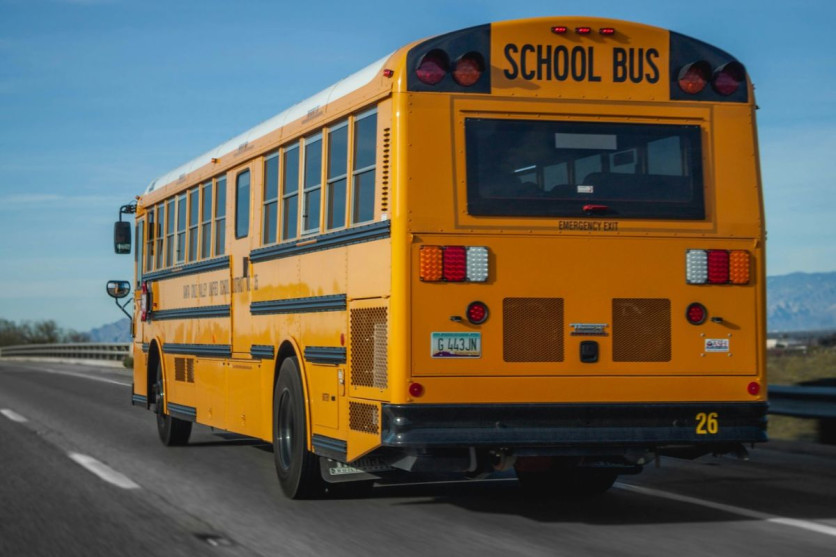
AI-powered cameras installed on school buses across the US were supposed to protect children from dangerous drivers, but the technology has now helped generate millions of dollars in traffic fines, raising questions about whether it is making roads any safer.
An investigation has revealed that Montgomery County, Maryland, issued 375,000 tickets worth $92 million (£69.4 million) over five years, but violations and crashes near stopped school buses did not go down.
The findings have raised concerns about a growing industry that promises to protect schoolchildren while generating substantial revenue for private companies.
'Why Do You Need AI?' Drivers Question Technology Behind Millions in Fines
Many agree that drivers who illegally pass stopped school buses should be punished. However, some question why artificial intelligence is needed to issue the tickets.
'Seems like a fantastic use of AI. Don't drive around a bus with a stop signal, it's always been illegal,' one Reddit user wrote.
Others argued that a simple camera and sensor could do the job without relying on AI, with some accusing companies of using the technology as a sales tactic.
'Why do you need AI? A sensor, a camera, and a computer can do that just fine,' another user commented.
Some also raised concerns about potentially faulty systems issuing penalties for incidents that never happened.
'I got a $300 (£226) ticket, and I didn't even see the bus. It was four lanes over, going the opposite way. I'm a safe driver and always stop for buses when they have their lights on and stop signs out,' one Redditor claimed.
Another driver said they received a ticket despite video evidence allegedly showing their vehicle nowhere near the bus. They also claimed their attempt to contest the fine was unsuccessful.
A $92M Ticket Haul – But Who Is Actually Making Money?
BusPatrol, a US school bus safety programme, installs cameras designed to capture vehicles illegally passing stopped school buses.
The company has installed its systems on approximately 35,000 school buses across 24 US states.
Its business expanded after New York State passed a law in 2019 allowing local governments to install automated stop-arm cameras on school buses.
According to an investigation by Type Investigations and Bloomberg, Montgomery County issued 375,000 tickets worth $92 million (£69.4 million) between 2019 and 2024.
Of that money, the county received $18.5 million (£13.95 million), while BusPatrol collected approximately $40 million (£30.17 million) for installing and operating the cameras.
The figures raise questions about the financial incentives behind a system introduced primarily to protect schoolchildren.
Cameras Are Catching Drivers – But Are They Actually Making Roads Safer?
Hundreds of thousands of tickets later, violations and crashes near stopped school buses in Montgomery County haven't dropped. So what's going wrong?
The process is simple enough. BusPatrol's cameras send footage to the cloud, AI filters it, and human reviewers verify it before police get the evidence. Police then notify the driver, who can pay the fine, says the Allentown School District.
It's a growing business, too. Verra Mobility has agreed to split revenue equally with Florida's Osceola County school board, according to TechSpot.
Protecting Children or Creating a Lucrative Ticketing Business?
The real controversy is whether AI-powered enforcement is delivering the safety improvements promised.
With millions of dollars in fines collected, private companies receiving substantial payments and drivers questioning the accuracy of some tickets, the debate is no longer simply about catching dangerous motorists or drivers.
It is about whether these systems are genuinely making school journeys safer – or turning child safety into a lucrative traffic enforcement business.


