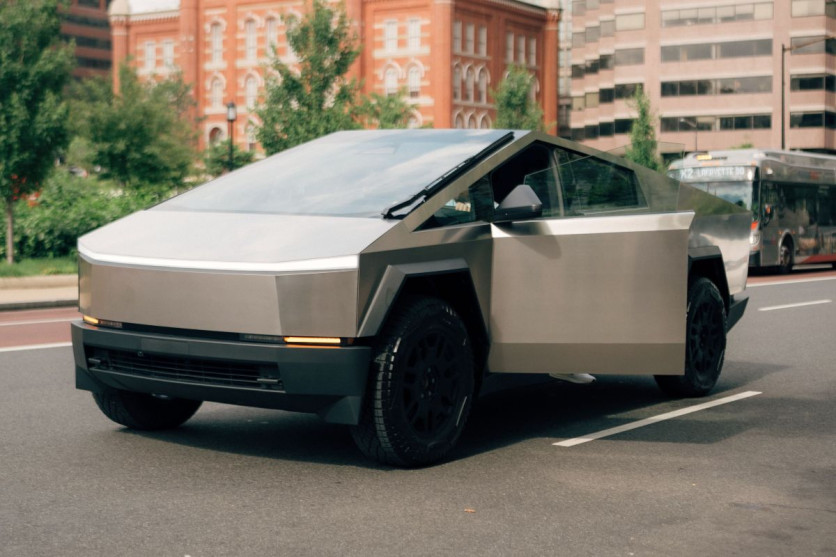
South Korean police have referred 80 Tesla owners to prosecutors after accusing them of using unauthorised devices to activate the company's Full Self-Driving (FSD) system in vehicles that were not approved to use it.
The investigation centres on hardware designed to bypass regional software restrictions, including equipment imported from overseas and devices assembled by owners themselves.
Officers seized 21 activation units, while investigators say some suspects shared instructions online for enabling the feature and hiding evidence of its use. The case highlights a regulatory problem facing Tesla in South Korea: most Teslas registered in the country are not currently eligible for FSD under local safety rules.
It also comes as a consumer group prepares a separate complaint alleging that Tesla marketed the paid feature to buyers whose vehicles could not legally use it. The police allegations and the consumer complaint concern different conduct, but together they put the company's FSD rollout under scrutiny.
Tesla FSD Jailbreak Devices and How Owners Bypassed Restrictions
The investigation uncovered different methods used to get around Tesla's software limitations. According to the Seoul Metropolitan Police Agency, some owners purchased activation equipment from sellers in Europe and China before connecting it to their vehicles.
One suspect reportedly bought a device manufactured in Europe and plugged it into a Tesla to activate the restricted driving assistance system.
Another, who worked in the information technology industry, allegedly developed an activation unit using technical information about Tesla's electronic control systems and open-source material from GitHub, the developer code-sharing platform.
The investigation also found that some owners exchanged instructions through online communities. These discussions reportedly covered both the process of activating FSD without authorisation and ways to prevent the vehicle from retaining records of the modification.
Police said the unofficial equipment had not gone through Tesla's approved software update and certification procedures. A police representative warned that the modifications could affect how the system responds to its surroundings.
'Using FSD in this way poses safety risks, such as the vehicle failing to properly recognise driving conditions or operating in ways that differ from the driver's intentions,' police said.
However, authorities have not identified any accidents caused by unauthorised FSD activation, according to South Korean reporting.
Tesla's FSD requires active human supervision. It is a driver-assistance system rather than a fully autonomous driving service, meaning motorists must continue monitoring the road and intervene when necessary.
The police investigation was requested by South Korea's Ministry of Land, Infrastructure and Transport in April after authorities identified signs of unauthorised activation. Investigators have also consulted the Korea Transportation Safety Authority on technical questions involving changes to vehicle software.
Why Tesla FSD Is Restricted In South Korea and What Happens Next
South Korea's restrictions are linked to the safety certification requirements for vehicles sold in the country. Under the Korea-US free trade agreement, qualifying US-manufactured vehicles that meet American safety standards can be exempt from certain domestic certification requirements.
This currently allows eligible US-built Model S and Model X vehicles, along with the Cybertruck, to use FSD legally. However, China-manufactured Model 3 and Model Y vehicles have not received the necessary approval for the feature under South Korean regulations.
The country's Motor Vehicle Management Act prohibits owners from arbitrarily changing, installing, adding or removing software that could affect the safe operation of a vehicle. Those found guilty of violating the provision can receive up to two years in prison or a fine of 20 million won (approximately £11,100).
On 4 November, Reuters reported that Citizens United for Consumer Sovereignty, a South Korean consumer advocacy group, planned to file a complaint with the Korea Fair Trade Commission (KFTC) on Thursday. It alleges that Tesla marketed FSD to customers whose vehicles could not legally use the system.
Reuters reported that Tesla had previously charged 9.043 million won (approximately £5,020) for a one-time FSD purchase before switching to a monthly subscription priced at 150,000 won (approximately £83) in August.
The group argues that buyers were not adequately informed about the restrictions affecting their vehicles. It also wants regulators to temporarily stop Tesla from marketing the software to owners of ineligible cars, impose administrative fines and refer the matter to investigators.
Reuters reported that Tesla did not respond to its requests for comment. A KFTC representative confirmed that the agency was already investigating the company's FSD advertising but declined to discuss the details.
The dispute has also reached the courts. On 29 October, the Seoul Central District Court rejected a refund lawsuit brought by 88 Tesla owners who had purchased FSD, finding that the option did not promise fully autonomous driving without human intervention.
The court also ruled that Tesla had already supplied some of the included functions, while the delivery of additional capabilities depended on technological progress and regulatory approval.
Tesla has since started seeking certification for China-manufactured vehicles, which could eventually expand the number of cars eligible to use FSD in South Korea.
For the people referred to prosecutors, the outcome will depend on the legal proceedings rather than the police allegations alone. The case also leaves Tesla facing questions about how it sells software features in markets where regulatory approval does not cover its entire vehicle range.


