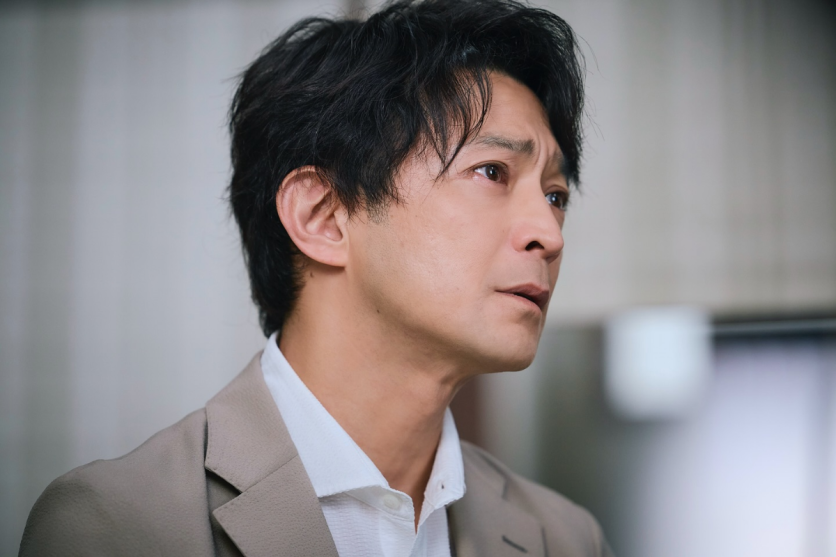
Japanese voice actor Kenjiro Tsuda's lawsuit against TikTok has produced a landmark ruling after a Tokyo court recognised that a person's voice can be protected under publicity rights.
Tsuda had accused an anonymous TikTok account of using generative AI to imitate his distinctive baritone in 188 videos that attracted more than 200,000 followers and were reported to generate between ¥500,000 and ¥750,000 a month.
The Tokyo District Court ruled on Wednesday that a person's voice can be protected under publicity rights when its use is intended to exploit its commercial appeal. However, the court dismissed Tsuda's request for the videos to be removed because the anonymous account had already deleted them.
Japan Court Recognises AI Voice Protection
The ruling is significant because it is the first in Japan to recognise that a person's voice can receive protection under publicity rights, which allow celebrities to control the commercial value associated with aspects of their identity.
Presiding Judge Aya Takahashi said: 'The unauthorised use of a performer's voice ... can be considered an infringement on publicity rights.'
The court also said: 'A person's voice, similar to a likeness, is a symbol of the individual's personality.'
The ruling does not mean every imitation of a person's voice is automatically unlawful. Instead, it establishes that a voice can fall within publicity-rights protection when it is used to take advantage of its commercial appeal.
Tsuda, 55, is best known internationally for voicing Kento Nanami in Jujutsu Kaisen and has also appeared in other major anime franchises.
Importantly, the court did not determine whether Tsuda's publicity rights had actually been infringed by the specific videos. The court dismissed the removal request because the videos had already been deleted.
TikTok Account Used Tsuda-Like Voice
The case centred on an anonymous TikTok account that posted 188 videos between July 2024 and September 2025, featuring content about urban legends, the occult and conspiracy theories.
According to reporting on the case, the account had more than 210,000 followers and averaged approximately 1.47 million views per video. Tsuda's legal team claimed that the account generated between ¥500,000 and ¥750,000 in monthly revenue.
Tsuda's legal team argued that the narration was generated using AI and was sufficiently similar to his distinctive voice to attract viewers. They argued that the account benefited commercially from the association between the narration and Tsuda's identity.
The account's profile image also reportedly resembled a Jujutsu Kaisen character voiced by Tsuda, strengthening the argument that viewers could associate the videos with the actor.
However, TikTok disputed the characterisation.
The platform argued in court that the narration used a 'generic male voice' and that any perceived similarity to Tsuda was subjective.
TikTok also argued that the AI had been trained on the voice of a friend of the uploader, rather than Tsuda's voice.
That distinction is important because the court's ruling establishes that voices can receive publicity-rights protection, but it did not definitively establish that the 188 videos contained an AI clone of Tsuda's voice.
Court Rejects TikTok Takedown Request
Tsuda filed the lawsuit in November 2025, seeking the removal of the videos from TikTok.
By the time the court issued its ruling, however, the anonymous account and the videos in question had already been deleted. The court therefore dismissed Tsuda's request for their removal.
The outcome means Tsuda did not obtain the specific takedown order he had sought. At the same time, the ruling establishes a legal principle that could become important in future disputes involving AI-generated voice imitations.
Tsuda's lawyer Takashi Hirano said the ruling 'ended up making both sides look victorious'. TikTok said it would respect the judgment while considering its next steps.
'We will continue to sincerely work on the balance between technology development and rights protection,' the platform said.
Voice Actors Fight AI Replication
The case comes as voice actors and other performers increasingly raise concerns about generative AI reproducing their voices without permission.
Yuko Sasaki, executive director of the Japan Actors Union, said an actor's voice 'is the result of years of rigorous training and apprenticeship'.
'It's something we spend lots of time and money perfecting,' Sasaki said, adding that 'we support Tsuda wholeheartedly'.
Japanese performers have also launched the 'No More' campaign against the unauthorised use of generative AI to mimic performers' voices.
Actor Bin Shimada, who is part of the campaign, warned that 'Our industry can be crushed' if 'unbridled' AI voice cloning spreads on social media.
Japan's Justice Ministry also published non-binding guidelines in August stating that legal protection, including publicity rights, could extend to voices. The Tokyo ruling now provides the first judicial recognition of that principle.
What The Ruling Means For AI Voices
The case highlights a growing legal problem created by increasingly capable generative AI voice technology.
AI systems can reproduce recognisable characteristics of a person's voice, raising questions about who controls the commercial value associated with a distinctive voice and what happens when AI-generated content is monetised without permission.
The Tokyo ruling does not create a blanket ban on AI voice cloning in Japan. Instead, it establishes that a person's voice can be protected as part of their publicity rights when its commercial appeal is being exploited.
For voice actors, that distinction could become increasingly important as synthetic narration becomes more common across social media and other digital platforms.
Tsuda's case also demonstrates a practical limitation: by the time a legal dispute reaches court, the content at issue may already have disappeared. In this case, the videos were deleted before the court could order their removal.
The ruling therefore leaves an important question for future cases: how Japanese courts will apply publicity-rights protection when a disputed AI-generated voice remains online and is still being used for commercial purposes.
Frequently Asked Questions
- What was the outcome of Kenjiro Tsuda's lawsuit against TikTok?The Tokyo District Court recognized that a person's voice can be protected under publicity rights, but dismissed Tsuda's request for video removal as they were already deleted.
- Why is the Tokyo court ruling significant?It is the first ruling in Japan to recognize that a person's voice can receive protection under publicity rights when used for commercial exploitation.
- What does the ruling mean for AI-generated voices?The ruling establishes that a person's voice can be protected under publicity rights if its commercial appeal is exploited, but does not create a blanket ban on AI voice cloning.


