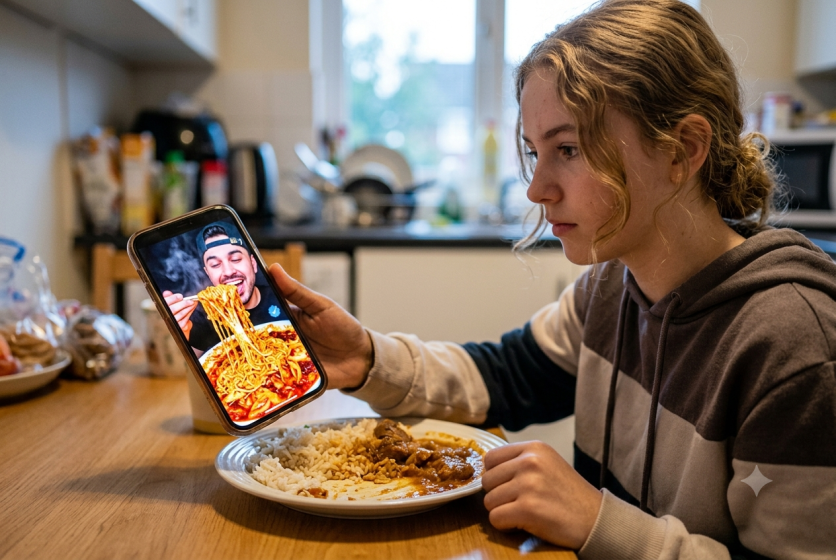
To evaluate how TikTok affects what teenagers eat and whether parents can soften that influence, University of Minnesota researchers conducted focus groups with 25 high school students. Their findings offer a clear look at how the platform's algorithm can trigger sudden food cravings in teens, while underscoring how detached most parents are from these digital influences.
Appearing in the Journal of Nutrition Education and Behavior, the research breaks new ground by examining TikTok's effect on the eating habits of lower-income, racially diverse teens — a group largely neglected in social media studies.
More than half of the participants identified as Black or African American, nearly 50 per cent noted Somali heritage, and most attended a school where a high proportion of students received free or subsidised meals.
Constant Social Exposure Triggers Impulse Snacking
A clear pattern surfaced across four separate discussion groups: the teenagers found themselves constantly exposed to food videos on their personalised 'For You' feeds. Throughout the day, their screens filled with viral recipes, restaurant adverts, influencer meal videos and food challenges.
Whenever appealing dishes popped up, the teens described feeling an immediate, almost overwhelming urge to eat them.
One student captured the annoyance of spotting a tempting dish online without any way to satisfy the urge on the spot: 'It's across the world, we can't get it! And also it's like, even if it's not about money, you can't get what they have right now, like you want it right now.'
This immediate urge played a key role in their habits. Although teenagers noted that cravings usually passed when they could not satisfy them quickly, they often turned to whatever snacks were on hand in their kitchens instead. Furthermore, several students admitted to streaming TikTok clips during meal times — a habit experts warned can trigger absent-minded overeating or dinner-table food envy.
How Influencer Posts and Comments Shape Teen Diets
Different food posts produced varying reactions among the students. Teenagers showed a far greater tendency to follow recommendations when they felt a sense of trust towards the creator. Features such as a verified blue tick, a massive follower count or an enviable physical appearance often prompted young viewers to sample new dishes or revamp their daily diets altogether.
Highlighting how a muscular TikTok creator influenced his eating habits, one male student explained: 'I click on his account and see what they'd be eating. And then I sometimes change how I eat, like to try to match it.'
However, the teenagers showed a sharp eye for disingenuous posts, with several pointing out when an influencer appeared motivated purely by pay or when a restaurant review seemed over the top.
One student expressed this cynicism directly: 'There are these creators that get to do ads for companies and stuff and you can't trust them cause they lie about everything just to get money.' Conversely, others highlighted creator Keith Lee as a dependable source because, as another teenager noted, he 'literally tells the truth every time.'
User comments below videos also proved influential in guiding teen reactions. Favourable remarks from viewers heightened their appetite for a featured dish, whereas expressions of disgust or doubt quickly killed off any initial interest.
The students also noted a habit of skipping videos that stretched beyond a minute or two, indicating that TikTok's quick-fire, short-form setup may contribute to how rapidly its food content hits home.
The Power of Parental Intervention in Mitigating Influence
Most teenagers reported minimal parental involvement in their daily TikTok use, with many stating their parents were unaware of or indifferent to their feeds.
However, simple actions made a notable difference: when parents encouraged family activities or shared meals, teens spent less time scrolling, indirectly limiting their exposure to tempting food videos.
More crucially, open conversations shaped how teens evaluated what they saw. Youngsters whose parents encouraged scepticism about influencer lifestyles and unrealistic body types developed a critical mindset during their own viewing, creating a vital safeguard against toxic diet messaging.
Frequently Asked Questions
- How does TikTok influence teenagers' eating habits?TikTok influences teenagers' eating habits by exposing them to food videos that create cravings and influence their dietary choices.
- What role do influencers play in shaping teen diets on TikTok?Influencers can shape teen diets by promoting certain foods or diets, especially if they are perceived as trustworthy or have a large following.
- How can parents mitigate TikTok's influence on their children's eating habits?Parents can mitigate TikTok's influence by encouraging family activities, sharing meals, and having open conversations about media consumption and influencer content.


