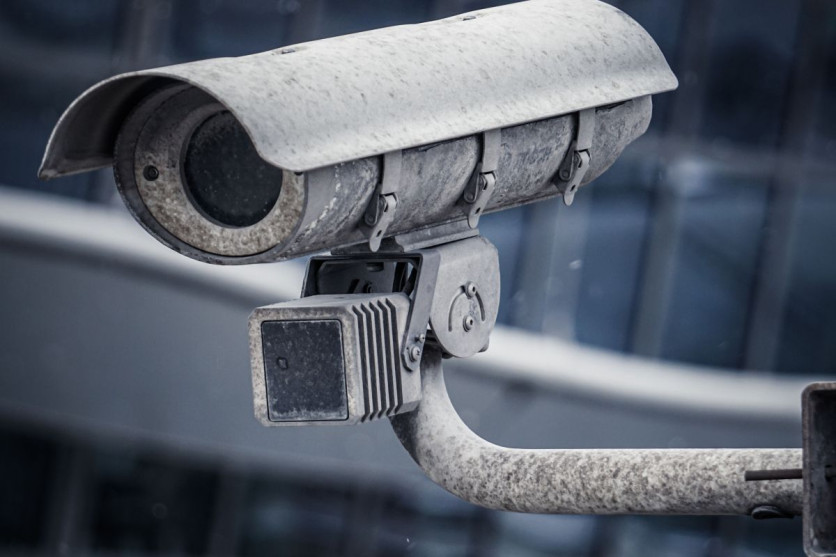
Facial recognition has become an increasingly familiar part of everyday life in Britain, even though most people have no reliable way of knowing how often their face is being analysed. A camera recording you is not necessarily using facial recognition, but when software turns an image of your face into biometric data and compares it with a watchlist or database, the nature of the surveillance changes.
Police forces are using live facial recognition in public spaces, retailers can deploy the technology to identify people on watchlists, and biometric systems are increasingly used at transport hubs and other controlled environments.
Yet there is no national register showing every deployment, meaning nobody can give an accurate figure for how many times the average person is scanned. The available figures show the scale. In 2024, live facial recognition scanned 4.6 million faces across England and Wales, according to the Parliamentary Office of Science and Technology.
The question is therefore less about whether facial recognition is being used and more about where, when and under what rules people encounter it.
Police Facial Recognition Is Expanding
The clearest evidence of how often people can encounter facial recognition comes from policing. Live facial recognition, or LFR, uses cameras to capture faces in real time and compare them against a predetermined watchlist. It is different from ordinary CCTV, which may simply record footage without attempting to identify the people appearing in it.
Julian Gage, a fractional Data Protection Officer and founder of Engage Compliance, said 13 of the 43 police forces in England and Wales are now using live facial recognition.
'There's no register of deployments, no duty to tell you when you walk past a camera, and no way to ask a shop whether your face was checked against its list. What can be counted is where it happens.'
The figures that can be counted are considerable. POST says LFR scanned 4.6 million faces across England and Wales during 2024, while retrospective facial recognition was used 252,798 times.
Individual deployments show what those numbers mean on the ground. In March 2026, Norfolk Constabulary carried out its first LFR trial in Norwich. Two vans operated in the city centre for three and a half hours and scanned more than 50,000 faces, according to the force.Gage described that type of deployment as the scale many people overlook.
'That's the scale people miss: one afternoon, one street, fifty thousand faces, almost none of whom knew.'
The police position is that LFR is not intended to identify everybody passing a camera. The Home Office says police deployments should be targeted, intelligence-led, time-bound and geographically limited. Forces are expected to provide information to the public about deployments and follow safeguards around the use of the technology.
The technology is also being expanded. The government announced in 2025 that it was providing police forces with 10 new LFR vans, describing the technology as a tool for finding people wanted for serious offences and sex offenders.
The Metropolitan Police has been among the most active users. Its LFR programme has generated thousands of alerts and hundreds of arrests. POST reported that, using the Met's stated threshold during 2024-25, 2,067 potential match alerts produced 962 arrests, although the technology is designed to generate an alert for police officers to assess rather than make an arrest automatically.
That distinction matters because a facial recognition alert is not the same thing as proof that someone is the person on a watchlist.
Facial recognition has also entered the politically sensitive setting of protests. In May 2026, the Metropolitan Police used live facial recognition at a large demonstration attended by around 50,000 people, according to contemporary reporting.
For people attending a protest, the issue is different from walking past a police camera during an ordinary journey. The Information Commissioner's Office has warned that facial recognition in publicly accessible spaces can raise concerns around privacy and other fundamental rights, including freedom of expression and freedom of assembly.
UK Law Relies on a Patchwork of Rules
Britain's legal position is more complicated than simply asking whether facial recognition is legal. There is no single Act of Parliament that comprehensively governs every use of facial recognition in public spaces.
Instead, different rules apply depending on who is using the technology, why it is being used and what happens to the biometric information collected.
For organisations processing personal data, the main framework includes the UK GDPR and Data Protection Act 2018, alongside changes made by the Data (Use and Access) Act 2025. The government says the 2025 Act did not replace the UK GDPR or Data Protection Act 2018 but amended them in several areas.
The ICO says facial recognition can involve the processing of personal data, biometric data and, in many cases, special category personal data. Organisations therefore have to meet specific data protection requirements when using it.
That includes considering whether the processing is lawful, fair and necessary and whether a less intrusive method could achieve the same purpose. The ICO says organisations using biometric data must be able to demonstrate compliance with data protection law and consider the risks to people's rights and freedoms.
Police use has its own additional legal and operational considerations. A key case is R (Bridges) v Chief Constable of South Wales Police, in which the Court of Appeal examined the lawfulness of South Wales Police's use of automated facial recognition in public places. The 2020 judgment remains an important part of the legal background surrounding police use of the technology.
The government is now considering whether those existing arrangements provide enough clarity. In December 2025, the Home Office launched a consultation on a new legal framework for law enforcement use of biometrics, facial recognition and similar technologies.
The Information Commissioner's Office responded to that consultation in February 2026, while continuing to work with government and police forces on the regulation and responsible use of facial recognition.
The technology is not limited to police cameras. Retailers can also use facial recognition, although the legal requirements remain. The ICO investigated Facewatch in 2023 and closed its investigation without regulatory action.
Facewatch uses facial recognition to compare people entering participating businesses with lists of people considered subjects of interest. Per a report by IBTimes UK, a viral incident about Facewash getting a woman banned from an establishment shows the reason of concern.
Its current privacy information says participating businesses must display signage indicating that facial recognition is operating. It also says biometric data from people who are not subjects of interest is not retained beyond the instant needed for the matching process.
That is why it would be misleading to say every CCTV camera in Britain is scanning faces. It is equally misleading to assume facial recognition is confined to obvious police vans.
The ICO says there is a high bar for the lawful use of facial recognition in public places because of the sensitivity of biometric information and the potential consequences of wrongly identifying someone.So, how often are you actually being scanned?
There is still no reliable national answer. A person who spends time in an area where police regularly deploy LFR could encounter the technology repeatedly, while someone living elsewhere may rarely encounter it. Retail, transport and other private deployments add another layer that is difficult to measure nationally.
Gage put it plainly: 'Nobody can tell you.'
What can be established is that millions of facial images are already being processed by systems capable of identifying people, and individual public-space deployments can scan tens of thousands of faces in just a few hours.
For now, the most accurate answer is not that Britain is scanning everyone everywhere. It is that facial recognition has become established in selected public spaces, while the legal framework governing its expansion is still being developed.
That leaves ordinary people with a practical problem: you may be able to see the camera, but you cannot always tell what the camera is doing with your face.
Frequently Asked Questions
- What is live facial recognition (LFR)?Live facial recognition uses cameras to capture faces in real time and compare them against a predetermined watchlist.
- How is facial recognition used by police in the UK?Police use live facial recognition to identify people on watchlists, often in public spaces, and it is intended to be targeted and intelligence-led.
- What legal frameworks govern facial recognition in the UK?The UK GDPR, Data Protection Act 2018, and Data (Use and Access) Act 2025 are the main frameworks, with additional considerations for police use.
- Can retailers use facial recognition technology?Yes, retailers can use facial recognition, but they must comply with legal requirements, including displaying signage and not retaining biometric data unnecessarily.


