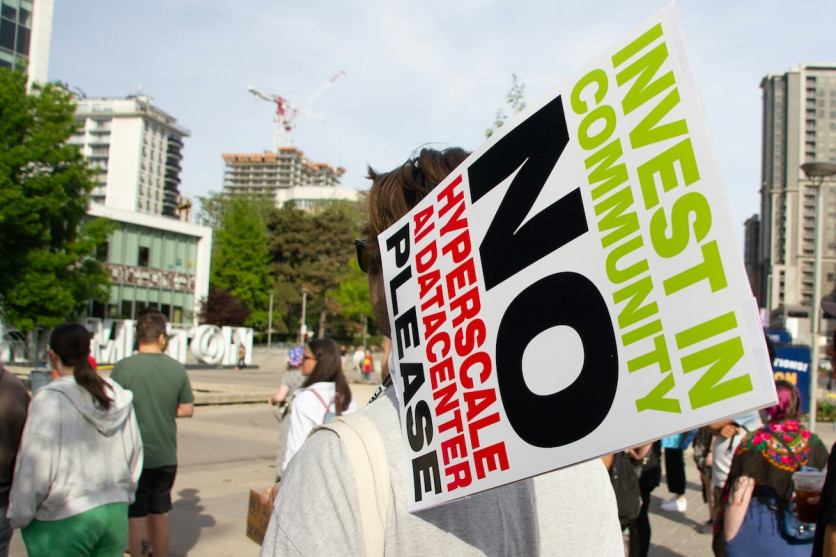
On Friday, 30 October 2026, the Hermantown City Council passed all six resolutions relating to Google's proposed data centre in northern Minnesota, unanimously clearing the project's major local approvals during a contentious, late-night session despite sustained resident opposition.
The proposed 154,200 square meter (1.66 million square foot) campus would occupy approximately 95 hectares (234 acres) in a rural area near Duluth. While the council's vote marked a decisive step forward, the project still faces legal challenges, requires a wetland permit, and awaits state review of its proposed electricity supply agreement.
Late-Night Vote Follows Heated Public Opposition
The vote followed two postponed council sessions and hours of public comment. Demonstrators chanted inside and outside city hall on Monday, prompting officials to delay the scheduled vote. A rescheduled Tuesday meeting was also postponed, with the council eventually convening on Friday.
The city announced that attendance at the Friday meeting would be limited to the first 85 visitors. An overflow room used at earlier gatherings was not opened. Officials offered a livestream and accepted comments by email in advance, but critics argued that the arrangements, speaking limits, and cold weather made meaningful public participation more difficult.
Resident Brian Bergeron said he had waited outside in the cold for two and a half hours before being admitted. Richard Hilton accused the council of making only minor changes before siding with a corporation over local residents.
Council Defends Decision as Land-Use Matter
Councillor John Geissler rejected the idea that the vote was a referendum on artificial intelligence or big technology.
"What we've done tonight is not about AI. It's not about big tech. It's not about software. It's about a project here in Hermantown, a land use application, and agreements that are associated with that," he said.
The six resolutions included rejecting a citizen petition seeking an Environmental Assessment Worksheet and approving the special-use permit subject to conditions. The council also approved the preliminary and final plat, development agreement, a cooperative agreement with St. Louis County, and a reuse and decommissioning agreement.
Google Scales Back Plans and Drops Tax Relief
Before the vote, Google reduced the proposed data centre buildings from four to three and capped their height at 10 metres (33 feet). The plans also include associated mechanical buildings and supporting infrastructure, alongside a commitment to monitor nearby private wells.
The company withdrew its request for up to £61 million ($80 million) in property tax relief. Hermantown estimates the completed project could generate just under £2.3 million ($3 million) annually for the city, with combined property-tax revenue for Hermantown and St. Louis County projected to exceed £161 million ($210 million) over the first 20 years after completion.
Separately, Google's reuse and decommissioning agreement is designed to protect the city if the facility ceases operating. It provides for options including adaptive reuse, developer-led maintenance and restoration, and municipal decommissioning, backed by an inflation-indexed financial guarantee matching that £161 million ($210 million) figure, subject to the agreement's conditions.
Lawsuits Keep Environmental Review in Focus
At the 30 October meeting, city attorney Christopher Virta said three lawsuits involving the environmental review, zoning process, and land ownership did not prevent the council from proceeding. On 5 November, environmental groups filed a fourth lawsuit challenging Hermantown's decision to retain responsibility for determining whether its updated environmental review was adequate.
Opponents have raised concerns about potential effects on water resources, air quality, noise, and greenhouse gas emissions. The Minnesota Department of Natural Resources identified gaps and deficiencies in aspects of the environmental review but stopped short of formally objecting to it.
Hermantown retained responsibility for determining whether the review was adequate, a decision environmental opponents have since challenged in court. The allegations remain contested and have not been established as findings of legal violations.
500MW Electricity Demand Leaves Regulatory Hurdles
The facility could require up to 500 megawatts of electricity at peak demand, roughly equivalent to the combined residential electricity demand of Minneapolis, St. Paul's, Duluth, and Rochester, according to the Citizens Utility Board of Minnesota.
The Minnesota Public Utilities Commission is reviewing a proposed electricity supply agreement between Minnesota Power and Harmony Group LLC, a Google subsidiary. Regulators must consider issues such as grid reliability and whether other customers could bear the data centre's supply costs, meaning approval is not automatic.
The dispute reflects a wider debate across Minnesota and the United States over data centres' growing demands on electricity, water, and local infrastructure.


