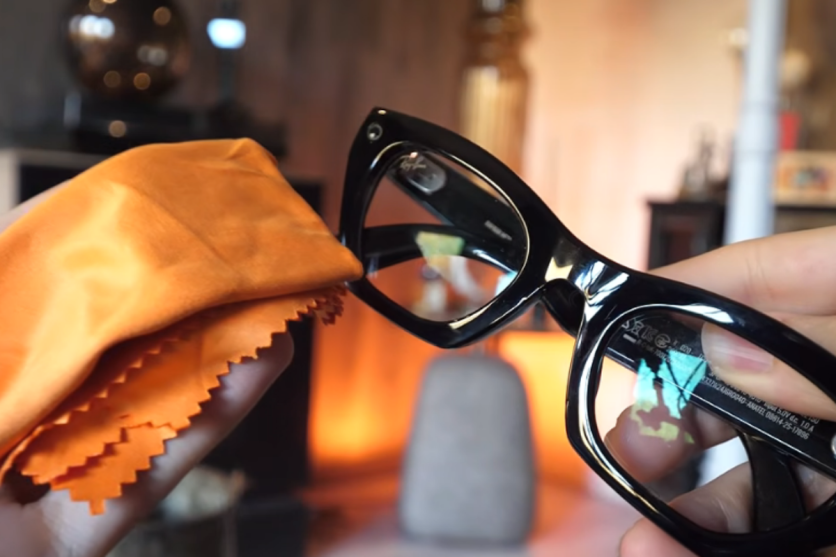
Smart glasses have become a symbol of unease about discreet recording after Australia's Macquarie Dictionary named 'pervert glasses' its Word of the Year for 2026 on 23 November.
The expression describes camera-equipped eyewear, including Meta's Ray-Ban smart glasses, and reflects concerns that people could be recorded without their knowledge or consent.
The phrase was selected by the dictionary's committee and also won the public vote, making it the People's Choice Word of the Year. The public vote gives the expression a second form of recognition, but does not measure how often recording occurs or whether it is unlawful.
For context, 'pervert glasses' is a critical nickname, not a product name. The devices combine cameras with artificial intelligence assistants.
Why Have Smart Glasses Become 'Pervert Glasses'?
The concern is not simply that smart glasses can take photographs. The committee's choice points to the possibility that wearers could film or photograph people who do not realise the devices are being used.
The expression rejects neutral descriptions such as 'smart glasses' and 'camera glasses'. It gives a blunt name to anxieties about surveillance and the speed at which artificial intelligence is being incorporated into everyday products.
'On the one hand, we've seen a massive acceleration in the capabilities of AI and products that integrate it.
At the same time, the undeniably critical nickname mirrors the widespread calls to hit the brakes on this seemingly unchecked development,' the Macquarie Dictionary committee said.
The scrutiny has extended beyond the dictionary's choice. Meta's Ray-Ban smart glasses have attracted attention from privacy regulators and lawmakers, while restrictions have emerged in specific settings.
In England and Wales, Meta smart glasses have been prohibited inside court buildings. The restriction relates to rules governing the recording of images and videos in courts and tribunals. It is not a general ban on wearing smart glasses in public.
UK cinema operators have also considered restrictions on Meta AI glasses.
What Do The Restrictions Mean For Smart Glasses?
A UK Parliament briefing says filming people in public is generally lawful, although particular circumstances can engage laws covering harassment, stalking or intimate images.
Recording someone without consent should therefore not automatically be described as a criminal offence. The legality depends on the circumstances, location and what is done with the material.
Meta has previously said its glasses use a pulsing light to indicate when recording is taking place. The company has also described measures intended to stop users covering that indicator.
The shortlist also included 'Nudify', referring to AI-generated pornography, and 'AI;DR', meaning 'AI; didn't read'. Honourable mentions went to 'agentic', 'PMOS' and 'digital dementia'.
The committee said 'pervert glasses' better captured the public mood than manufacturers' preferred terms, 'smart glasses' and 'camera glasses'.
Macquarie's previous winners were 'enshittification' in 2024 and 'AI slop' in 2025.
As of 25 November 2026, the selection places discreet recording among the issues captured by the dictionary's annual word choice.
The award does not prove widespread abuse, but records how a technology marketed as wearable convenience has become associated with questions about privacy and consent.


