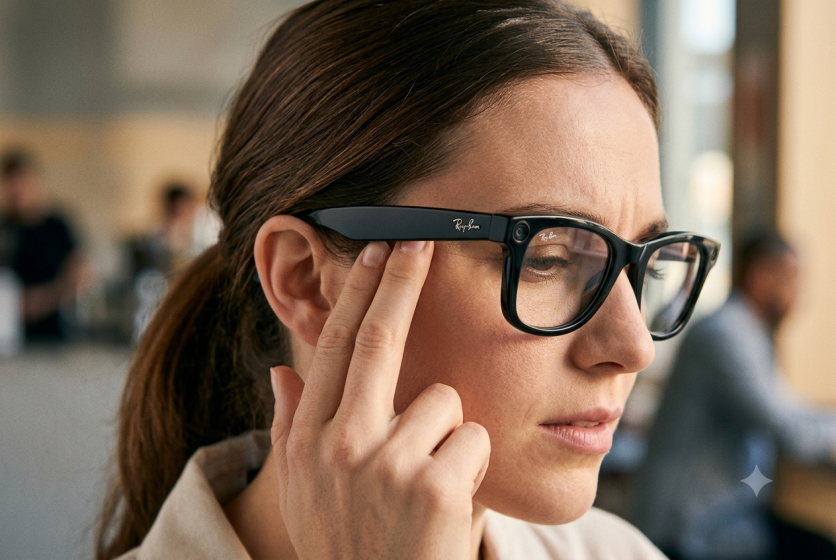
Meta's smart glasses may resemble regular eyewear, but their built-in cameras are raising growing privacy concerns.
According to Reuters, Dutch consumer and digital rights groups have asked a court to halt sales of Meta's AI-powered Ray-Ban glasses in the Netherlands.
The groups argue that the devices enable the recording of people without their knowledge, potentially breaching European privacy laws.
Dutch Groups Raise Objection
The legal challenge was brought by Consumentenbond, the Netherlands' leading consumer association, and by Offlimits, an organisation campaigning against online sexual abuse.
The groups are asking Meta to block covert recording, stop using footage captured by the glasses to train its AI models, and suspend sales until the alleged privacy issues are addressed. They are also seeking penalties of €100,000 (£83,478) per day for each defendant, subject to a combined cap of €100 million (£83 mn).
'Covert recordings are undoubtedly also being made during exams, in changing rooms, at swimming pools, in hotel rooms and hospitals, but also in playgrounds and on beaches,' Offlimits' lawyer Karlijn Han said in opening remarks. 'Each invasion of privacy is worse than the last.'
Privacy Concerns Put Smart Glasses Under Pressure
Meta denied the allegations, saying that it processes images captured by its smart glasses in Europe or uses the footage to train AI models in breach of European privacy laws.
Meta's lawyer, Bastiaan Kemp, urged the court to dismiss the case, arguing that the proposed restrictions would penalise legitimate users, undermine the company's competitive position and effectively amount to a product recall. He also questioned whether such measures would address privacy concerns surrounding similar devices from other manufacturers.
'Providers of products cannot be held responsible for every instance of deliberate misuse,' he told the court. He said that a recording light on the frame makes it obvious when they are being used for recording.
Kemp also rejected claims made by Consumentenbond's lawyer that Meta processes images captured by its smart glasses in Europe or uses the footage to train AI models in breach of European privacy laws. The scale of the business is significant: Meta and its manufacturing partner, EssilorLuxottica, sold more than seven million smart glasses in 2025, giving them an estimated 80% share of the global market.
EssilorLuxottica also challenged the proposed restrictions, arguing that it neither processes nor has access to the recordings and that halting sales would be a disproportionate response.
Privacy Backlash Spreads Beyond the Netherlands
The legal challenge comes amid growing scrutiny of camera-equipped smart glasses, with restrictions emerging in courts and cinemas and proposed measures being considered in countries including Australia and Norway.
Germany's consumer federation is suing Meta and Ray-Ban over privacy concerns. The Dutch data protection authority also warned consumers not to buy smart glasses, citing safety risks to wearers and bystanders.
The Dutch court is expected to issue its decision by mid-December. Until then, Meta's smart glasses remain on sale in the Netherlands, while questions about their impact on privacy continue to mount.
As smart glasses grow more sophisticated, reassuring bystanders that they aren't being recorded without their knowledge remains a broader challenge for the technology.


