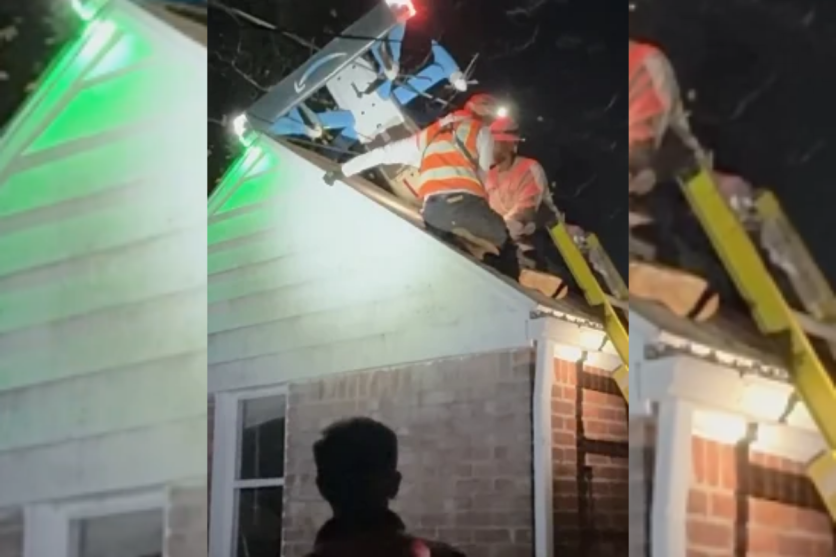
An Amazon Prime Air MK30 delivery drone struck an overhead cable and crashed onto a residential garage in Huntington Woods, Michigan, on 20 November after delivering a shampoo order.
The aircraft delivered the package to Jim Brennan's backyard shortly before 4:30 p.m. local time. It reportedly struck a fibre-optic cable while ascending, lost a propeller, and crashed onto a neighbouring property. No injuries were reported.
The Federal Aviation Administration (FAA) confirmed on 23 November that it was investigating the incident. The National Transportation Safety Board (NTSB) was also gathering information but had not yet decided whether to open a separate investigation.
FAA Investigates Drone's Collision With Cable and Garage
A preliminary incident record cited by CNBC reported that the unmanned aircraft struck a fibre cable and a residential garage before becoming entangled in power lines during take-off. However, the record does not establish the precise sequence of impacts or identify the cause of the incident.
The FAA said it would determine whether corrective or enforcement action was warranted. NTSB media-relations specialist Peter Knudson said the board was aware of the incident and was gathering information. As of 23 November, it had not decided whether to open a formal investigation.
See new video of an Amazon delivery drone crash into a garage Nov. 20 that was captured by a neighbor out for an afternoon walk in Huntington Woods.Read story: https://t.co/Bf5yqYl9PY https://t.co/KnIapV3ig7
— Detroit Free Press (@freep) November 23, 2026
How Amazon's MK30 Delivery Drone Is Designed to Operate
According to FAA environmental documents, the MK30 is a hybrid multicopter fixed-wing aircraft with six propulsors. It is designed to take off and land vertically before transitioning to wing-borne flight.
Amazon says its Detect-and-Avoid technology helps the aircraft monitor its surroundings and make safety decisions in flight. The company has not publicly explained whether the system detected the fibre-optic cable before the Huntington Woods collision.
The incident raises questions about how delivery drones operate near overhead infrastructure, although the available information does not establish whether a technical failure or another factor caused the collision.
Previous Amazon Drone Incidents Involved a Wire and a Crane
The Huntington Woods crash follows two earlier incidents involving Amazon's MK30 aircraft and obstacles near their flight paths.
On 18 November 2025, an Amazon MK30 struck a wire line in Waco, Texas, prompting an FAA investigation. The agency's statement described the incident as a wire-line strike, not a crash.
On 1 October 2025, two Amazon MK30 drones struck the boom of a mobile crane in Tolleson, Arizona. According to the NTSB's preliminary report, the crane arrived at the site and was erected before the first collision. The second drone struck the crane while it was stationary.
The NTSB report is preliminary and subject to change. The FAA has not established a link between those incidents and the Huntington Woods crash, and no cause for the Michigan incident has been publicly determined.
Amazon Responds as Prime Air Plans Wider Expansion
Amazon spokesperson Jack Stelzner said no one was injured, the drone had been removed, and the company was in contact with the affected resident.
'Safety is our top priority and incidents are extremely rare,' Stelzner said. 'Anytime a delivery does not go as planned, we investigate what happened and use the findings to further improve the service.'
Amazon also said that Prime Air reports incidents to the appropriate agencies and participates in investigations.
The company announced on 19 August that it planned to expand Prime Air to nearly 500 US cities and towns by the end of 2026. The expansion would extend its drone delivery operations to more communities, making the safe operation of its aircraft an important consideration as the service grows.


